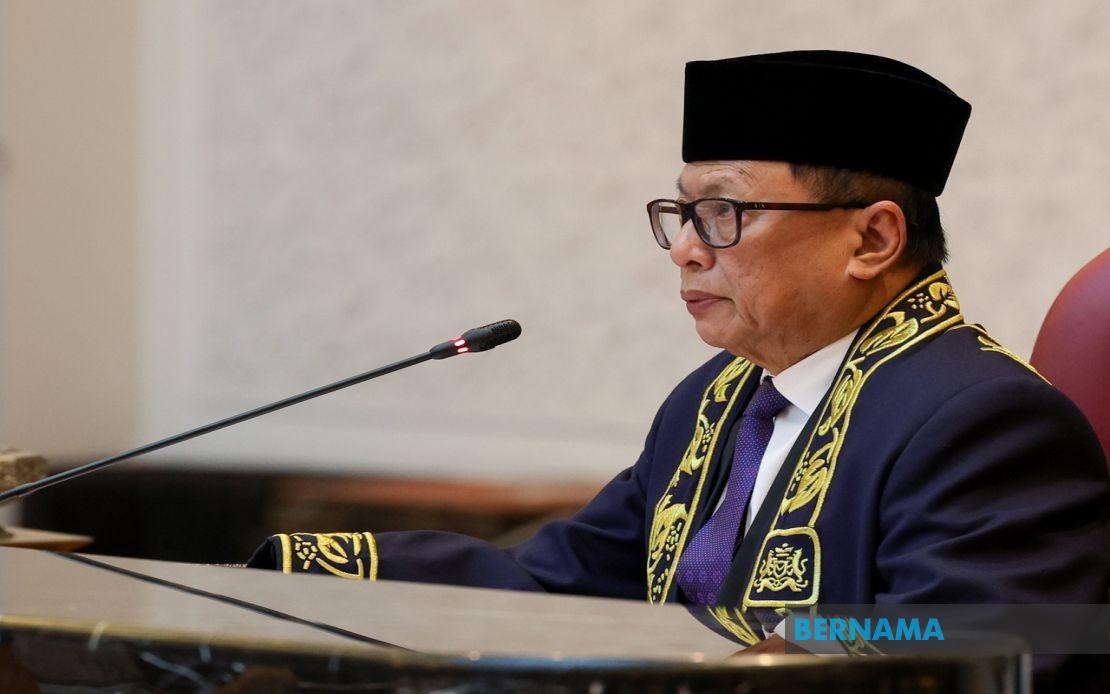
UMNO's Datuk Dr Mohd Puad Zarkashi walked away from the party on June 25, 2026, announcing his departure through a Facebook statement in a move that marks a significant fracture within Johor's dominant political machinery. The Supreme Council member, who has held the Rengit state assembly seat, made the decision without external pressure, he said, positioning his exit as a deliberate act of political principle rather than forced expulsion.
In his resignation announcement, Puad stressed that leaving the party voluntarily would shield him from accusations of disloyalty while enabling him to express concerns that had accumulated within UMNO's structures. He framed his departure as an exercise in "political courage," suggesting that remaining would have compromised his ability to speak candidly about organisational dysfunction. This language carries particular weight in Malaysian politics, where party loyalty traditionally supersedes public criticism among elected members.
The crux of Puad's grievance centres on Johor Chief Minister Onn Hafiz Md Sham, whom he characterised as a mere "pak turut"—a Malay colloquialism denoting a subordinate who reflexively agrees with superiors rather than exercising independent judgment. Puad's use of this term suggests deeper frustration with decision-making processes in Johor UMNO, implying that critical voices face suppression within a hierarchical structure where the chief minister's authority remains unquestioned. This characterisation, if validated by other party members, would indicate a concentration of power that stifles internal debate.
Moreover, Puad extended his critique beyond Onn Hafiz personally to describe Johor UMNO itself as a "tethered puppet," suggesting the party lacks autonomy and operates under external constraints. Such language implies that organisational independence has eroded, with decisions predetermined by forces beyond party membership. In Malaysian context, this accusation strikes at the legitimacy of internal party structures and raises questions about whether state-level UMNO functions as an authentic democratic body or as an instrument serving narrow interests.
Puad's timing aligns with brewing tensions over Barisan Nasional candidate selections for the Johor state election. The previous day, he had hinted at irregularities in the nomination process, suggesting that meritocratic or democratic selection procedures may have been compromised. His decision to withdraw from defending his Rengit seat—despite winning it in 2022—takes on new meaning in this context. Rather than a graceful step aside for younger candidates as initially presented, his resignation appears to reflect profound dissatisfaction with how the party conducts internal business.
Puad's political resume underscores why his departure carries weight within UMNO's hierarchy. As a former Speaker of the Johor State Legislative Assembly and onetime Deputy Education Minister during the federal administration, he possessed institutional knowledge and credibility that extended beyond his state assembly role. His previous stint as Director-General of JASA from 2015 to 2018 indicates proximity to higher echelons of party influence. This is not a fringe figure departing, but rather someone embedded within party structures at multiple levels.
His electoral history reflects the competitive dynamics within Malaysian politics and Johor specifically. Puad secured the Batu Pahat parliamentary seat in the 12th General Election with a majority exceeding 12,000 votes, demonstrating substantial grassroots support. However, his loss of that same seat to PKR's Datuk Mohd Idris Jusi by fewer than 1,600 votes in the following general election suggests shifting voter preferences or organisational weaknesses. This experience of electoral reversal may have sharpened his perspective on party management and strategic capability.
Puad's assertion that he acted without coercion or personal grievance carries implications for how UMNO's internal culture is perceived. By pre-emptively dismissing claims of self-interest, he anticipated criticism that his departure reflected disappointment over lost opportunities or factional rivalry. Whether such reassurances prove persuasive depends on subsequent actions and whether other party figures echo his concerns. Should additional senior figures voice similar frustrations, a pattern emerges suggesting systemic issues rather than individual discontent.
For Johor UMNO specifically, Puad's departure represents a visible wound to party unity during a critical election cycle. The state has traditionally served as UMNO's stronghold, and internal cohesion directly translates to electoral performance. Public criticism from a Supreme Council member, regardless of his state assembly position, signals that reservations about leadership extend beyond isolated malcontents to include individuals with meaningful party credentials. This perception could influence candidate morale and volunteer enthusiasm during campaign operations.
The broader Malaysian political context shapes interpretation of Puad's move. UMNO has faced successive electoral challenges and internal instability over the past decade, navigating coalition politics, leadership transitions, and defections. Johor's significance within this narrative cannot be overstated—the state remains demographically and economically important, and any erosion of UMNO's command structure there reverbates across the party nationally. Puad's public criticism of how Johor UMNO functions thus carries implications extending beyond state-level politics.
The question of what Puad intends next remains open. His statement emphasised freedom to criticise UMNO rather than announcing affiliation with an alternative party, leaving his political future ambiguous. Whether he repositions as an independent, joins another coalition component, or launches a new venture will shape how his resignation ultimately influences Johor politics. Remaining within the broader Barisan Nasional while outside UMNO represents one possibility, though such moves carry risks of marginalisation.
Puad's criticism that organisational wrongdoing could escalate if unchecked suggests specific grievances beyond broad ideological disagreement. His reference to exposing misconduct before it worsens implies knowledge of particular incidents or patterns rather than general dissatisfaction with leadership style. This framing may encourage other party members harbouring similar concerns to evaluate their own positions within UMNO's structures.
Ultimately, Puad's departure articulates tensions between hierarchical party loyalty and democratic accountability that persist throughout Malaysian politics. By publicly departing rather than quietly withdrawing, he has forced a public reckoning with questions about how Johor UMNO operates internally and whether state party structures genuinely serve member interests or function primarily as vehicles for leadership consolidation.

