As Johor voters prepare to cast ballots this Saturday, residents of Pulau Tinggi are pressing the incoming state representative to tackle two critical infrastructure challenges that have long plagued their island community. The appeal underscores how remote and marginalised settlements often struggle to secure government attention, even as broader state-level campaigns dominate political discourse. For the approximately 150 residents scattered across Kampung Pasir Panjang and Kampung Tanjung Balang, infrastructure decay and economic hardship have become defining features of daily life, driving a determined push for action from whoever wins the Tenggaroh state seat in the 16th Johor election.
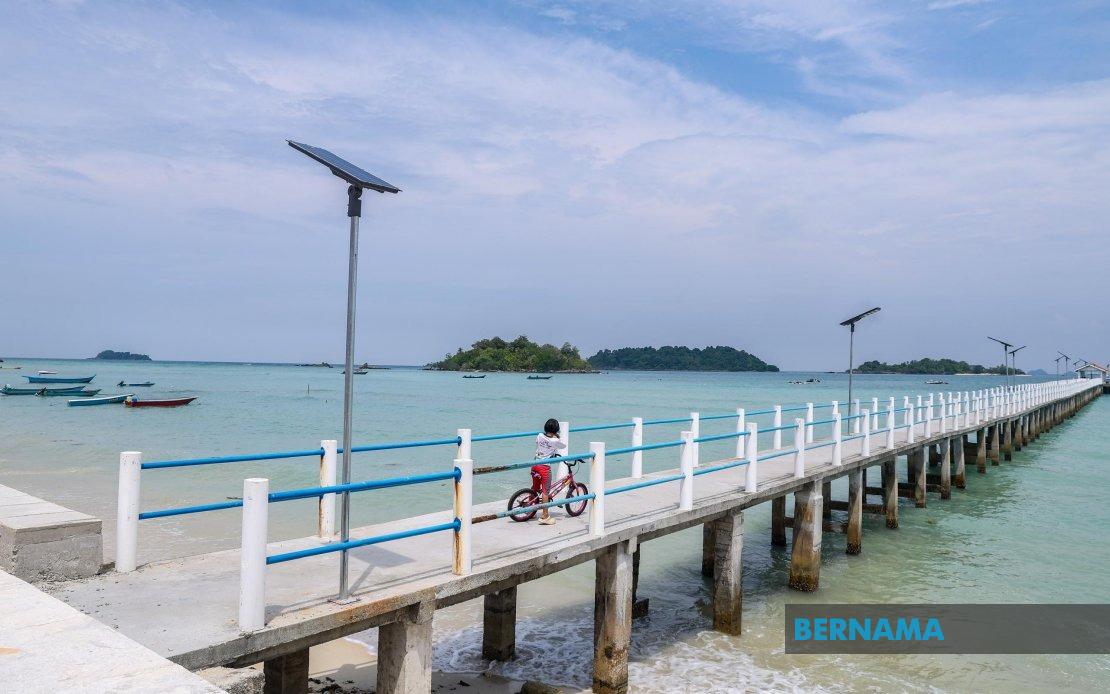
The Kampung Pasir Panjang jetty stands as a symbol of deferred maintenance and administrative inertia. Since 2017, the facility—essential to both the island's fishing economy and its fledgling tourism sector—has deteriorated significantly, yet continues to be used by locals and visitors despite safety concerns. Rossana Hussin, the 57-year-old village head, has championed efforts to secure an upgrade, submitting formal applications to the Mersing District Office in March. The response was encouraging in principle, but progress has stalled, leaving residents in limbo. For an island where maritime access is the only reliable connection to the mainland, a functional jetty is not merely a convenience but a lifeline. Its decay sends a troubling message about the state government's capacity or willingness to maintain infrastructure in remote areas, frustrating residents who see infrastructure investment flowing more readily to urban centres.
Paralleling the jetty crisis is the housing predicament facing Kampung Tanjung Balang's B40 fishermen. Many households require urgent repairs, while others remain incomplete, leaving families living in substandard conditions. Housing assistance for low-income groups has long been a flashpoint in Malaysian politics, with competing promises from different administrations. Yet on Pulau Tinggi, where the majority of residents depend on fishing for survival, the gap between rhetorical commitment to B40 welfare and actual delivery remains stark. Rossana has advocated strongly for prioritising this assistance, framing it not as charity but as a basic investment in residents' dignity and security. The issue resonates particularly in Johor, where rural and island communities have historically felt overlooked by predominantly urban-focused development agendas.
The timing of these grievances—aired just before an election—reflects a calculated strategy by island residents to leverage the heightened attention that campaigning brings. Both the jetty upgrade and housing assistance applications received formal acknowledgement from district authorities, suggesting bureaucratic receptiveness. However, the gap between acknowledgement and implementation is where many rural initiatives falter. By framing their concerns as pending requests already submitted through proper channels, Pulau Tinggi residents are effectively asking candidates to commit to expediting approvals and releasing funds, rather than starting from scratch. This approach has proven effective in rural Malaysian politics, where voters often prioritise actionable promises over grand rhetoric.
Economic decline compounds the infrastructure challenge. Mariam Mamat, an 85-year-old resident, articulated a broader anxiety afflicting the island: demographic erosion driven by limited employment opportunities. Young people have steadily migrated to urban areas and Felda schemes seeking stable livelihoods, hollowing out the community. Tourism revitalisation has been mooted as a partial solution, yet without basic infrastructure like a functional jetty, the island cannot effectively market itself as a destination. This vicious cycle—poor infrastructure discouraging investment, which in turn discourages youth from staying—has trapped many rural Malaysian communities in slow decline. Pulau Tinggi's predicament reflects a nationwide challenge: how to retain populations in peripheral areas when economic incentives systematically favour centralisation.
The 2.7 million eligible voters participating in Saturday's Johor election will determine control of 56 state seats, including Tenggaroh, which encompasses Pulau Tinggi. The outcome will shape resource allocation and political priorities for the next five years. For island residents, the election represents a critical juncture to reset expectations with new representatives. Whether incoming lawmakers prove responsive to such specific, geographically isolated demands remains uncertain. Johor's political history shows that once campaigns conclude, attention often shifts away from small communities, leaving local grievances unresolved. Residents are acutely aware of this pattern, which explains their determination to secure public acknowledgement of their concerns from candidates before votes are counted.
The Pulau Tinggi case illuminates broader tensions within Malaysian federalism and local governance. Island and remote communities often fall into administrative grey areas, where responsibility for maintenance and development becomes diffused across district, state, and federal agencies. Jetty maintenance might fall under Mersing District, while housing assistance could involve state-level schemes and federal B40 programmes. This fragmentation creates opportunities for bureaucratic buck-passing. Residents must navigate multiple authorities, submit applications through various channels, and wait for coordination that frequently never materialises. Streamlining such processes—assigning clear ownership of infrastructure projects and housing schemes to specific agencies with dedicated budgets—would address not merely Pulau Tinggi's problems but a systemic weakness affecting rural Malaysia broadly.
The election offers an opportunity for substantive discussion about rural development beyond photo opportunities and ribbon-cutting ceremonies. Johor's political landscape has shifted significantly in recent years, with power alternating between coalitions. Incoming representatives, regardless of party affiliation, would be wise to demonstrate early responsiveness to peripheral communities. Pulau Tinggi's residents are not asking for grand transformation but for baseline governance: a safe jetty and habitable housing. Meeting such modest demands would build credibility and signal genuine commitment to inclusive development. Conversely, dismissing these concerns as too minor or too geographically insignificant would validate residents' fears that remote communities remain perpetually marginalised.
The jetty and housing issues, while specific to Pulau Tinggi, carry implications for how Johor approaches rural governance more broadly. The state has substantial fishing communities, agricultural regions, and island settlements, many facing similar infrastructure deficits and economic stagnation. How the incoming government prioritises Pulau Tinggi's concerns will set a tone for its broader rural development philosophy. A responsive approach could signal that even the smallest communities merit serious attention. Conversely, further delays would suggest that electoral promises to rural voters carry less weight once campaigns conclude. For residents of Pulau Tinggi, Saturday's election is not merely a civic exercise but a test of whether democratic processes can actually deliver material improvements to their lives.

