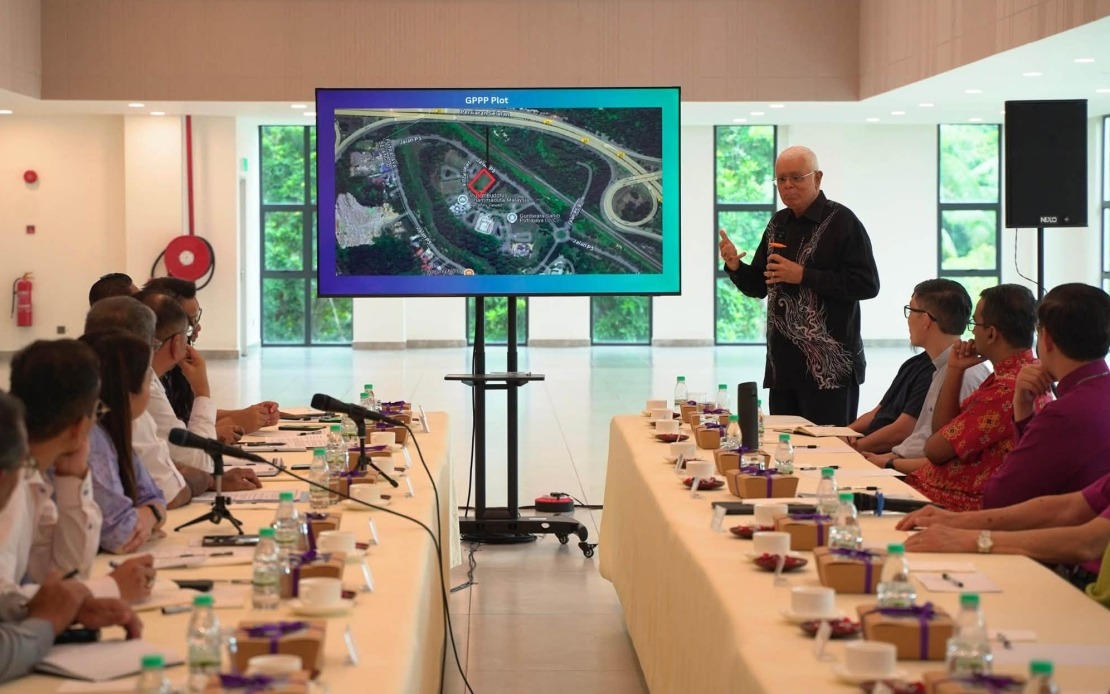
Malaysia's federal government has been systematically developing Putrajaya's Precinct 20 as a dedicated zone for non-Muslim religious facilities since 2013, according to National Unity Minister Datuk Aaron Ago Dagang. The strategic initiative reflects a broader commitment to ensuring that urban development in the capital territory accommodates the spiritual needs of Malaysia's religiously diverse population while promoting peaceful coexistence among different faith communities.
The designation of Precinct 20 represents more than mere land allocation. It embodies a deliberate policy choice to embed religious pluralism into the physical design of Malaysia's administrative centre. By reserving specific precincts for interfaith facilities, planners have created a model for how modern Malaysian cities can accommodate religious expression without relegating minority faiths to peripheral locations. This approach contrasts sharply with earlier urban development patterns that often left non-Muslim communities to navigate accommodation challenges independently.
Aaron framed the initiative within the broader context of Putrajaya's Structure Plan 2050, specifically Policy 17, which articulates a vision of the federal territory as an inclusive, compassionate community. The minister emphasised that systematic planning for diverse religious needs represents not merely technical urban design but a statement of values regarding how Malaysia's multicultural society should function. The allocation of prominent, planned sites for various faiths demonstrates official recognition that religious pluralism strengthens rather than threatens social cohesion.
The government's approach aligns with the Harmoni MADANI initiative launched by the National Unity Ministry in 2024. This framework, which emphasises understanding, respecting, accepting, and celebrating Malaysia's multireligious character, provides the philosophical foundation for initiatives like Precinct 20's development. By connecting infrastructure planning to national unity programmes, policymakers are signalling that religious harmony requires both structural support and cultural commitment.
Currently, Precinct 20 hosts the Prince of Peace Church, which recently became operational, and the Dhammaduta Malaysia Buddhist Centre, which has functioned since 2023. The landscape of faith communities in the precinct continues to expand. Construction is advancing on the Gurdwara Sahib Putrajaya, the Dewi Sri Lalithaambigai Alayam temple, and the San Qing Taoist Temple. Additionally, plans remain in place for a Roman Catholic church, indicating the diversity of denominations finding space within this single precinct. This breadth of representation—spanning Christian, Buddhist, Hindu, Sikh, Taoist, and Catholic traditions—positions Precinct 20 as genuinely representative of Malaysia's religious tapestry.
The emergence of this interfaith precinct carries particular significance for Southeast Asia, where rapid urbanisation often creates tensions between development and religious accommodation. Putrajaya's model demonstrates that religious pluralism can be integrated proactively into urban planning rather than addressed reactively through ad hoc solutions. This approach offers lessons for other rapidly developing cities across the region grappling with similar demographic and religious diversity challenges.
For Malaysian religious minorities, the initiative addresses longstanding concerns about equitable access to prime urban land and adequate facilities. Rather than forcing non-Muslim communities to fund expansion or relocation in response to urban pressure, planned provision acknowledges religious infrastructure as a legitimate component of public resource allocation. This recognition carries psychological and practical implications for communities whose institutions have historically operated in less visible or accessible locations.
The concentration of diverse places of worship within a single precinct also creates infrastructure for interfaith dialogue and mutual understanding. When communities occupy shared urban space designed for interaction and exchange, opportunities naturally emerge for deeper engagement across faith boundaries. Beyond individual worship spaces, the integrated planning of Precinct 20 anticipates shared facilities, perhaps recreational areas, parking, and administrative infrastructure that would facilitate community interaction and cooperation.
The minister's announcement reflects ongoing government efforts to position religious harmony as a cornerstone of national identity. As Malaysia navigates competing pressures of rapid development, demographic change, and globalisation, initiatives that embed pluralism into fundamental infrastructure become increasingly significant. Precinct 20 stands as tangible evidence of this commitment, transforming abstract policy objectives into concrete facilities where communities can practise their faiths with dignity and equality.
The timeline extending back to 2013 underscores that this approach represents sustained, deliberate policy rather than a recent or reactive measure. Over more than a decade, government entities have coordinated land provision, infrastructure development, and regulatory frameworks to support this vision. Such continuity, spanning multiple administrations and policy cycles, suggests genuine institutional commitment to maintaining these provisions regardless of shifting political circumstances.
As Precinct 20 develops further and additional faith communities establish their institutions within this space, the precinct will likely evolve into a destination for interfaith learning and dialogue. Religious scholars, community leaders, and ordinary citizens may increasingly utilise the precinct as a space for understanding religious diversity and exploring common ground across faith traditions. This secondary function—as a centre for religious understanding rather than merely discrete worship spaces—amplifies the initiative's potential impact on Malaysian society.
The success of Putrajaya's model will ultimately depend on sustained investment in supporting infrastructure, protection of allocated sites from competing land uses, and facilitation of genuine interfaith engagement opportunities. For other Malaysian cities and regional governments observing this development, Precinct 20 offers a blueprint for how inclusive urban planning can advance national unity while respecting the authentic spiritual needs of religiously diverse populations.

