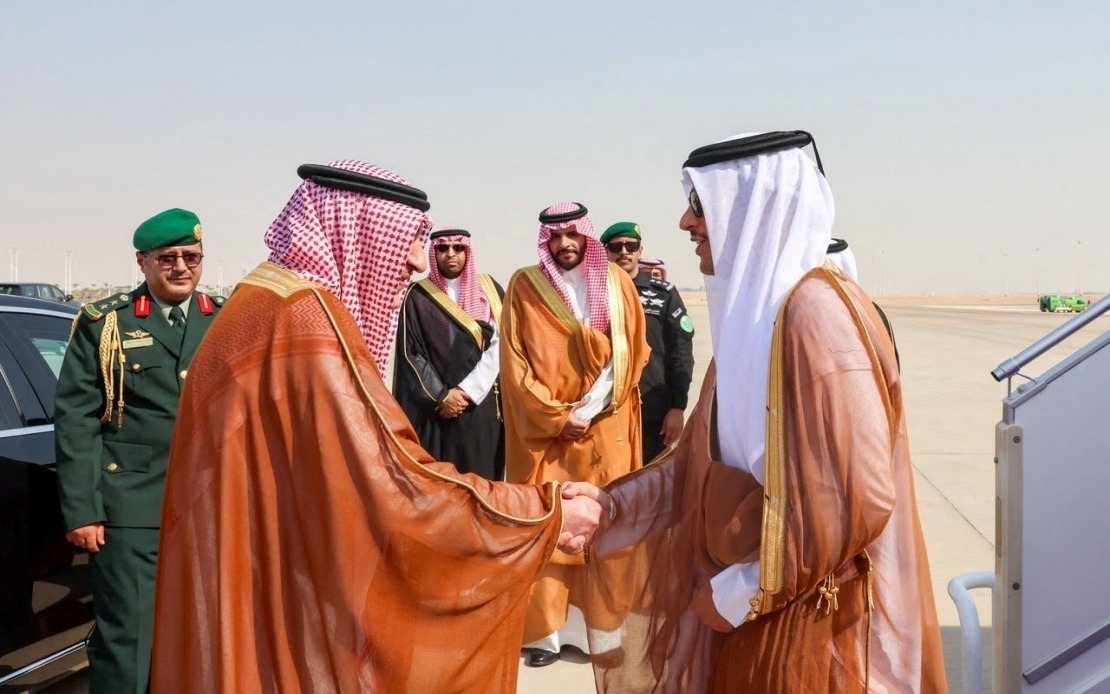
Qatar's Prime Minister Sheikh Mohammed bin Abdulrahman bin Jassim Al Thani touched down in Riyadh on Wednesday for a state visit centred on advancing diplomatic channels between two of the Gulf's most influential players. The high-level engagement signals renewed commitment from both nations to address mounting tensions that have defined the region's security landscape in recent months, with officials prioritising dialogue and cooperative frameworks over confrontation.
During his time in the Saudi capital, Sheikh Mohammed convened with Saudi Foreign Minister Faisal bin Farhan to examine the bilateral relationship and canvas broader regional developments. According to Qatar's Foreign Ministry, their discussions encompassed concrete "diplomatic efforts to de-escalate tensions and enhance security and stability" — language suggesting both governments view the current environment as requiring urgent, coordinated intervention rather than passive observation of unfolding events.
The formal statements emerging from their talks emphasise a shared philosophical approach: both nations reaffirmed their commitment to resolving disputes through diplomatic channels rather than military or coercive measures. This rhetorical alignment carries particular weight given the historical mistrust between Gulf states and the competing interests that have fractured regional unity. The emphasis on peaceful resolution reflects growing recognition that the costs of escalation — economically, strategically, and in terms of civilian suffering — exceed the benefits any single actor might achieve through confrontation.
A key dimension of their conversation focused on synchronising regional and international efforts to prioritise sustained dialogue. This language indicates that Qatar and Saudi Arabia recognise the necessity of building broader coalitions rather than pursuing bilateral solutions in isolation. The reference to "international efforts" hints at engagement with external powers — likely including mediation attempts by friendly nations and multilateral organisations concerned with Gulf stability. For Malaysian observers, this underscores how Gulf affairs increasingly involve global stakeholders, affecting international oil markets, trade routes, and security architecture that have downstream implications for Southeast Asia.
Maritime security emerged as a specific concern, with both delegations stressing the importance of safeguarding navigation through the Arabian Gulf and Red Sea. These waterways constitute critical arteries for global commerce, with enormous volumes of petroleum and containerised cargo transiting daily. Disruptions to shipping — whether from military actions, drone attacks, or blockades — reverberate across international supply chains and energy markets. The emphasis on "ensuring trade flows" reflects pragmatic recognition that economic disruption strengthens hardline voices and undermines diplomatic initiatives.
Shakh Mohammed's dual role as both Prime Minister and Foreign Minister underscores Qatar's strategic investment in this engagement. His personal involvement signals that the discussions carry weight beyond routine diplomatic machinery. Upon arrival, he was received by Saudi Deputy Foreign Minister Waleed bin Abdulkarim Al-Khereiji, a courtesy that acknowledges the visit's significance while suggesting the Saudis sought to balance the protocol gestures without overcommitting to particular outcomes before substantive talks concluded.
The timing of this visit occurs against the backdrop of escalating Iran-United States tensions that have reverberated throughout the Gulf system. Saudi Arabia's longstanding alliance with Washington positions Riyadh as Washington's primary regional partner, while Qatar maintains a more calibrated diplomatic posture. This difference in alignment creates space for Qatar to function as an intermediary voice, potentially bridging positions and exploring compromise frameworks that might prove acceptable across dividing lines. Such mediation roles require careful management to maintain credibility with multiple constituencies.
Regional tensions have intensified considerably in recent years, encompassing confrontations over nuclear ambitions, proxy conflicts in Yemen and Syria, maritime disputes, and ideological competition for regional influence. The scale and complexity of these challenges exceed what bilateral arrangements alone can resolve, necessitating multilayered diplomatic engagement and sustained high-level attention. Both Qatar and Saudi Arabia recognise that allowing tensions to spiral unchecked risks triggering broader conflicts with unpredictable consequences.
For Southeast Asian nations, developments in the Gulf carry genuine significance. Many Southeast Asian countries maintain economic ties with Gulf states, rely on Gulf energy supplies, and operate shipping interests in these waters. Sustained instability in the region could disrupt trade, elevate energy prices, and create security challenges that extend beyond the immediate area. Malaysia's own navigation of Gulf affairs — balancing commercial interests, diplomatic relationships, and security concerns — makes understanding these high-level engagements directly relevant to national interests.
The Qatari Foreign Ministry's statement notably avoided providing specifics about the visit's duration, suggesting either ongoing negotiations or deliberate ambiguity regarding next steps. This withholding of detail may indicate that discussions remained fluid or that both parties preferred to control the narrative around specific commitments until internal consultations concluded. The absence of a predetermined endpoint also allows flexibility for additional meetings or follow-up engagements should circumstances warrant.
Beyond the formal statements, this visit represents a broader trend of intensified diplomatic activity aimed at preventing further escalation in the Gulf. The convergence of Qatari and Saudi efforts on de-escalation suggests that even states with competing regional interests recognise the existential importance of maintaining communication channels and exploring negotiated solutions. Such engagement, though incremental, creates conditions where crises might be managed before spiralling into open conflict.
The visit underscores that regional stability in the Gulf remains contingent on sustained diplomatic investment, multilateral cooperation, and willingness from key players to prioritise shared interests in security and prosperity. Whether these discussions yield tangible results in reducing tensions or constitute another iteration of dialogue without breakthrough outcomes will become apparent through subsequent developments in regional affairs and the actions of external powers involved in Gulf dynamics.

