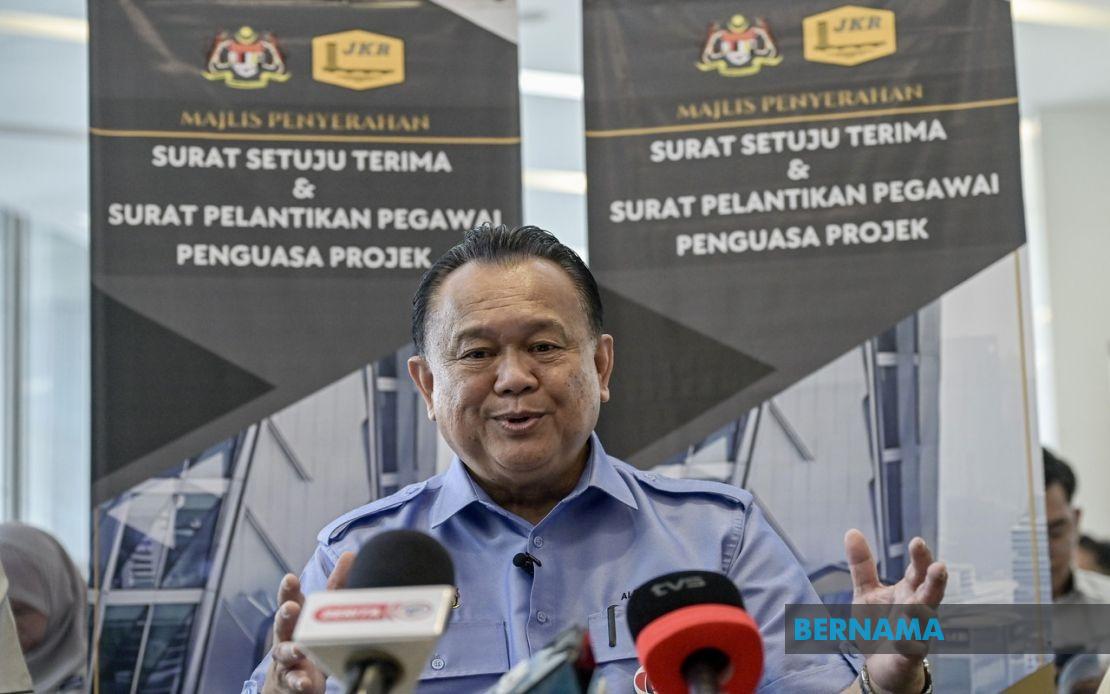
Works Minister Datuk Seri Alexander Nanta Linggi has drawn a sharp distinction between genuinely efficient project delivery and apparent speed that masks underlying problems. Speaking after launching the Perak police contingent headquarters construction scheme in Kuala Lumpur, he emphasised that the Public Works Department cannot claim success by finishing projects ahead of schedule if other critical dimensions suffer in the process. The minister's intervention reflects growing concern within Malaysian government circles about hollow victories—projects completed on time but plagued by quality defects or cost overruns that ultimately classify them as troubled ventures.
The distinction Nanta articulated challenges conventional thinking about infrastructure delivery. Many procurement systems and contractor incentive schemes reward early completion, sometimes inadvertently encouraging shortcuts that compromise durability or create future maintenance burdens. The minister instead called for a holistic approach where three variables must align: the contractually agreed timeline, the budgeted cost, and specified quality benchmarks. Only when all three parameters are satisfied simultaneously can a project genuinely be considered ahead of schedule or well-executed. This reframing suggests that the Public Works Department recognises how premature handovers or quality issues can transform apparent successes into long-term liabilities for the government and taxpayers.
To enforce this philosophy, the Ministry of Works and JKR have implemented key performance indicators specifically targeting what officials term "sick projects"—those experiencing severe delays, abandonment, or quality failures. According to Deputy Minister Datuk Seri Dr Ahmad Maslan, the proportion of troubled projects under JKR supervision has declined to 4.13 per cent, down from five per cent previously. The improvement represents 36 problematic ventures out of 871 currently under construction, suggesting that systematic monitoring and standardised operating procedures are beginning to yield measurable results. The ministry has also established formal guidelines and standard operating procedures to enhance oversight throughout implementation phases, recognising that intervention during construction is far more cost-effective than remediation afterwards.
The Perak police contingent headquarters and associated housing complex exemplifies the scale of projects now subject to these stricter standards. Located in Bandar Meru, Ipoh, adjacent to Bulatan Sultan Azlan Shah, the RM366 million development will occupy a 25-hectare site and take 42 months to complete, with handover scheduled for February 2030. The contractor, Serada Realty Sdn Bhd, must therefore deliver a complex security installation and residential facility according to specifications while managing a substantial budget and adhering to the agreed schedule. This project, classified as strategically important to the Ministry of Home Affairs, will test the government's commitment to enforcing the triple standard of schedule, cost, and quality.
The replacement of the existing Perak police complex reflects a common challenge facing Malaysian infrastructure systems: ageing facilities that have exhausted their economical lifespan. The current installation, now 58 years old, has deteriorated significantly and would require prohibitively expensive rehabilitation to bring up to modern standards. New construction, though capital-intensive, represents better value than attempting to renovate a structurally compromised building. Beyond the immediate facilities upgrade, the ministry projects that the new headquarters will enhance operational effectiveness through improved coordination and control capabilities, potentially reducing the crime index in Perak by approximately five per cent annually while cutting police response times from 15 minutes to ten minutes.
The emphasis on superintendent officers, who oversee day-to-day progress, indicates that the government recognises supervision quality as critical. Nanta specifically urged these officials to proactively monitor site activities, identify emerging problems, and implement corrective measures swiftly before issues cascade or create schedule pressure. This approach contrasts with retrospective inspection-based systems that identify defects only after substantial work has been completed. By positioning the superintendent officer as an active stakeholder rather than a passive auditor, the ministry attempts to embed quality assurance throughout the construction process rather than treating it as a final acceptance step.
The RM366 million Perak project also carries symbolic weight for the government's broader infrastructure agenda. Large, complex projects involving both police facilities and housing components demonstrate the coordination required across multiple agencies and the public-private partnership model now common in Malaysian development. Serada Realty's selection as developer obligates the company to navigate both residential market expectations and security sector requirements—a combination that demands technical expertise, financial stability, and operational integrity throughout a 42-month execution window.
For Malaysian contractors and project managers, Nanta's comments signal a policy shift away from treating schedule acceleration as the primary success metric. This recalibration may initially slow project initiation if contractors price bids more conservatively to ensure quality and cost compliance, but it should reduce the burden of rectification works and warranty disputes that currently consume government resources. The minister's insistence that contractors carry out their obligations "with full integrity, responsibility and commitment" reflects concern that some firms view early completion bonuses as offsetting the financial impact of later quality disputes.
The declining percentage of sick projects, if sustained, would validate the ministry's investment in systematic oversight. However, officials recognise that the transition from project initiation to handover involves numerous variables beyond their direct control, including material supply disruptions, workforce availability, and unforeseen site conditions. The focus on standardised procedures and clear accountability mechanisms attempts to distinguish between legitimate challenges and preventable failures stemming from poor management or corner-cutting. By publicising the sick project statistics alongside new initiatives like the Perak headquarters launch, the ministry signals that governance improvements are producing tangible results.

