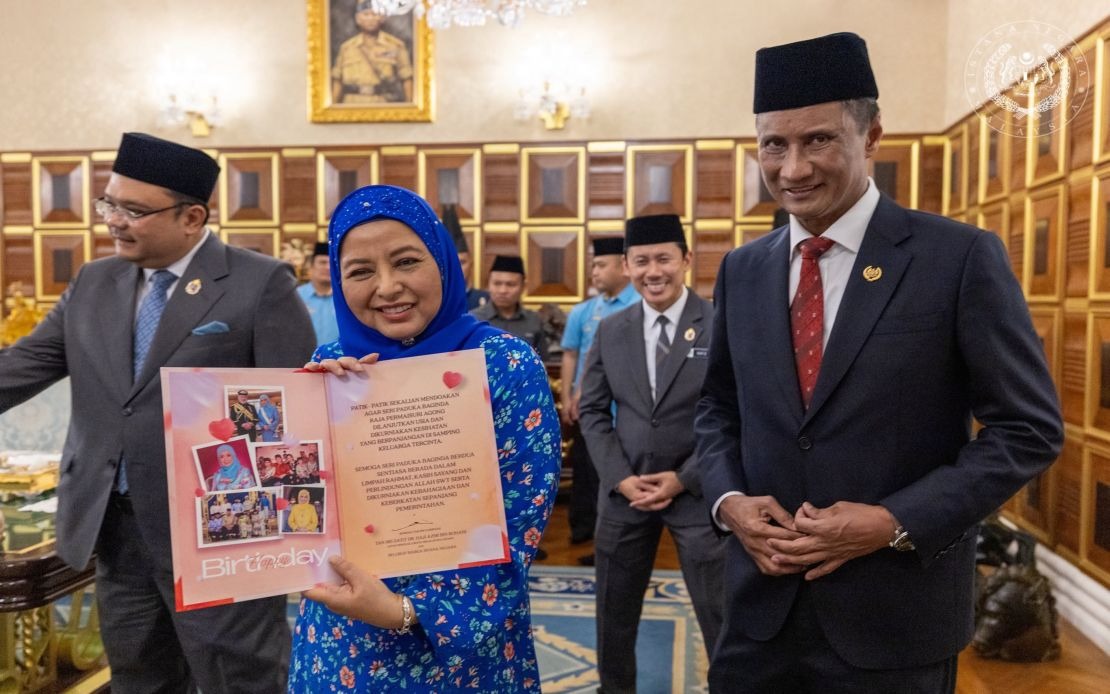
Queen Raja Zarith Sofiah marked another year with a formal ceremony at Istana Bukit Serene in Johor, when the Palace's most senior officials called to extend their birthday greetings. The encounter brought together key figures from the royal household in a tradition that underscores the institutional respect accorded to Malaysia's Queen, highlighting the ceremonial dimensions of palace life that remain central to the nation's constitutional monarchy.
The courtesy visit involved Istana Negara Comptroller of the Royal Household Tan Sri Dr Azmi Rohani and Datuk Paduka Maharaja Lela (Grand Chamberlain) Datuk Azuan Effendy Zairakithnaini, two appointments that represent the highest administrative positions within the palace infrastructure. These roles carry significant responsibility for the day-to-day operations of the royal residence and the coordination of official functions, making their personal attendance at such occasions a gesture laden with symbolic meaning. The presence of Puan Sri Dr Noor Azizah Abdul Latif, wife of Azmi, added further formality to the proceedings.
The meeting took place within the walls of Istana Bukit Serene, the royal residence located in Johor, which has served as an important ceremonial space for the Johor royal family. This venue choice is particularly significant given Sultan Ibrahim Sultan Iskandar's position as the current Yang di-Pertuan Agong, Malaysia's constitutional monarch. The decision to mark the occasion at this specific location underscores the interconnected nature of Malaysia's federal and state-level royal institutions, where the personal connections between the reigning monarch and the Johor palace remain institutionally significant.
The formalities of the gathering included the presentation of gifts befitting a royal occasion. Her Majesty received a specially prepared cake alongside yellow glutinous rice, both offerings presented by the senior management and staff of Istana Negara. The choice of yellow glutinous rice carries cultural resonance within Malay-Muslim traditions, often associated with celebratory occasions and royal ceremonies. These gifts, while modest in material terms, represented the collective goodwill of the palace administration toward their Queen.
Tan Sri Dr Azmi Rohani, in his capacity as the senior most official present, took the opportunity to articulate formal wishes on behalf of the palace household. His conveyance of prayers and heartfelt wishes for Her Majesty's continued good health, well-being and happiness reflected the ceremonial language typical of such royal interactions. As the chief administrative officer of the palace, Azmi's remarks carried institutional weight, representing not merely personal sentiment but the formal position of the entire palace apparatus toward their Queen.
The documentation of this event through Sultan Ibrahim Sultan Iskandar's official Facebook page demonstrates how Malaysian royal institutions have adapted to contemporary digital communication channels. Social media has become a vehicle for sharing official palace moments with the broader public, democratising access to information about royal activities that might previously have remained confined to official bulletins or palace announcements. This transparency, while maintaining appropriate formality, reflects evolving approaches to royal communication in the modern era.
Malaysia's constitutional monarchy places considerable emphasis on ceremonial observance and institutional protocol. Birthday celebrations involving senior palace officials represent touchstones in the royal calendar, marking moments when formal hierarchies are acknowledged and institutional relationships reaffirmed. For the palace staff, these occasions provide opportunities to demonstrate loyalty and respect through carefully choreographed ceremonial acts. For the monarchy itself, such moments serve to reinforce the dignity and solemnity with which the institution is regarded within government and society.
The role of the Queen in Malaysia's institutional framework deserves consideration in this context. While the Yang di-Pertuan Agong holds executive constitutional authority, the Queen's position as the consort to the reigning monarch carries its own ceremonial and representational significance. Royal spouses throughout the Commonwealth maintain active schedules of charitable patronage, state visits, and ceremonial appearances, and Raja Zarith Sofiah has maintained similar commitments. The deference shown during this courtesy call reflects recognition of her position within the constitutional and social hierarchy.
The gathering of palace officials also illustrates the hierarchical structure that characterises Malaysia's royal institutions. The specific selection of officials present—the Comptroller and the Grand Chamberlain—indicates careful attention to rank and precedent. These are not merely administrative positions but roles steeped in historical tradition and constitutional significance. The formality of the occasion, from the carefully selected gifts to the official documentation and public sharing of the event, demonstrates how palace protocol continues to shape interactions even in moments of personal celebration.
For Malaysian readers and observers of the nation's constitutional arrangements, such events offer insight into the functioning of royal institutions beyond the dramatic moments of political significance that occasionally capture headlines. The regular, orderly ceremonial life of the palaces represents the underlying institutional framework within which Malaysia's monarchy operates, a framework that depends upon consistent adherence to protocol, respect for hierarchy, and recognition of the significance that ceremonial moments carry within the broader constitutional order.

