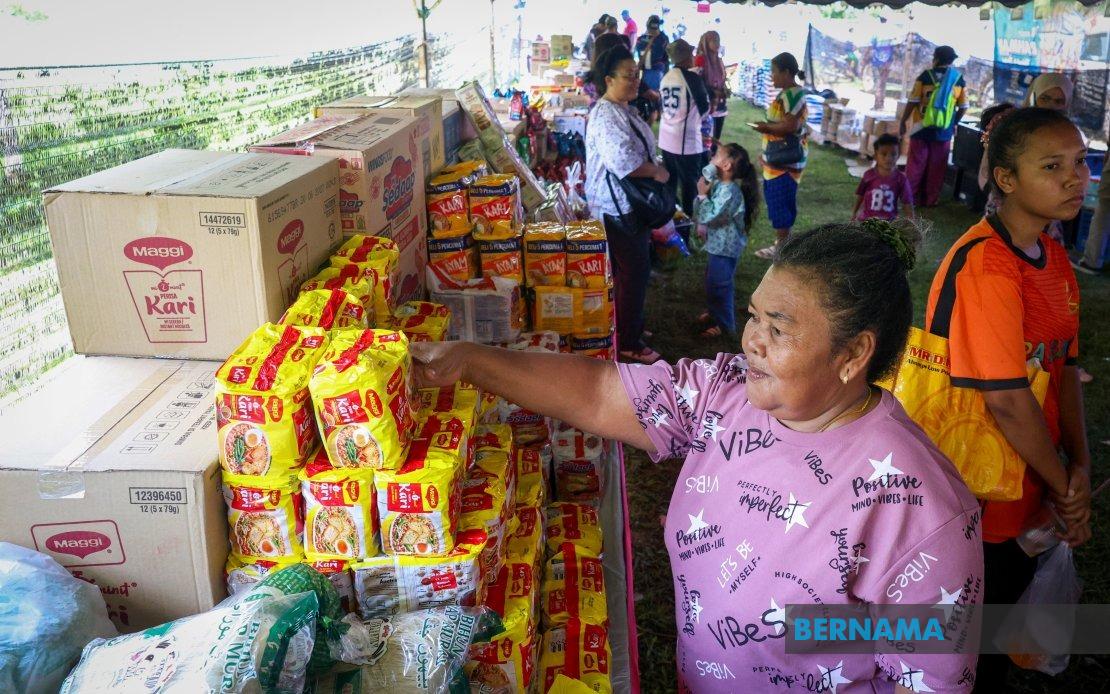
The Rahmah MADANI Sales Programme has established its presence at Pasik Resettlement Scheme in Gua Musang, bringing affordable basic commodities to more than 1,000 Temiar Orang Asli residents who previously faced significant logistical and financial barriers to obtaining essential supplies. The initiative, which allows shoppers to utilise their Rahmah Basic Contribution (SARA) credit stored in their MyKad, represents a significant expansion of the government's cost-of-living support scheme into one of Peninsular Malaysia's most geographically isolated communities.
Before the programme's arrival at Pasik RPS, indigenous residents endured arduous travel conditions to access discounted goods. Ramli Chimbong, a 51-year-old resident of Kampung Ayong, explained that purchasing necessities required a gruelling round trip to Kampung Jerek approximately two and a half hours away. Beyond the exhausting journey itself, residents bore substantial out-of-pocket expenses covering vehicle rental, meals, and incidental costs that frequently totalled RM600 or more per shopping expedition. This combination of distance and expense effectively created a significant barrier to accessing affordable goods for many families in the settlement.
The price differential between local shops and the PJRM offerings underscores why the programme's expansion matters for household budgets in this region. A nine-kilogramme bag of rice, for instance, typically retails at RM40 in village shops but sells for just RM29 through the Rahmah MADANI arrangement—a saving of nearly 28 percent on a staple commodity. For families managing on limited incomes with few economic opportunities, such price reductions accumulate into meaningful monthly savings that can be redirected toward education, healthcare, or other necessities.
SMS Maju Solution, the operator managing the Pasik RPS outlet, mobilised an inventory designed to meet the community's immediate needs. The company brought 100 categories of essential goods to the site, with particularly substantial stock of high-demand items: 300 bags of rice, 300 trays of eggs, and 300 chickens. The enthusiasm among residents was evident from the early arrival times, with shoppers beginning their purchases as early as 9 am, indicating both pent-up demand and appreciation for the convenience factor.
The financial capacity of the local population to absorb goods through the SARA credit scheme appears robust, suggesting sustained participation in the programme. According to Sabariah Mohamed Sayuti, SMS Maju Solution's owner, many residents retain substantial credit balances in their schemes, with typical amounts ranging between RM300 and RM800. Few individuals held balances below RM100, indicating that the SARA allocations have been managed prudently and remain readily available for expenditure. This credit availability removes a potential constraint on programme participation and suggests residents can make meaningful purchases without additional cash outlay.
Operating in remote terrain presents logistical challenges that operators must navigate. The journey to Pasik RPS involves traversing rocky and muddy roads, conditions that took their toll during the programme's inaugural visit when a vehicle tyre burst while transporting supplies. These infrastructure limitations, while manageable during initial operations, underscore the ongoing difficulties in maintaining regular supply chains to Malaysia's most isolated communities. Improving road conditions or establishing permanent distribution points could enhance the sustainability of such initiatives.
Nenggiri state assemblyman Mohd Azmawi Fikri Abdul Ghani framed the Rahmah MADANI expansion within the broader context of rising living costs affecting rural populations across Malaysia. He characterised the government's decision to extend PJRM into Orang Asli settlements as a targeted intervention to help vulnerable communities manage inflationary pressures. The assemblyman articulated support for further geographic expansion, calling for similar programmes to reach all Orang Asli settlements to ensure equitable access to subsidised goods regardless of location.
The programme's arrival at Pasik RPS reflects a policy approach that recognises indigenous communities as deserving beneficiaries of national cost-of-living support schemes. Orang Asli populations, scattered across Peninsular Malaysia's interior regions, often experience geographic and economic marginalisation that limits their access to government services and programmes available in urban centres. By bringing the Rahmah MADANI scheme into these settlements, policymakers address a specific equity gap in the distribution of subsidised commodities.
For Malaysian readers in urban and developed areas, this expansion illustrates how cost-of-living support mechanisms function beyond metropolitan convenience. The scheme's value becomes apparent only when considering the alternative: without PJRM, Pasik residents would continue absorbing substantial travel costs, time expenditure, and opportunity costs associated with multi-hour journeys to access affordable goods. The programme effectively redistributes the convenience of subsidised shopping to populations who face the greatest geographic constraints.
The SARA credit mechanism itself represents an innovative approach to welfare delivery, embedding purchasing power directly within resident identification systems rather than relying on cash transfers or coupon-based schemes. This approach reduces administrative overhead while ensuring that allocated credits cannot be misused for purposes outside the programme's scope. For Orang Asli communities managing limited cash incomes, the availability of SARA credit provides reliable access to essential commodities without requiring simultaneous cash availability.
Sustaining the programme's reach into remote settlements will require addressing the operational complexities evident in the Pasik experience. Road infrastructure improvements, potentially permanent establishment of distribution facilities, and coordination with local community leaders could enhance reliability and reduce logistical friction. The enthusiasm demonstrated by Pasik residents during the inaugural operation suggests strong demand that could support such infrastructure investments.
The Pasik RPS expansion also carries implications for regional development policy across Southeast Asia, where indigenous and rural populations often face similar geographic isolation from subsidised market mechanisms. Malaysia's approach of deploying national cost-of-living programmes into remote settlements offers a model that other regional governments grappling with equity in welfare distribution might examine. As inflationary pressures persist across the region, such targeted interventions become increasingly important for maintaining living standards in geographically disadvantaged communities.

