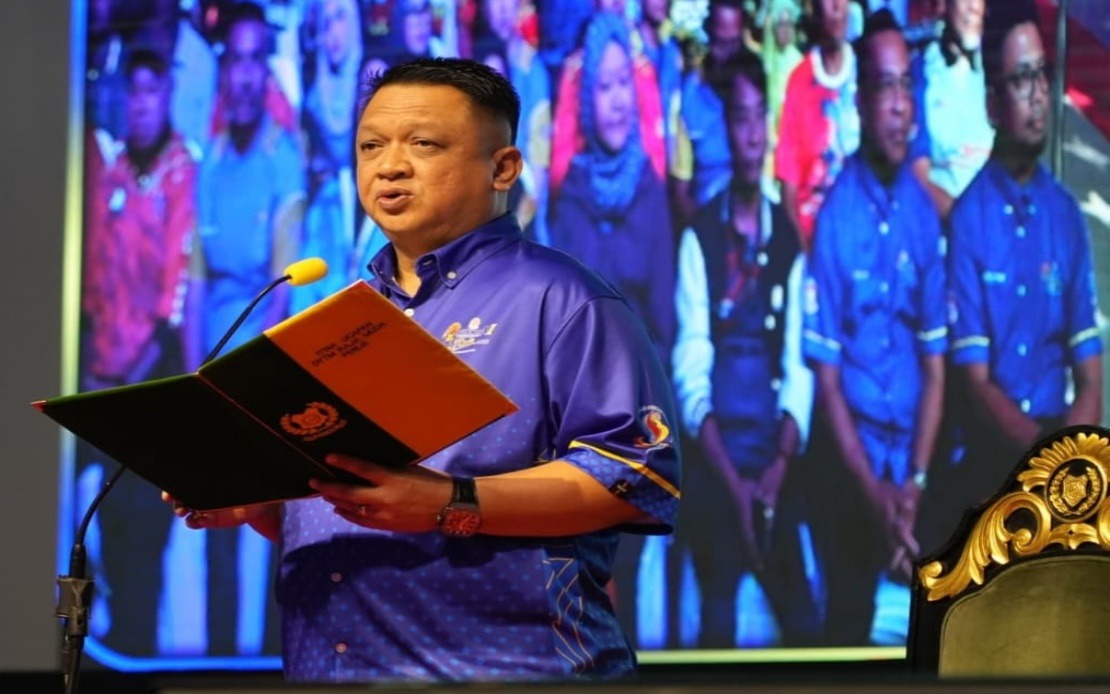
The Raja Muda of Perlis Tuanku Syed Faizuddin Putra Jamalullail has unveiled an ambitious strategic roadmap for Majlis Amanah Rakyat (MARA), the federal statutory body tasked with developing Bumiputera entrepreneurship and economic participation. Speaking at the opening of the 11th Sukan MARA Se-Malaysia (SUKMAS) in Kangar on August 30, His Royal Highness articulated three primary pillars intended to guide the organization's institutional evolution as it navigates rapid technological and market transformations affecting Malaysia's competitive landscape.
The first strategic thrust centres on technological innovation and digital adoption. Tuanku Syed Faizuddin Putra called upon MARA personnel to embrace emerging technologies, particularly artificial intelligence, as catalysts for organizational modernization rather than viewing them as peripheral tools. His emphasis on AI deployment reflects broader regional and global trends wherein Southeast Asian governments and public agencies are recognizing digital transformation as essential to maintaining institutional relevance and operational effectiveness. The framing here is notably assertive—MARA should not merely react to technological change but actively position itself as a pioneer in shaping how technology serves developmental objectives. This positioning carries significant implications for how the agency approaches its core mission of nurturing Bumiputera entrepreneurs, many of whom will compete in increasingly digitalized markets and value chains.
The second pillar directly addresses entrepreneurial capacity and market expansion. Rather than restricting MARA's developmental mandate to domestic market participation, His Royal Highness advocated for cultivating entrepreneurs with the acumen, courage, and strategic vision to penetrate international markets. This reflects a maturation in development thinking beyond import substitution or protected-market models toward export-oriented competitiveness. By emphasizing the creation of "local companies capable of competing and making their mark on the world stage," the Raja Muda signals recognition that Malaysia's long-term economic resilience depends upon building homegrown enterprises with global competitive advantage. For Malaysian policymakers and business communities, this represents an important recalibration—development initiatives must no longer concentrate solely on providing safe domestic opportunities but must equip beneficiaries to succeed in open, competitive environments.
The third strategic dimension focuses on leadership transformation and institutional culture. His Royal Highness stressed the need for MARA to cultivate leaders characterized by decisiveness, strategic thinking, and proactive transformation rather than reactive management. This speaks to persistent challenges within many development-oriented public agencies across Southeast Asia, where hierarchical structures and risk-averse cultures can inhibit innovation and adaptive capacity. The call for leaders to emerge as "catalysts and drivers of transformation" rather than followers suggests recognition that institutional culture within MARA may require fundamental recalibration to support the technological and entrepreneurial ambitions outlined in the first two thrusts.
The simultaneous hosting of SUKMAS serves as more than a sporting spectacle for MARA personnel. According to MARA director-general Datuk Seri Zulfikri Osman, the biennial tournament functions as a mechanism for institutional cohesion and community engagement. With 3,000 athletes and officials representing 14 MARA teams competing across 15 sporting events—including football, netball, volleyball, sepak takraw, and tennis—the gathering extends from August 30 through September 3. Such events within large public agencies serve psychological and organizational functions beyond their immediate sporting purpose, reinforcing institutional identity and fostering esprit de corps among dispersed personnel across Malaysia's 14 states.
The choice of Kangar as venue, with the Raja Puan Muda of Perlis Tuanku Dr Hajah Lailatul Shahreen Akashah Khalil in attendance alongside senior MARA leadership, underscores the significance Perlis places on the organization's trajectory. For readers in the state, this represents visible royal engagement with developmental institutions, a recognition that Perlis's economic prospects remain bound to the success of federal programs designed to expand Bumiputera participation in commerce and industry.
From a broader Southeast Asian perspective, MARA's strategic reorientation toward technology and international competitiveness reflects adaptations occurring across the region's development-focused institutions. Indonesia's cooperative system, Thailand's SME initiatives, and Vietnam's entrepreneurship programs face similar pressures to modernize beneficiary support mechanisms. The emphasis on AI and digital tools suggests Malaysian institutions are not insulating themselves from global technological trends but rather attempting to harness them in service of equity objectives—a challenging balance that other regional policymakers monitor closely.
The three-thrust framework also implicitly acknowledges limitations of purely subsidy-oriented development models that characterized earlier eras of MARA's operations. Modern entrepreneurship development prioritizes capability building, market exposure, and strategic thinking over protected-market arrangements. This philosophical shift, evident in the Raja Muda's pronouncements, aligns MARA's thinking with contemporary development economics emphasizing competitiveness and sustainable enterprise building rather than dependency-creating patronage systems.
For Malaysian businesses, particularly Bumiputera entrepreneurs and enterprises, these strategic directions carry practical implications. MARA's commitment to technological integration suggests that training programs, financing instruments, and advisory services will increasingly incorporate digital and AI-related components. The emphasis on international market penetration may result in expanded support for export development, supply chain integration into regional networks, and market intelligence provision.
The simultaneous emphasis on leadership transformation suggests that MARA's institutional culture will undergo scrutiny and potential restructuring. Personnel recruitment, training pathways, and promotion criteria may increasingly prioritize adaptability, innovation orientation, and strategic foresight over traditional civil service norms. This carries implications for how MARA attracts and retains talent, particularly younger professionals comfortable operating within technology-rich environments.
Historically, MARA has demonstrated capacity to evolve its programs and priorities in response to changing economic circumstances. The current strategic articulation by the Raja Muda of Perlis appears calibrated to position the organization for relevance across the next decade of Malaysia's development trajectory. Whether these ambitious directions translate into concrete institutional changes and meaningful improvements in beneficiary outcomes will depend upon implementation fidelity, resource allocation, and organizational commitment—factors that extend well beyond rhetorical endorsement from royal patrons and senior leadership.

