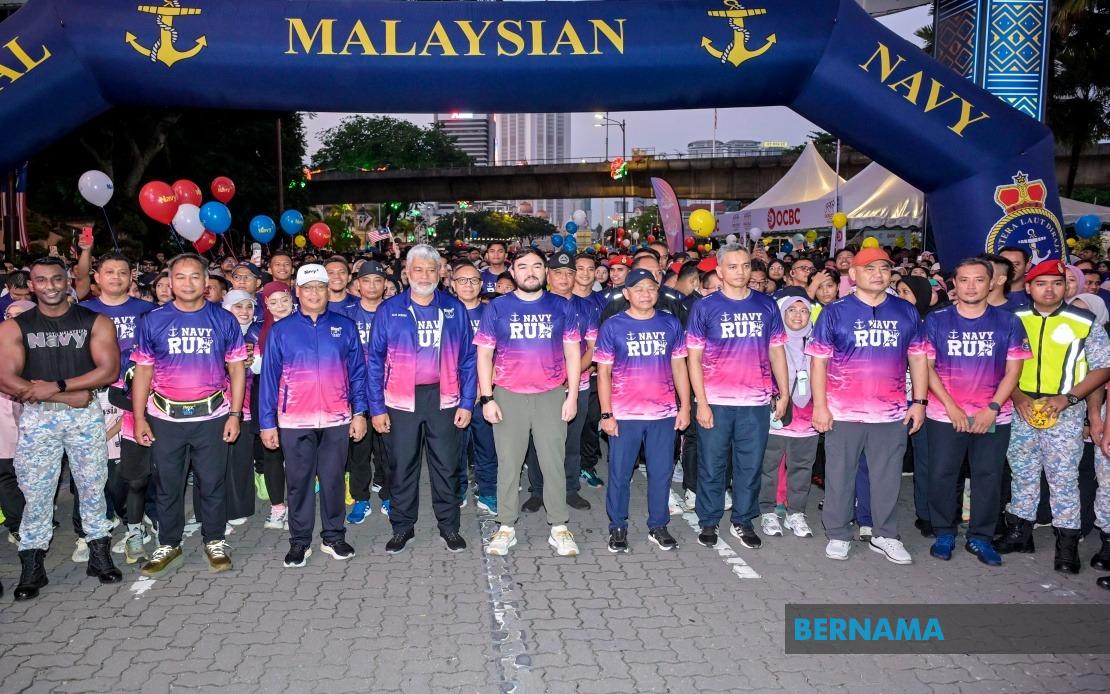
The Raja Muda of Selangor, Tengku Amir Shah Sultan Sharafuddin Idris Shah, officially launched Navy Run 2026 at Dataran DBKL in Kuala Lumpur, marking a significant milestone for Malaysia's premier civil-military engagement initiative. The event attracted a record-breaking 15,000 participants across the capital, underscoring the growing public enthusiasm for the annual seven-kilometre fun run that has become a cornerstone of the Royal Malaysian Navy's community outreach efforts since its debut in 2023.
The royal patron's active participation in the race itself—completing the full distance alongside ordinary Malaysian citizens—sent a powerful signal about the accessibility and inclusive nature of the event. This was the fourth edition of Navy Run, demonstrating consistent growth and institutional commitment to bridging the gap between military personnel and civilian society. The presence of Admiral Tan Sri Dr Zulhelmy Ithnain, the RMN's top leadership, reinforced the navy's serious investment in the programme as a strategic communications and recruitment tool.
Beyond the main event in Kuala Lumpur, the Navy Run 2026 expanded geographically through simultaneous participation by naval personnel stationed across the country. RMN bases in Lumut, Kuantan, and Kota Kinabalu held coordinated activities, with live streaming connecting participants nationwide. This distributed approach reflects modern military thinking about maintaining morale and fostering institutional pride across dispersed operational commands while maximising media reach and public awareness.
The running programme served as the centrepiece for a broader festival celebrating maritime defence and national service. Local government representatives, including Kuala Lumpur Mayor Datuk Fadlun Mak Ujud, participated alongside private sector partners like Lumut Naval Shipyard Sdn Bhd, whose chief executive officer Azhar Jumaat was present. This multi-stakeholder participation demonstrates how major public events increasingly require coordination across government tiers, uniformed services, and commercial entities.
The RMN's official messaging around Navy Run 2026 framed the initiative as far more than recreational exercise. Military leadership characterised the event as embodying values of national unity and fostering trust between the armed forces and the Malaysian public. In an era when military institutions in developing nations sometimes struggle with public perception and recruitment, such direct engagement activities serve critical strategic purposes beyond their surface appearance.
According to RMN's statement, the event cultivated patriotic sentiment and reinforced public understanding of naval operations and defence priorities. This messaging acknowledges a fundamental challenge facing any military organisation in a democracy: maintaining public support, attracting quality recruits, and ensuring civilian populations understand the institution's relevance to national security. For Malaysia, where conscription does not exist and military service relies entirely on voluntary recruitment, community engagement events carry particular weight.
The supporting programme enhanced the event's appeal to diverse demographics. An aerobics session provided activity for participants seeking lighter exercise options, while the RMN Central Band delivered musical performances that added ceremonial grandeur and cultural richness. A silent drill display—a staple of military exhibitions worldwide—showcased the discipline and coordination that characterise professional armed forces, providing educational value for civilians unfamiliar with military training standards.
The on-site career exhibition represented the most utilitarian element of Navy Run 2026, allowing recruiters direct access to thousands of physically active, health-conscious Malaysians who might qualify for naval service. Young participants particularly represent a valuable target demographic for military recruitment, and events like this generate awareness about career opportunities in maritime defence that might not otherwise reach their attention through conventional advertising channels.
The lucky draw component added an entertainment factor that encouraged participation from casual runners seeking modest prizes beyond the satisfaction of fitness activity and patriotic engagement. This combination of health promotion, entertainment, community engagement, and institutional messaging reflects sophisticated event management thinking that acknowledges diverse participant motivations.
For Malaysian defence and security observers, Navy Run 2026's record turnout suggests sustained public interest in civil-military cooperation and defence-related activities. The event's growth from its 2023 inception indicates that such programming meets genuine public appetite for accessible engagement with national institutions. The geographic expansion to multiple naval bases nationwide suggests RMN leadership views the programme as sufficiently valuable to justify resource allocation across disparate command areas.
The royal patronage provided by the Raja Muda, particularly his personal participation rather than mere ceremonial presence, elevates Navy Run's status within Malaysia's institutional hierarchy. Royal involvement in military events carries historical and cultural significance in Malaysia's constitutional monarchy system, signalling institutional legitimacy and national importance. This level of royal engagement likely contributed to the record attendance figures.
Looking forward, Navy Run 2026's success may encourage other Malaysian military and security institutions to develop comparable community engagement programmes. The RMN has effectively demonstrated that well-executed public events can simultaneously serve recruitment, morale, public relations, and patriotic education objectives. As Southeast Asian nations grapple with modernising defence capabilities while maintaining democratic legitimacy, such multifunctional public engagement becomes increasingly strategic.

