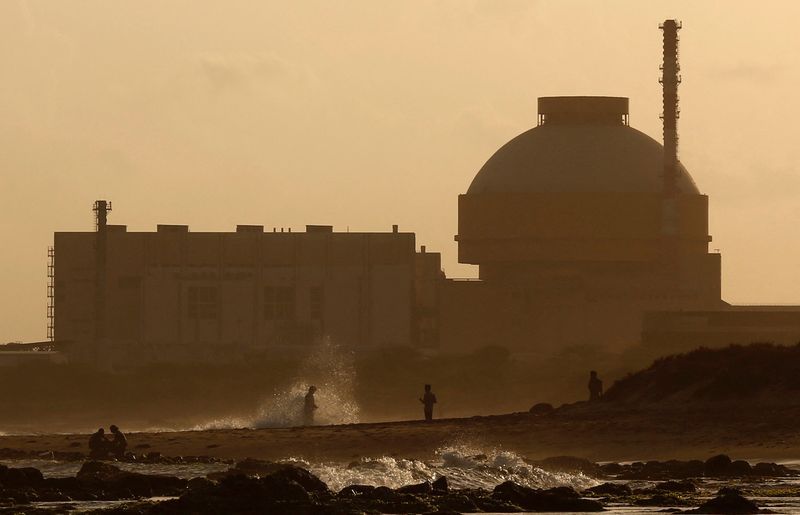
A ransomware syndicate known as World Leaks has published a substantial collection of confidential documents tied to the Kudankulam Nuclear Power Plant, India's premier atomic energy installation, on underground forums accessible only through specialised networks. The breach, attributed to a contractor working on the facility, includes what purport to be technical blueprints, supplier information, and operational records spanning nearly a decade. This incident underscores a mounting pattern of security lapses affecting India's nuclear sector and raises significant implications for regional stability and energy security across South and Southeast Asia.
The Kudankulam plant, situated in Tamil Nadu in southern India, represents a cornerstone of Prime Minister Narendra Modi's push to substantially expand India's atomic energy generation capacity. As the country's largest nuclear installation among seven operational facilities, it symbolises New Delhi's commitment to low-carbon energy expansion amid rapid industrialisation. The site currently comprises operational units and two additional reactors under construction, with Units 3 and 4 scheduled to commence operations by 2027, collectively contributing 2,000 megawatts of electrical capacity to India's grid.
Reliance Infrastructure, a subsidiary of Indian billionaire Anil Ambani's sprawling Reliance Group conglomerate, secured a contract in 2018 to engineer and construct supporting infrastructure for the two newly planned reactor units. This commercial involvement makes the group a prime target for cyber-espionage operations. Company officials acknowledged a partial compromise of their systems through a server maintained by Yotta, a third-party Indian data centre operator. The statement provided scant detail regarding the scope of exposed materials, though Reliance confirmed that Indian government authorities had been notified of the compromise.
World Leaks, an established ransomware operation with a documented history of targeting multinational corporations including Nike and India's Tata Group, did not respond to inquiries about the breach. The syndicate typically publishes stolen information on the dark web after target organisations decline to meet extortion demands. In a previous operation against Tata Group in June, the gang demanded $1.5 million in exchange for suppressing confidential component designs obtained from clients including Apple and Tesla, later publishing the materials after the company refused capitulation.
Yotta's technical team detected suspicious activity on a Reliance Infrastructure server on 29 May, immediately terminating the intrusion and preventing what appeared to be ransomware activation. However, Reliance Infrastructure only informed the data centre provider in late June that external threat actors had begun circulating breach claims. Yotta stated it could not independently authenticate claims by the attackers but has shared comprehensive technical analysis with Reliance and supports ongoing investigations.
Security researchers have characterised the breach as potentially serious. According to Nickolas Roth, a senior analyst at the Nuclear Threat Initiative, an organisation advising governments on atomic security readiness, the exposed information poses genuine risks to plant safety. The leaked materials include purported technical drawings of ventilation and cooling infrastructure within Units 3 and 4, floor diagrams of central control facilities, vendor catalogues, approved supplier lists, and photographic documentation of joint Nuclear Power Corporation and Reliance inspections conducted in 2024. Critically, adversaries possessing such documentation could theoretically map supplementary systems, trace procurement chains, and identify vulnerabilities throughout the security ecosystem.
The documents further reveal that Reliance Infrastructure and the Nuclear Power Corporation jointly obtained insurance coverage providing $112 million in compensation should either new reactor unit experience a terrorist attack. This detail, now publicly available, could assist malicious actors in comprehending the institutional structures governing the facility and the financial frameworks protecting operations. While the compromised files do not appear to encompass designs for the reactors' core nuclear systems—those being supplied by Russia's state-owned Rosatom—the supporting infrastructure data proves extensively valuable for reconnaissance purposes.
The Nuclear Power Corporation of India, responsible for commissioning and operating all national nuclear installations, has maintained dialogue with Reliance regarding the breach. India's principal cybersecurity authority, the Indian Computer Emergency Response Team (CERT-In), is conducting a formal investigation. However, neither Nuclear Power Corporation Chairman Rajesh Veeraraghavan, CERT-In officials, nor the government's communications office have provided substantive public commentary. The Department of Atomic Energy and Prime Minister Modi's office similarly declined to engage with inquiries, maintaining silence on a matter touching on national security and critical infrastructure.
This breach constitutes the second publicly documented cyber-incident involving the Kudankulam facility. In 2019, malware linked to North Korean hacking groups infiltrated the plant's administrative networks, though the Nuclear Power Corporation asserted that operational systems remained uncompromised and investigations proceeded immediately. The recurrence of such incidents suggests inadequate cybersecurity maturity across India's atomic sector.
India confronts a broader cybersecurity crisis that should alarm Southeast Asian governments similarly developing nuclear capacity or reliant on Indian technology partnerships. According to cybersecurity firm Surfshark, India ranks third globally for data breaches, with 28.9 million user accounts compromised annually, surpassed only by the United States and France. A 2024 assessment by India's Data Security Council of India and cybersecurity firm Seqrite, surveying 204 organisations, revealed that 73 percent remained unaware whether they had experienced successful attacks, whilst 57 percent lacked fundamental cyber hygiene procedures. These statistics illustrate systemic deficiencies in cybersecurity awareness and implementation capacity across the Indian business and institutional landscape.
For Malaysia and other Southeast Asian nations, this episode carries troubling ramifications. As regional economies increasingly collaborate with Indian firms on infrastructure and technology projects, and as several countries explore nuclear energy development, the demonstrated vulnerabilities in India's critical infrastructure protection warrant careful scrutiny. The reliance upon third-party foreign data centre providers creates additional attack vectors beyond an organisation's direct control, a vulnerability replicated throughout the region. Malaysian policymakers, particularly those overseeing energy security and critical infrastructure protection, should examine the governance frameworks and contractual safeguards employed in comparable arrangements, ensuring that cybersecurity standards matching international best practices are mandated and enforced irrespective of contractor jurisdiction.
The exposure of Kudankulam documentation also reflects broader challenges confronting emerging economies attempting rapid nuclear expansion whilst simultaneously addressing cybersecurity capacity deficits. Nuclear facilities demand exceptionally stringent security protocols given potential consequences of system compromise. The breach demonstrates that expanded atomic capacity without proportionally strengthened cyber defences creates asymmetric risks, where technical advancement outpaces institutional protective capability. This dynamic threatens not only individual nations but potentially regional stability, should catastrophic incidents resulting from inadequate cyber-protection occur at major installations.
Reliance Infrastructure's involvement in Kudankulam expansion, combined with demonstrated security lapses, may prompt renewed scrutiny of vendor selection criteria and ongoing oversight mechanisms for nuclear projects across South Asia. Whether current safeguards prove sufficient remains uncertain. The World Leaks publication ensures that detailed intelligence regarding the facility's supplementary systems now circulates within criminal and state-sponsored hacking communities, potentially enabling future intrusions or physical security vulnerabilities previously masked.

