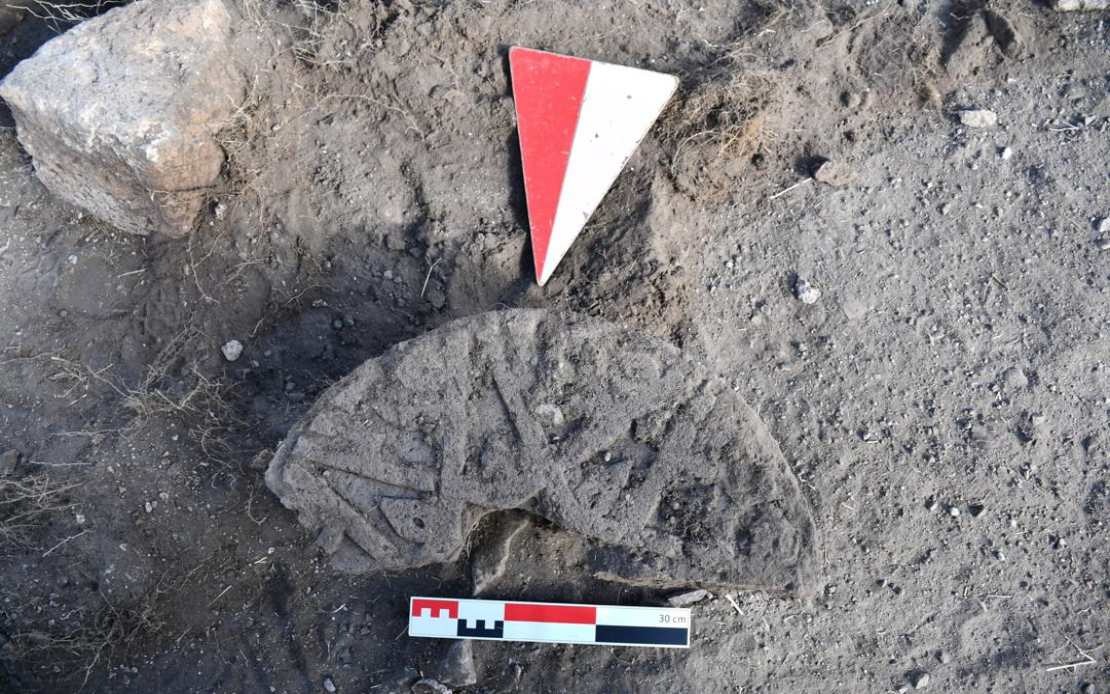
Excavations at the ancient city of Ani in eastern Türkiye have yielded a significant discovery: a stone artefact inscribed with the name of Prophet Muhammad, offering researchers fresh perspectives on the religious and cultural life of the medieval Seljuk period. Turkish Culture and Tourism Minister Mehmet Nuri Ersoy announced the find through social media on Monday, describing it as a notable addition to the archaeological record of one of the world's most important historical sites.
The stone displays an extraordinary level of craftsmanship and symbolic significance. The name of Prophet Muhammad appears six times across the surface, executed in Kufic script, the angular calligraphic form widely used in early Islamic manuscripts and monumental inscriptions. Three of these inscriptions are particularly striking, having been meticulously carved into a decorative band that encircles an eight-pointed star—a geometric pattern rich with Islamic spiritual symbolism. The precision of the carving suggests the piece held considerable importance to its creators and likely served a commemorative or devotional function.
Based on stylistic and contextual analysis, authorities believe the stone originated from a Seljuk tomb tower, a distinctive architectural feature of the medieval Islamic world. Tomb towers served not merely as burial monuments but as symbols of prestige and religious devotion, often adorned with inscriptions honouring figures of spiritual significance. The presence of multiple repetitions of the Prophet's name on this particular stone aligns with Islamic commemorative practices of the period, where religious devotion was expressed through artistic and architectural expression. The discovery deepens understanding of how Seljuk dynasties integrated Islamic faith into their monumental structures.
The artefact emerged during systematic excavations at a Seljuk cemetery that researchers have been studying since 2021. This cemetery represents a crucial archaeological layer at Ani, offering evidence of settlement patterns, burial practices, and religious customs during the Seljuk occupation. The methodical, long-term approach to excavating the cemetery has proven worthwhile, with each season yielding insights into the daily lives and spiritual beliefs of medieval inhabitants. The stone's discovery represents the culmination of patient archaeological work and underscores the value of sustained investment in excavation projects at major heritage sites.
Ani itself holds immense historical significance for understanding the broader trajectory of civilisation in the Caucasus and the broader Middle Eastern region. Situated in the province of Kars on the Turkish-Armenian border, the city functioned as a vital nexus on the ancient Silk Road, facilitating not only commercial exchange but also the movement of ideas, technologies, and religious traditions. This geographic position made Ani a natural meeting point for diverse cultures and faiths throughout its long history.
The city's trajectory reflects the shifting political landscape of the medieval world. During the 10th and 11th centuries, Ani served as the capital of the Bagratid Armenian kingdom, a period during which the city flourished as a major cultural and economic centre. Following this era of Armenian dominance, the city subsequently fell under the control of successive empires—first the Byzantine Empire, then the Seljuk Turkish dynasties, and finally the Ottoman Empire. Each period of rule left distinct architectural and cultural imprints on the city, creating a layered palimpsest of religious and artistic traditions.
The international scholarly community recognised Ani's universal historical value when UNESCO designated it as a World Heritage Site in 2016. This designation acknowledged the site's exceptional testimony to the interchange of various cultures across the Caucasus and Anatolia over more than a thousand years. The recognition also signalled commitment to preserving the site for future generations and supporting rigorous archaeological study. The discovery of the Prophet Muhammad inscription strengthens the case for comprehensive protection and continued research investment.
For Malaysian and Southeast Asian readers, Ani's history offers instructive parallels about how Islamic civilisation has coexisted with diverse religious and cultural traditions. The Seljuk period at Ani demonstrates medieval Islamic societies as dynamic, architecturally ambitious, and culturally sophisticated—characteristics that resonate with regional Islamic heritage across Southeast Asia. The discovery illustrates how monumental inscriptions served as vehicles for religious expression and community identity in the Islamic world, a practice reflected in Southeast Asian Islamic architecture and arts.
The find also underscores the importance of systematic, patient archaeological methodology in recovering lost histories. As heritage sites throughout the world face threats from climate change, development pressure, and political instability, the long-term commitment demonstrated by Turkish authorities at Ani provides a model for regional preservation efforts. Southeast Asian countries with significant archaeological sites might draw inspiration from the Turkish approach to methodical excavation and international collaboration in heritage conservation.
The inscription's prominence—appearing six times on a single ceremonial stone—suggests the profound reverence with which Islamic believers regarded the Prophet during the Seljuk period. This artistic practice of repetition served both devotional and commemorative functions, embedding religious messaging into the urban and funerary landscape. Understanding how medieval Islamic societies integrated religious expression into architecture and artefacts provides valuable context for interpreting Islamic heritage across different regions and time periods.
Future analysis of the stone will likely employ advanced techniques including digital imaging, chemical composition analysis, and comparative study with other Seljuk-period inscriptions. Such interdisciplinary approaches can unlock additional information about dating, provenance, workshop traditions, and the broader social context of the cemetery. Researchers will seek to understand whether the stone represents an isolated example of exceptional artistic patronage or part of a larger group of similar artefacts from the same period at Ani.

