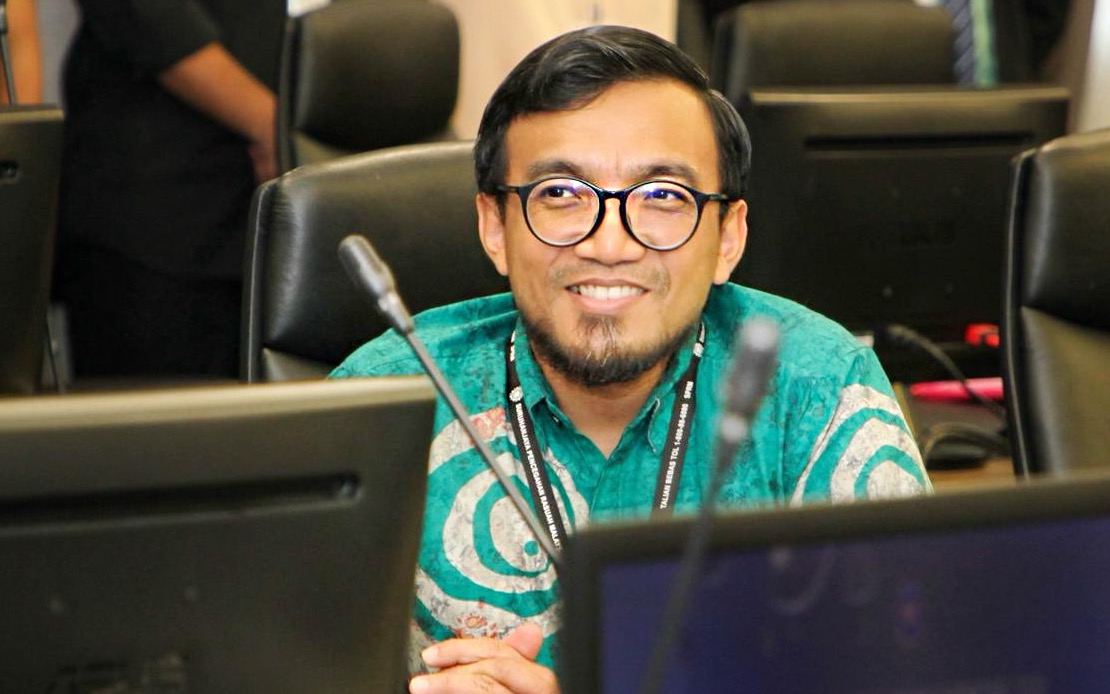
The push to reform Lembaga Tabung Haji following Royal Commission of Inquiry recommendations should extend well beyond simply meeting prescribed timelines, according to Dr Muhammad Irwan Ariffin, a lecturer in economics at the International Islamic University Malaysia's Kulliyyah of Economics and Management Sciences. Speaking on BERNAMA Radio's REAKSI programme, the economist argued that true success in institutional reform hinges on establishing measurable performance indicators that can demonstrate genuine effectiveness, rather than merely ticking boxes on implementation schedules.
The distinction matters enormously in a high-stakes context where public trust has been shaken. Tabung Haji, which manages pilgrimage savings for millions of Malaysian Muslims, had faced serious governance lapses that prompted the inquiry. Simply completing reforms by stated dates risks creating the illusion of progress without substantive improvement. Dr Irwan emphasised that consistent, regular progress reports on how recommendations are being enacted would prove instrumental in alleviating the persistent uncertainty among depositors whose confidence requires careful reconstruction.
His perspective reflects a sophisticated understanding of economic psychology that extends beyond traditional financial analysis. People's financial decisions are not shaped solely by objective economic conditions but are heavily influenced by their perceptions and expectations about institutional stability. This principle takes on particular weight when examining Tabung Haji, where the majority of depositors are ordinary Malaysians saving for the once-in-a-lifetime pilgrimage, a deeply personal and spiritually significant undertaking. Poor communication or unexplained delays in implementing promised reforms can rapidly poison the psychological environment, potentially triggering a cascade of unwarranted withdrawals based on fear rather than rational assessment.
The risk of information vacuums becoming filled by rumour and speculation is especially pronounced in Malaysia's highly connected society. When institutional communication fails, depositors naturally fill the gap with worst-case assumptions, a phenomenon that can become self-fulfilling as panic withdrawals increase. Dr Irwan specifically warned that hasty, uninformed actions by account holders withdrawing savings prematurely could damage both individual long-term plans and the institution's overall liquidity position, creating problems that need not have emerged.
On the structural governance front, Dr Irwan advocated for periodic review of existing institutional frameworks to enable organic improvements and prevent stagnation. He emphasised that board appointment criteria must rest exclusively on demonstrated expertise and personal integrity, as originally recommended by the RCI, accompanied by unambiguous separation of powers between executive management and oversight committees. These committees themselves must be rigorously insulated from political interference and conflicts of interest, while adhering to the most exacting accounting standards. Such structural clarity prevents the kind of concentrated authority and murky decision-making that contributed to Tabung Haji's difficulties.
Framing these reforms through an Islamic economic lens provides additional legitimacy and moral force within Malaysia's Muslim-majority context. The proposed governance improvements translate directly into the Islamic principles of trust (amanah), justice (adl), and hifz al-mal, the protection of wealth. By this theological accounting, governance reforms constitute sadd al-dhari'ah, a preventive approach to eliminating potential harms before they materialise. This foundation offers a compelling narrative: strengthening governance is not merely technical administration but rather fulfilling Islamic obligations to safeguard depositors' assets. When Tabung Haji can accurately determine actual profit earned versus reserves and hibah distributions, it operates with clarity that Islamic principles demand.
Dr Irwan argued that investment appraisal should transcend the traditional binary of halal versus haram classifications, which address only product permissibility. A more comprehensive approach would evaluate how governance structures protect depositor interests and ensure that institutional decision-making processes themselves embody Islamic values. This holistic assessment acknowledges that even technically permissible investments can be inappropriate if adopted through flawed governance processes that fail to protect stakeholder interests.
Attraction and retention of younger Malaysian depositors presents another strategic imperative. The emerging generation differs markedly from their predecessors in financial sophistication and expectations around institutional transparency. Younger Malaysians increasingly scrutinise how their money is managed, demanding detailed financial statements, clear risk disclosures, and transparent governance practices. Dr Irwan recommended strengthening financial literacy initiatives alongside enhanced reporting, enabling even younger Malaysians to participate in pilgrimage savings schemes with genuine understanding. Greater accessibility to Haj registration at younger ages, coupled with transparent institutional communication, could reverse the drift of young people away from traditional schemes.
Investment strategy constitutes the final critical dimension of Tabung Haji's reformation agenda. Dr Irwan advocated a balanced portfolio approach that blends stability and liquidity with growth assets offering enhanced returns. This framework acknowledges that an institution managing long-term savings for millions cannot pursue either excessive conservatism that fails to generate adequate returns or reckless risk-taking that jeopardises principal. The optimal path balances prudence with dynamism, ensuring depositors' savings maintain purchasing power while remaining accessible for planned pilgrimage expenditure.
The underlying message across all these recommendations emphasises that institutional reform represents far more than administrative compliance with an inquiry checklist. Genuine restoration of Tabung Haji's standing requires sustained commitment to transparency, measurable performance improvement, rock-solid governance architecture, and communication that keeps depositors genuinely informed throughout the transformation process. In Malaysia's increasingly sophisticated and informed marketplace, half-measures prove insufficient. Only comprehensive, verifiable reform efforts can rebuild the institutional trust that Tabung Haji requires to serve its essential role in Malaysian Muslim life.

