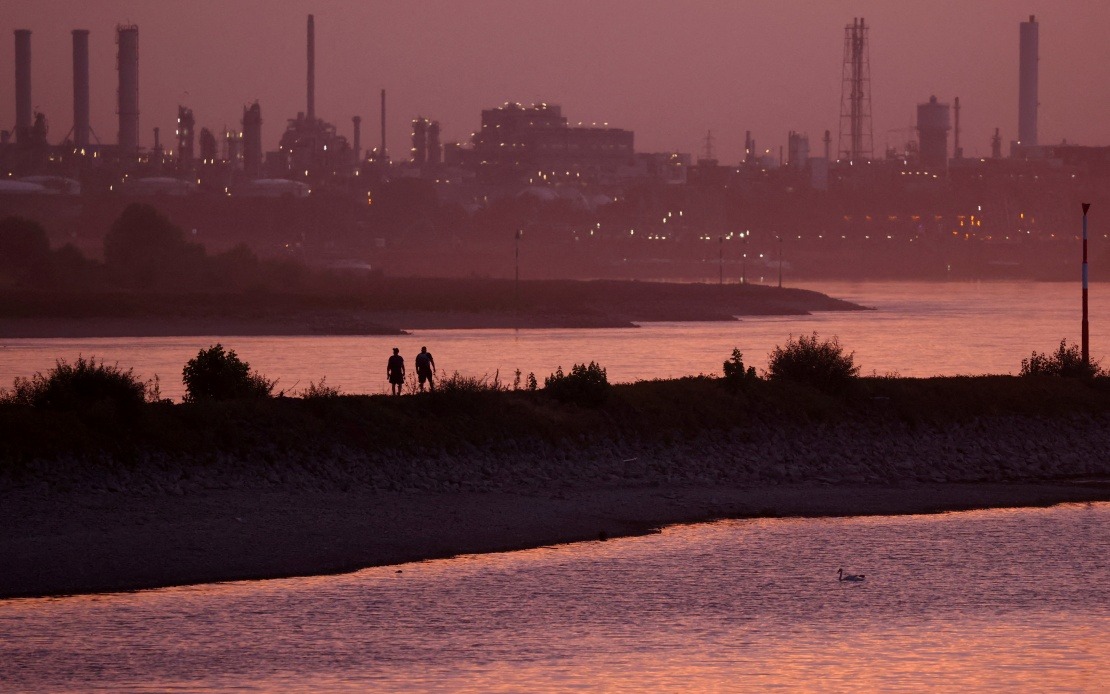
German explosives specialists mobilised on Thursday to safely defuse a substantial aerial bomb unearthed on the bed of the Rhine River close to Cologne, capitalising on unusually shallow conditions that have exposed relics of the Second World War. The discovery underscores both the persistent hazards left behind by decades of conflict across Europe and the dramatic effects of climate-driven environmental stress on major waterways, a phenomenon of growing concern throughout the continent.
The 500-kilogramme device, identified as a United States-manufactured bomb, surfaced near Cologne's Rheinpark after being submerged for nearly eight decades. Authorities detected the ordnance on Wednesday evening, prompting immediate security protocols. While the precise timing for the defusing operation remained unconfirmed as of Thursday, city officials had already begun coordinating one of the larger emergency evacuations the region has undertaken in recent years.
Authorities ordered the removal of approximately 360 individuals occupying or stationed within a 400-metre perimeter surrounding the bomb site. The evacuation zone encompassed multiple demographic groups, notably elderly residents sheltering in a retirement community positioned dangerously close to the discovery location, as well as broadcast personnel employed at nearby RTL television studios. The scale of the precautionary measure reflected the substantial destructive potential such ordnance retains, regardless of age.
The Rhine's precipitous water decline has created an unprecedented crisis for one of Europe's most economically vital shipping corridors. On Thursday alone, the gauge in Cologne plummeted to 67 centimetres, equalling a historical minimum set merely days prior, with forecasters predicting further deterioration to 66 centimetres before any stabilisation might occur. This represents not merely a statistical anomaly but a fundamental disruption to continental supply chains and industrial operations that depend upon barge transport.
Commercial navigation along Germany's principal inland waterway has buckled under the strain of diminished depths. Shipping operators have resorted to drastically reducing cargo loads aboard their vessels, forcing them to conduct multiple journeys where single transit operations previously sufficed. The economic implications ripple outward: manufacturers requiring just-in-time delivery of raw materials face production delays, while freight costs escalate as vessel capacity shrinks. For Malaysia's trading partners throughout Europe, particularly those relying upon German industrial goods or integrated manufacturing supply chains, these disruptions carry tangible commercial consequences.
The exceptional water recession simultaneously functions as an archaeological unwrapper, revealing military hardware and objects entombed on the riverbed since Allied bombing campaigns devastated German cities throughout the latter stages of World War II. Cologne, historically targeted by intensive bombing operations, has yielded multiple such discoveries previously. Each exposure carries inherent danger: ordnance preservation under water can be precarious, and removal operations demand specialised expertise to prevent accidental detonation. The current discovery represents merely the most prominent recent instance; authorities anticipate additional finds should water levels continue declining.
Experts attribute the calamitous water shortage to an extended sequence of elevated temperatures and deficient precipitation affecting central Europe. Climate scientists have increasingly linked such extreme weather phenomena to anthropogenic climate change, flagging inland waterways as particularly vulnerable infrastructure elements facing escalating stress in coming decades. The Rhine's condition exemplifies broader challenges confronting European water resources, with implications extending to hydroelectric power generation, agricultural irrigation, and urban water supply systems spanning multiple nations.
Forecasts offered limited encouragement for rapid improvement. Officials acknowledged that water levels would experience only marginal gains over ensuing days, with no prospect of substantial recovery within the immediate timeframe. Such pessimistic projections underscored the systemic nature of the crisis rather than portraying it as a temporary inconvenience. Extended periods of depressed river conditions could necessitate sustained reductions in barge traffic, potentially forcing economic adjustments across multiple industrial sectors.
The incident illuminates the intersection of historical legacy and contemporary environmental vulnerability. While ordinance disposal represents a recurring administrative burden throughout post-conflict Europe, the confluence of climate-induced water stress and bomb discovery magnifies operational complexity. Defusing teams must now work amid extraordinary low-water conditions, potentially requiring modified procedures and additional safety precautions. The simultaneous challenges of wartime ordnance management and climate adaptation will likely intensify across the continent as global temperatures continue rising.
For Malaysia and Southeast Asian nations integrated into European supply networks, the Rhine disruption serves as a potent reminder of how environmental disruptions in distant regions can propagate economic consequences across global commerce. As climate change impacts multiply, supply chain vulnerabilities rooted in infrastructure dependencies on waterways demand strategic consideration from policymakers and corporate planners alike.

