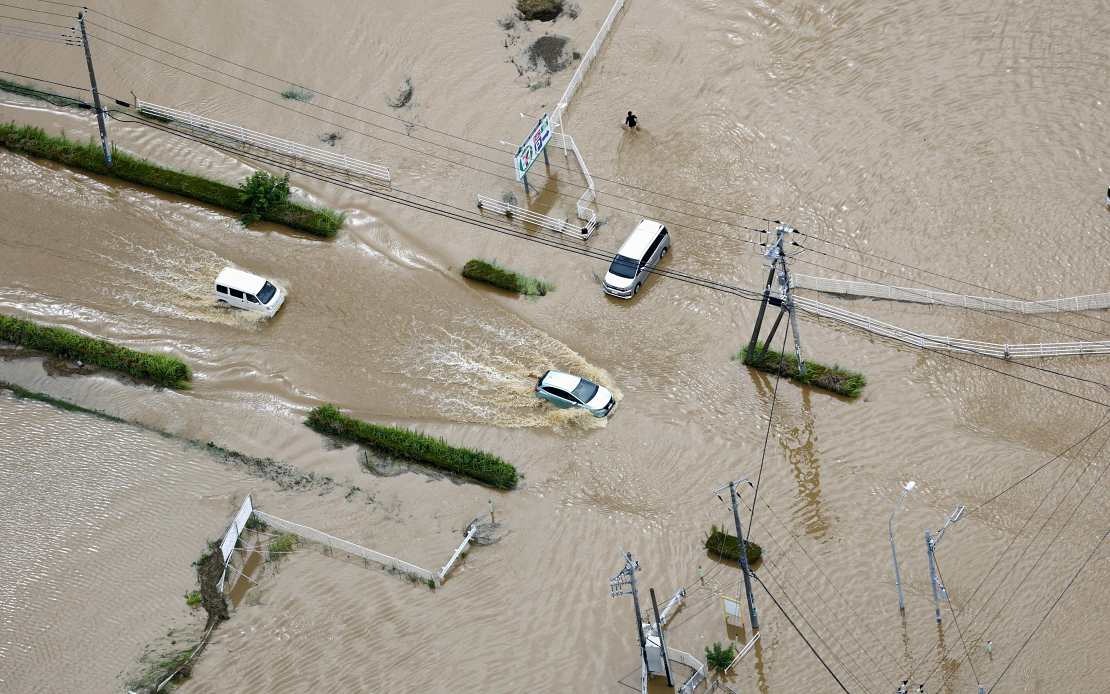
Eastern Japan's Chiba Prefecture has been devastated by torrential rainfall that claimed eight lives on Thursday and Friday, with authorities grappling to manage a sprawling humanitarian crisis affecting more than 100,000 residents. The extreme weather system delivered record-breaking precipitation to the region, overwhelming infrastructure and triggering widespread evacuations across multiple municipalities. Chiba City, Kashiwa, Ichikawa, Sakura and Yachiyo all recorded fatalities, while four additional residents sustained minor injuries in the onslaught, according to the Chiba Prefectural Government.
The meteorological scale of the disaster underscores the intensity of the weather event. The Japan Meteorological Agency reported that Chiba City received 348 millimetres of rain within a twelve-hour period ending at 1.40 am on Friday, shattering previous records for the location. To contextualise this extraordinary volume, the rainfall equivalent represents approximately three times the city's typical precipitation for the entire month of August, compressed into just half a day. Such concentrated downpours create catastrophic conditions for flood management systems designed around historical weather patterns, leaving urban drainage infrastructure fundamentally overwhelmed.
Recognising the severity of the situation, the Japan Meteorological Agency had issued its highest-level emergency alert—Level 5—for heavy rain and landslide risks across portions of Chiba Prefecture. This classification indicates an imminent and severe threat to life and property. However, as conditions began to stabilise on Friday morning, authorities downgraded the warnings to Level 4 or lower, suggesting that the most acute phase of the emergency had passed. Nevertheless, weather officials remained cautious, warning residents that additional heavy rainfall remained possible and urging continued vigilance.
The human cost of the disaster extends beyond fatalities. As of 11 am on Friday, approximately 102,600 residents remained under mandatory evacuation orders throughout Chiba Prefecture, confined to emergency shelters or relocated facilities pending clearance to return home. This scale of displacement creates substantial logistical challenges for local authorities managing food supplies, medical services, and sanitation across multiple shelters. The psychological toll on evacuated families—particularly the elderly and children—accumulates with each passing day away from their residences.
The flooding's economic repercussions rippled across regional transportation networks. Narita Airport, located within Chiba Prefecture, experienced severe disruption as the downpour incapacitated both train and bus operations. Approximately 7,000 passengers found themselves stranded overnight at the airport, unable to proceed with their journeys as conventional ground transportation became inoperable. This paralysis of Japan's second-largest international hub highlights how extreme weather events can cascade through interconnected systems, affecting not just local populations but travellers and businesses across Asia-Pacific supply chains.
For Malaysian and Southeast Asian observers, the Chiba flooding offers sobering lessons about climate resilience and disaster preparedness. Japan, despite possessing some of the world's most advanced meteorological forecasting capabilities and robust disaster management infrastructure, still experienced significant loss of life and displacement. The frequency of record-breaking rainfall events—once considered once-in-a-century occurrences—has accelerated markedly in recent years, prompting climate scientists to reassess assumptions underlying urban planning and infrastructure design.
The vulnerability exposed by the Chiba disaster resonates particularly in Southeast Asia, where monsoon systems and typhoon activity regularly deliver comparable or greater precipitation intensities to densely populated areas. Regional cities in Malaysia, Thailand, and the Philippines face similar challenges when extreme rainfall exceeds design thresholds for drainage systems constructed decades ago. The region's rapid urbanisation has often proceeded without proportionate upgrades to water management infrastructure, creating potential scenarios where concentrated rainfall could overwhelm systems entirely.
Climate adaptation emerges as an urgent priority across Asia. Japan's experience demonstrates that even wealthy nations with sophisticated disaster management apparatus require continuous reassessment of emergency protocols and infrastructure investment. The downgrade from Level 5 to Level 4 warnings suggests that while the immediate crisis subsided, the underlying risk environment has shifted. Authorities must now investigate not merely what went wrong but how future events of this magnitude might be anticipated, mitigated, and managed more effectively.
The regional implications extend to insurance and financial sectors. Extreme weather events increasingly threaten economic stability across Asia, with flood losses accumulating rapidly. Insurers, reinsurers, and financial institutions operating in Southeast Asia must recognise that historical loss data no longer reliably predicts future claims frequencies. The Chiba flooding may ultimately reshape risk assessment models across the Asian insurance industry, potentially affecting premium structures and coverage availability.
Government coordination and inter-agency communication proved critical during the Chiba emergency. The Fire and Disaster Management Agency's role in tracking evacuation numbers and maintaining real-time information flows enabled authorities to allocate resources systematically. For Southeast Asian governments, such institutional capacity represents a benchmark against which preparedness should be measured. Establishing clear command structures, standardised alert protocols, and reliable data collection systems becomes increasingly essential as extreme weather events grow more common.
Looking forward, the Chiba Prefecture flooding underscores that disaster resilience requires sustained investment and continuous improvement, not episodic responses following crises. Regional governments should examine their own flood forecasting capabilities, evacuation procedures, and shelter adequacy. The eight deaths and displacement of over 100,000 residents represent human costs that might potentially have been reduced through enhanced preparedness, better urban drainage design, and more rapid evacuation procedures. As climate patterns continue shifting, such lessons become ever more consequential.

