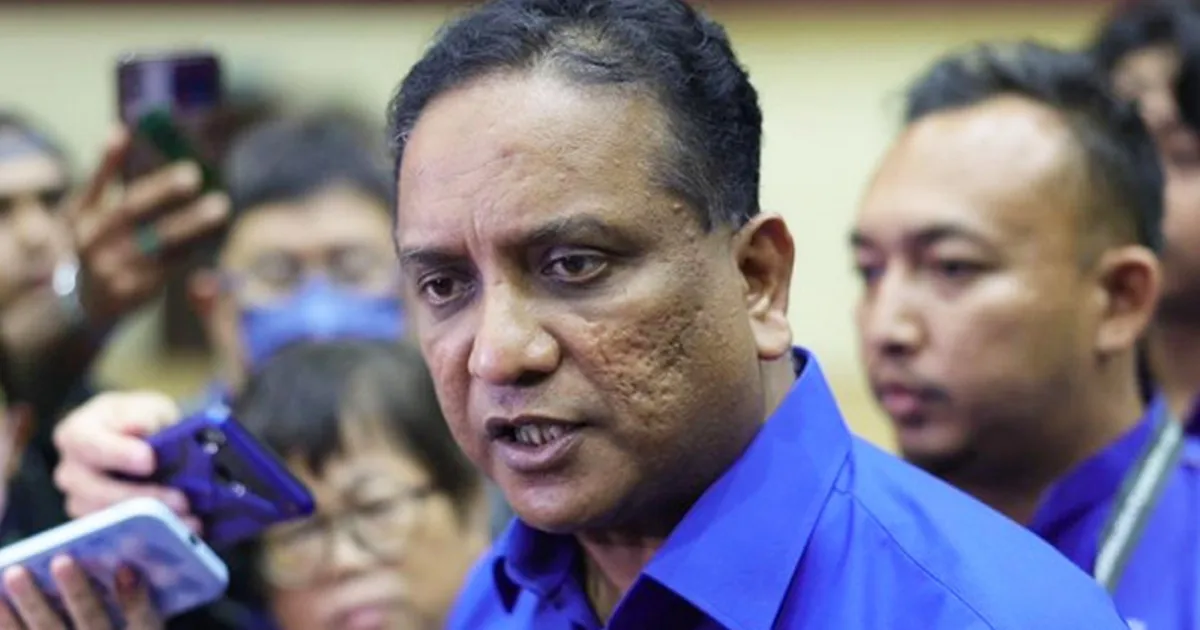
A prominent member of Umno's Supreme Council has mounted a defence against criticism directed at the party and its coalition partner Barisan Nasional over the mounting controversies surrounding Tabung Haji, asserting that the Royal Commission of Inquiry's findings should not be weaponised to level charges of systemic corruption or the shielding of alleged wrongdoers within their ranks.
The statement represents a strategic attempt to ring-fence the broader political establishment from accountability narratives that have intensified following the disclosure of the RCI's investigation into the hajj savings institution. Tabung Haji, the government-backed pilgrimage fund managing the savings of millions of Malaysian Muslims, has become embroiled in a complex financial scandal involving allegations of mismanagement, questionable investments, and governance failures that have eroded public confidence in the institution.
The RCI's investigation was initiated against a backdrop of growing public concern about how the fund's assets had been deployed, particularly regarding high-risk investments and opaque dealings that resulted in substantial losses to contributors. The inquiry examined the decision-making processes, oversight mechanisms, and the roles played by various officials and board members who oversaw the institution during the period under investigation.
By framing the RCI's conclusions as potentially subject to misinterpretation, the Umno figure appears to be preemptively challenging narratives that might implicate party members or political appointees who had stewardship roles at Tabung Haji. This defensive posture is significant in the Malaysian political context, where accountability for governance failures often becomes entangled with partisan considerations and where institutional inquiries frequently generate spillover effects on political actors associated with administrations under scrutiny.
The timing of this statement carries implications for how the government may approach follow-up actions based on the RCI recommendations. Depending on the report's specific findings, potential consequences could range from structural reforms to criminal referrals, and the political positioning being undertaken now suggests an effort to shape the narrative before any such action materialises. This mirrors historical patterns in Malaysian politics where powerful figures have sought to compartmentalise investigations to limit reputational or legal exposure.
The Tabung Haji situation has profound relevance for Malaysian Muslims who have entrusted their savings to the institution for one of Islam's five pillars. The fund serves a distinctive social and religious function, and its financial deterioration touches on questions not only of competence but of stewardship of resources held in trust. For many contributors, Tabung Haji represents decades of accumulated savings essential for fulfilling their hajj aspirations, making the mismanagement allegations particularly sensitive from a communal perspective.
From a broader governance standpoint, the controversy highlights recurring challenges within Malaysia's institutional framework: the blurred boundaries between political leadership and administrative management, the adequacy of board-level oversight, and the mechanisms for ensuring that government-linked entities operate with appropriate transparency and accountability. These are systemic issues that transcend individual parties, though the finger-pointing that follows inquiries inevitably becomes partisan.
The Umno figure's intervention suggests the party leadership views the Tabung Haji scandal as a reputational threat significant enough to warrant proactive messaging. Rather than allow the RCI report to dominate discourse independently, the tactic of pre-emptively framing its findings as potentially subject to misuse reflects confidence that the party can shape how the report is received and interpreted in the public domain and within government circles where implementation decisions will be made.
For the broader Malaysian electorate and civil society watchdogs, such defensive statements raise questions about whether accountability will be pursued evenly or whether political considerations will again determine how institutional failures are ultimately addressed. Southeast Asian governments generally have struggled with governance transparency in their financial institutions, and Malaysia's experience with Tabung Haji offers insights into how politically-sensitive investigations are managed when powerful actors have vested interests in the outcomes.
The statement also underscores ongoing tension between demands for institutional accountability and the resilience of patronage networks within Malaysia's ruling structures. How the government ultimately responds to the RCI recommendations—whether through genuine reform, symbolic adjustments, or minimal action—will signal the degree to which investigations into governance failures can translate into substantive change even when political leadership has been implicated.

