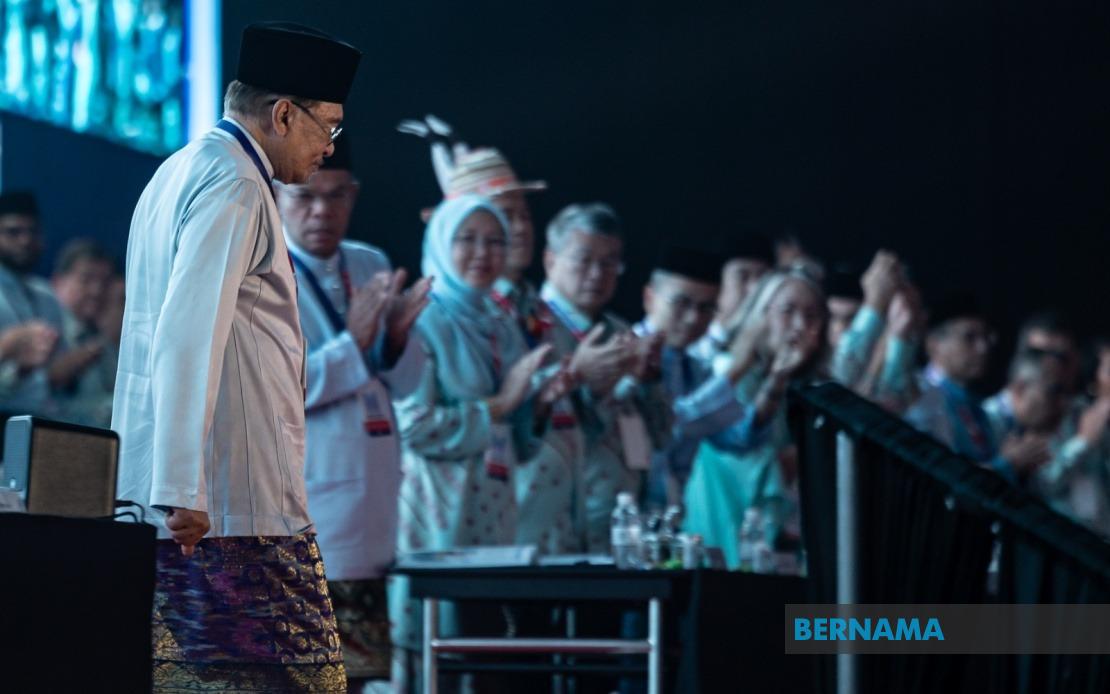
Prime Minister Datuk Seri Anwar Ibrahim mounted a robust defence of his government's reform agenda at the PKR National Congress in Melaka on August 15, arguing that substantial institutional changes have been achieved and should not be overlooked simply because further improvements remain on the horizon. Speaking at the party's flagship gathering, Anwar acknowledged the legitimate demands for continued transformation while asking supporters to recognise the tangible progress already delivered under the MADANI administration since his ascent to power in late 2022.
The tension between reform expectations and implementation reality has become increasingly prominent in Malaysian political discourse, with various stakeholder groups pushing for faster institutional change across multiple sectors. Anwar's remarks directly address this friction, positioning the government as committed but constrained by political realities and the practical exigencies of governance. His framing suggests that critics conflate the absence of comprehensive overnight transformation with a lack of genuine commitment, a distinction he sought to clarify before an audience of party faithful and coalition partners including PKR deputy president Nurul Izzah Anwar, Amanah president Datuk Seri Mohamad Sabu, and Gabungan Rakyat Sabah chairman Datuk Seri Hajiji Noor.
Anwar enumerated specific legislative and institutional achievements to substantiate his contention that meaningful reform has occurred. The administration has secured amendments to the Audit Act 1957, overhauled the Parliamentary Service Act, and enacted the Public Finance and Fiscal Responsibility Act 2023—measures designed to strengthen democratic accountability and fiscal transparency. Additionally, the government established a dedicated Special Task Force on Agency Reform, introduced the Consumer Credit Act to protect financial consumers, and passed legislation addressing the rights and protections of gig economy workers. These initiatives collectively represent interventions in areas that had languished without significant legislative attention for decades under previous administrations.
The contextual backdrop to Anwar's address is crucial for understanding the political pressures he navigates. The formation of the Unity Government following the 2022 General Election required extensive negotiations with multiple coalition partners possessing divergent reform priorities and political constraints. As Pakatan Harapan's principal party and as Finance Minister alongside his role as Prime Minister, Anwar must balance the coalition's original reform manifesto with the practical compromises necessitated by shared governance. This structural reality fundamentally shapes what reforms can be advanced, at what pace, and with what level of institutional support—a complexity that Anwar suggests critics often overlook when demanding wholesale transformation.
Anwar's acknowledgment that not all government initiatives have achieved perfection provides important rhetorical balance to his defence. Rather than claiming flawless execution, he concedes that implementing comprehensive institutional reform involves inevitable stumbles and course corrections. This calibrated candour serves multiple purposes: it demonstrates awareness of legitimate shortcomings, prevents the appearance of defensive rigidity, and establishes realistic expectations about the difficulty of transforming entrenched bureaucratic and political systems. For Malaysian readers familiar with decades of governance under different administrations, such honesty about implementation challenges carries particular weight.
The philosophical argument Anwar articulates regarding phased reform deserves analytical attention. He contends that meaningful institutional change cannot occur instantaneously but must be carefully sequenced to develop deep roots within governmental structures and public consciousness. This perspective reflects sophisticated understanding of institutional development theory, which emphasises that durable reform requires both structural changes and cultural adaptation within organisations. The approach also allows for adjustment based on feedback and emerging challenges, rather than rigid adherence to predetermined timelines that may prove unrealistic given administrative complexity.
For Southeast Asian observers, Anwar's position carries broader implications about reform governance in the region. Many democracies in Southeast Asia face similar pressures between reform constituencies demanding rapid institutional transformation and governing coalitions managing complex political compromises. The Malaysian example demonstrates both the possibilities and limitations of reform-oriented leadership operating within plural political systems. Anwar's emphasis on anchoring reforms deeply—ensuring they have institutional support and can be implemented in stages—resonates with governance challenges faced across the region, from Myanmar's democratic transition struggles to Thailand's repeated constitutional renovations.
The PKR congress setting itself represents a significant political moment. Anwar's presidential policy speech establishes party narrative and messaging to party members who will carry these arguments throughout their constituencies. By directly addressing the tension between reform expectations and delivery, he seeks to preempt internal party fracturing on this crucial issue and present a unified front to coalition partners. The presence of senior coalition figures from Amanah and Gabungan Rakyat Sabah underscores the multi-party nature of reform strategy, with each coalition member bringing different reform priorities and political constraints to the governance arrangement.
The question of reform velocity versus depth remains fundamentally contested in Malaysian political discourse. Some constituencies believe that governing coalitions should prioritise quantity of reform measures and rapid legislative passage, while others—including Anwar's position—argue that institutional reforms require careful implementation and must be constructed to survive political transitions. This philosophical difference shapes everything from parliamentary scheduling to bureaucratic capacity allocation. For citizens seeking institutional accountability and transparency improvements, understanding this debate's nuances is essential for setting realistic expectations and holding government appropriately accountable.
Anwar's closing statement about continuing to strengthen the reform agenda while accounting for capabilities and circumstances suggests ongoing evolution rather than conclusion of the reform project. He emphasises that future reforms will be pursued on a foundation of demonstrated capacity and will be designed to benefit ordinary Malaysians while strengthening institutional resilience. This forward-looking posture acknowledges that the reform agenda extends beyond his current term and requires sustained commitment across multiple political cycles, a sobering recognition that transforming deeply embedded institutional patterns requires patience and persistence.
The speech reflects a government attempting to narrate its own reform story before critics and opponents define it exclusively through the lens of unrealised expectations. Whether this rhetorical strategy proves persuasive depends substantially on continued visible progress in reform implementation over coming months and years. Malaysian voters and observers will ultimately judge the balance between achievements defended in the Melaka congress and the further transformations they continue demanding.

