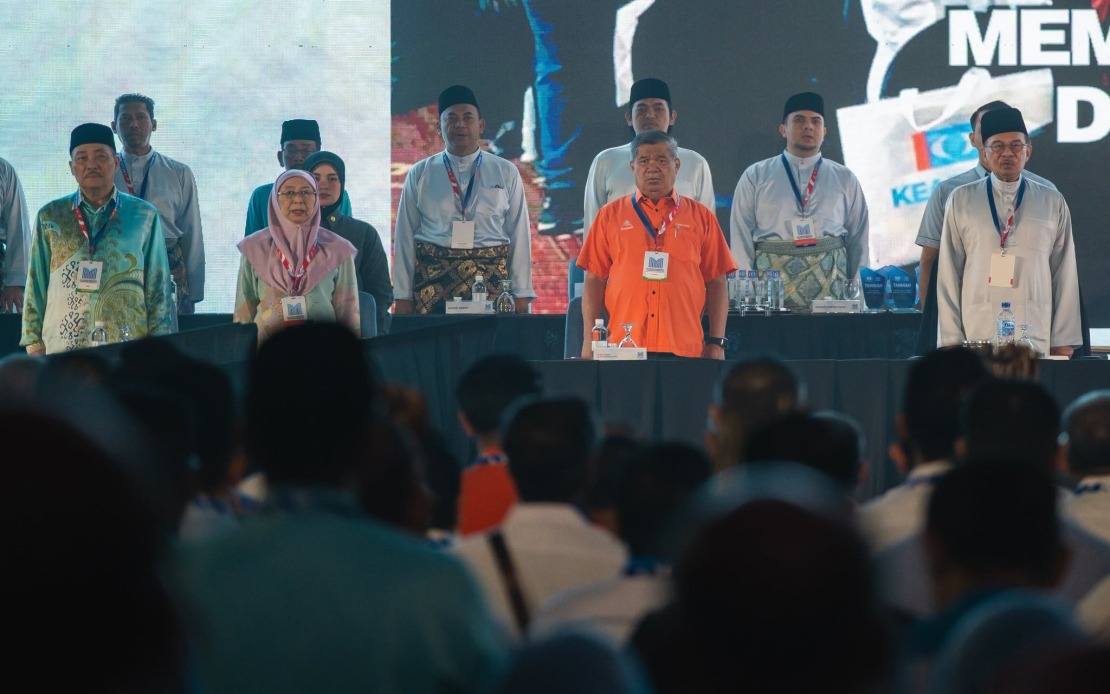
Parti Amanah Negara (Amanah) president Datuk Seri Mohamad Sabu has underscored the necessity for the reformist agenda to remain at the forefront of the government's work, insisting that consolidating power does not signal an end to the push for systemic change. Speaking at the 2026 Parti Keadilan Rakyat (PKR) National Congress held at the Melaka International Trade Centre in Ayer Keroh on Thursday, Mohamad Sabu articulated a vision wherein reform becomes not a campaign promise but an embedded principle of governance. His remarks reflect growing concerns within coalition circles that the initial momentum for institutional renewal risks dissipating once parties secure ministerial positions and parliamentary majorities.
The Amanah leader, who currently serves as Agriculture and Food Security Minister, framed the reform commitment as a debt owed to voters who delivered the coalition to power. He emphasised that the electorate's trust must be honoured through tangible outcomes rather than rhetorical flourishes. This framing represents a subtle acknowledgement that public scepticism regarding political promises runs deep in Malaysia, particularly following periods of perceived stagnation or backsliding under previous administrations. By positioning reform as an ongoing obligation rather than a finite campaign objective, Mohamad Sabu seeks to establish accountability mechanisms that transcend electoral cycles.
Central to his statement was an unambiguous commitment to pursuing corruption cases regardless of the status or political affiliation of those involved. The minister's assertion that "those who siphon off the people's money" will face consequences, irrespective of their position or party membership, carries particular weight given Malaysia's historical struggles with institutional integrity. This stance distinguishes Amanah's positioning within the coalition and suggests internal negotiations over how aggressively to pursue high-profile corruption investigations that might implicate political allies.
Moreover, Mohamad Sabu attended Parti Keadilan Rakyat president Datuk Seri Anwar Ibrahim's address at the same congress, which similarly emphasised continuity of reform efforts. The convergence of messaging between the two leaders suggests coordinated coalition strategy to preempt accusations of reform fatigue as the government enters its next phase. This alignment also indicates ongoing alignment within Pakatan Harapan's leadership regarding institutional priorities, though questions remain about whether coalition discipline can withstand the pressures of resource distribution and factional interests.
Beyond anti-corruption efforts, Mohamad Sabu highlighted the government's commitment to implementing the Malaysia Agreement 1963 (MA63), which governs the constitutional relationships between the federal government and the states of Sabah and Sarawak. This emphasis reflects the coalition's recognition that ensuring stability and political buy-in from East Malaysian states requires substantive action on constitutional and fiscal matters. The MA63 implementation has emerged as a litmus test for both federal and state governments in demonstrating seriousness about honouring inter-governmental compacts.
The minister also articulated a nuanced position on economic policy, distinguishing between headline growth figures and tangible improvements in living standards for ordinary households. This rhetorical choice signals an awareness among coalition leaders that Malaysians increasingly judge government performance not by aggregate economic indicators but by whether their personal circumstances have improved. Addressing cost-of-living pressures, which have intensified across Southeast Asia in recent years, remains a defining test for the administration's credibility.
Amanah's positioning within the coalition has historically emphasised values-driven politics and institutional reform over patronage networks, creating both opportunities and vulnerabilities for the party. By repeatedly returning to reform themes, Mohamad Sabu reinforces Amanah's distinctive brand positioning while potentially differentiating it from coalition partners perceived as more transactional. However, this strategy also raises questions about whether a multi-party coalition built partly on expedience can maintain coherence around reform principles when material interests diverge.
The announcement regarding repeal of the Universities and University Colleges Act 1971 (AUKU) received Mohamad Sabu's endorsement as a necessary expansion of intellectual freedom. The AUKU has long been criticised by student activists and civil society organisations as unduly restrictive of campus organising and political expression. Its repeal would represent one of the coalition's most visible achievements in the civil liberties sphere, addressing concerns among younger voters and academically-inclined constituencies.
The emphasis on reform persistence carries particular resonance for Southeast Asian observers tracking Malaysia's democratic trajectory. The region has witnessed concerning patterns wherein reformist coalitions lose momentum after assuming office, often due to competing pressures, intra-coalition tensions, and the administrative demands of governing. Mohamad Sabu's insistence on maintaining reform velocity suggests an attempt to resist these regional patterns, though whether Amanah can sustain influence over coalition priorities remains uncertain given the numerical dominance of larger coalition partners.
Looking forward, the durability of these reform commitments will likely depend on several variables: whether corruption investigations proceed impartially, whether MA63 implementation translates into measurable fiscal transfers and policy autonomy for East Malaysian states, and whether cost-of-living interventions demonstrably improve household finances. Each of these tests will generate constituencies of support and opposition within the coalition and broader society. The next eighteen months will prove particularly revealing in determining whether reform rhetoric reflects genuine institutional commitment or serves primarily as coalition legitimation during a politically vulnerable transition period.

