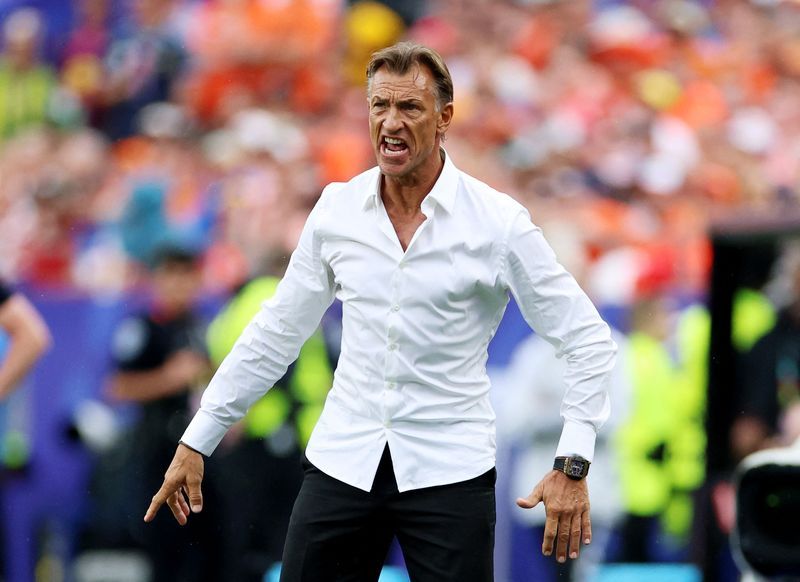
Herve Renard's brief spell in charge of Tunisia has come to an end following the North African nation's elimination from the World Cup at the group stage. The 57-year-old French coach announced his departure through Instagram on Saturday, expressing gratitude to the Tunisian Football Federation whilst acknowledging that his "adventure ends here." Despite the brevity of his appointment and the honour he described representing Tunisia, Renard's tenure proved unable to reverse a dramatic collapse that saw the team exit the tournament winless.
Tunisia's World Cup campaign represents one of international football's most striking collapses in recent memory. The team arrived in Qatar on the back of an impressive qualifying campaign that saw them complete their fixtures without conceding a single goal, generating genuine optimism about their tournament prospects. However, that defensive solidity evaporated almost immediately, with the realities of World Cup competition exposing fundamental weaknesses that had been masked during the qualifiers.
The scale of the defensive breakdown became apparent in Tunisia's opening match against Sweden, a catastrophic 5-1 defeat that immediately signalled serious problems within the squad. The magnitude of that loss prompted the Tunisian Football Federation to make a desperate mid-tournament coaching change, removing Sabri Lamouchi after just one game and turning to Renard in hopes that experienced leadership could steady the ship. The decision reflected the federation's recognition that something was fundamentally amiss, though the hope for swift improvement proved misplaced.
Renard's arrival did nothing to arrest the downward trajectory. In his first match in charge against Japan, Tunisia suffered a 4-0 defeat that left the coach publicly despondent. Renard subsequently revealed that the loss filled him with feelings of "shame," a candid admission that underscored the depth of the crisis unfolding within the national team. Rather than demonstrating the tactical acumen and motivational prowess that had defined his previous managerial successes elsewhere, Renard found himself unable to implement any meaningful improvements during his brief window of opportunity.
The final nail in Tunisia's coffin came with a 3-1 defeat to the Netherlands in their final group-stage match, a result that mathematically confirmed their elimination without a single victory across all three games. This outcome places Tunisia among the worst-performing teams in recent World Cup history, a particularly humbling conclusion given the optimism that preceded the tournament. The team's inability to translate a strong qualifying campaign into group-stage success raises profound questions about preparation, adaptation, and the significant gap between competitive regional football and the elite standard required at the World Cup.
Tunisia's defensive record at the tournament stands as a cautionary tale and a historical marker of failure. Over the course of their three group matches, the team conceded 12 goals, establishing a new unwanted record for the expanded 48-team World Cup format introduced in 2022. This surpassed the previous record held by Costa Rica, who conceded 11 goals at the 2022 tournament in Qatar. The statistical magnitude of this defensive collapse underscores that Tunisia's problems extended well beyond tactical adjustments or momentary lapses in concentration; instead, they revealed structural issues that neither Lamouchi nor Renard possessed sufficient time to address.
For Malaysian observers, Tunisia's experience offers relevant lessons about World Cup preparation and the challenges facing smaller football nations. Despite possessing a competitive regional pedigree, Tunisia struggled to compete against opposition from Europe and Asia, highlighting the disparity in resources, depth, and tactical sophistication between established World Cup powers and rising African nations. The inability of two successive coaching appointments to salvage the campaign demonstrates that leadership changes during tournaments, whilst dramatic gestures, rarely provide miraculous solutions when fundamental squad deficiencies exist.
Renard's departure also marks a broader reflection on the pressures facing international managers tasked with rehabilitating collapsed campaigns. His publicly expressed sense of shame following the Japan defeat suggested the personal toll of witnessing a national team's competitive standards collapse so dramatically. For an experienced manager accustomed to winning major tournaments, the Tunisian role transformed into an exercise in damage limitation rather than genuine competition, a reality that likely influenced his decision to step aside.
The future direction of Tunisian football now remains uncertain. The federation must conduct a thorough assessment of how a qualifying campaign conducted without conceding a goal devolved into tournament football that saw the team ship 12 goals across three matches. This assessment should extend beyond individual players or tactics to encompass preparation methodology, mental conditioning, and the tactical flexibility required to compete at the World Cup's highest standard. Tunisia's football community faces considerable work in restoring credibility and developing a pathway toward more competitive future tournaments.

