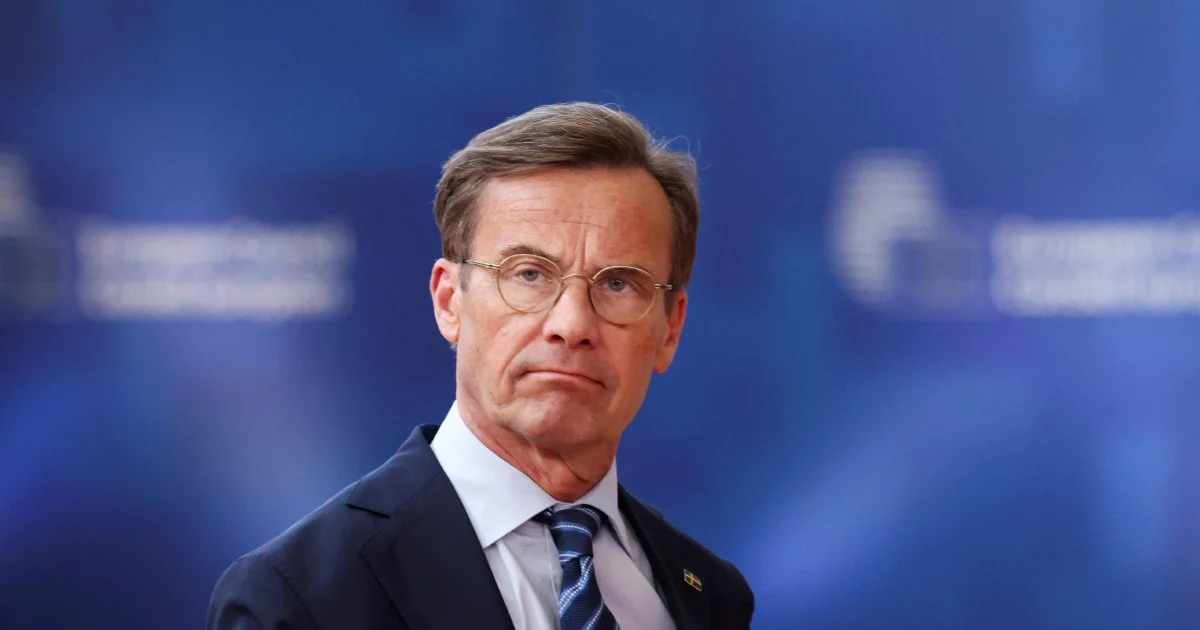
Swedish Prime Minister Ulf Kristersson has cultivated a remarkable ability to sidestep serious political repercussions throughout his four-year administration, weathering allegation after allegation that might have toppled other leaders. Now, with general elections scheduled within the next quarter, he confronts yet another wave of corruption accusations that threaten to dominate the final stretch of campaigning. The pattern raises questions about the resilience of Sweden's democratic institutions and whether scandals retain their capacity to reshape electoral outcomes in an increasingly polarised political landscape.
Kristersson's tenure has been marked by an extraordinary catalogue of controversies spanning personal conduct, government administration, and political propriety. Each incident might ordinarily prove sufficient to trigger serious political damage—forcing resignations, triggering formal investigations, or fundamentally undermining public confidence in leadership. Yet the Swedish Prime Minister has managed to navigate each crisis with an almost uncanny ability to minimise fallout, emerging from each controversy with his coalition government's core political position essentially intact. This pattern suggests either exceptional political skill or the absence of sufficient structural mechanisms within Swedish politics to enforce meaningful accountability when scandals emerge.
The timing of the fresh corruption allegations carries particular significance given the electoral calendar. In parliamentary democracies, timing influences how voters process political scandals and their willingness to punish incumbents at the ballot box. Allegations that emerge during the final campaign period before elections can amplify their impact, as voters actively deliberate their choices and media scrutiny intensifies. Conversely, allegations emerging months into a term can dissipate through the sheer passage of time and the emergence of new issues. By striking just three months before elections, these new accusations occupy an awkward middle ground—serious enough to demand attention but perhaps insufficient time for their full implications to crystallise in voter consciousness.
Kristersson's coalition partners have tacitly accepted his repeated navigation of scandals, suggesting either their own vulnerability to voter backlash if they forced his departure or genuine belief that removing him would prove more damaging than maintaining the existing government. Swedish coalitions operate through delicate power-sharing arrangements where each partner must balance their institutional interests against broader coalition stability. The decision to retain Kristersson despite accumulating controversies implies that potential successors face their own liabilities, or that coalition partners fear triggering new elections during an economically uncertain period.
Comparative context from other Nordic and European democracies illuminates the exceptionalism of Kristersson's political longevity amid scandal. Finnish, Norwegian, and Danish leaders have faced removal or serious consequences for conduct far less substantial than some of Kristersson's controversies. The contrast suggests either distinctive features of Swedish institutional culture that prioritise continuity over accountability, or specific aspects of Kristersson's political base and coalition that differ fundamentally from these neighbours. Understanding which factor predominates would require detailed analysis of Swedish media dynamics, parliamentary procedures, and voter behaviour.
The accumulation of scandals, regardless of their individual resolution, inevitably affects political culture and public trust. Even when specific allegations fail to generate formal consequences, the sheer volume of controversy surrounding a leader creates a perception problem that operates independently of legal or parliamentary outcomes. Swedish voters may experience fatigue or cynicism from repeated scandals, potentially dampening overall electoral engagement or shifting support toward parties perceived as offering fresh political alternatives. The psychological impact of scandal accumulation often exceeds the impact of individual controversies.
Regional implications merit consideration for Southeast Asian political observers watching Nordic democracies. Sweden's experience demonstrates that even highly institutionalised, wealthy democracies with strong rule-of-law traditions face challenges in enforcing accountability through scandal. If Swedish mechanisms prove insufficient, systems with weaker institutional safeguards face even steeper challenges in translating scandals into political consequences. Conversely, Swedish voters may prove more discerning than counterparts elsewhere, recognising that scandal management requires distinguishing between serious corruption warranting removal and minor propriety violations that should not determine electoral outcomes.
The coalition government's stability despite scandals highlights the distinction between crisis capacity and electoral behaviour. A government might survive parliamentary confidence votes and continue functioning administratively while simultaneously facing severe electoral punishment. Kristersson's coalition remains technically intact, but the forthcoming elections will reveal whether Swedish voters perceive his scandal-plagued tenure as sufficiently problematic to warrant changing governments. The separation between institutional survival and electoral viability represents a crucial feature of parliamentary systems that analysts often overlook.
Media coverage patterns have likely influenced scandal trajectories. Swedish media outlets balance rigorous investigative journalism exposing official misconduct against journalistic norms that avoid excessive personalisation of political disputes. This balance point differs substantially from media ecosystems in other democracies, potentially affecting how scandals register with voters and whether they achieve sufficient narrative coherence to shape electoral behaviour. The question of whether additional scandals gain traction or merge into background noise depends partly on media editorial decisions about coverage intensity and framing.
As the election campaign intensifies, Kristersson faces the challenge of shifting voter attention toward policy substance and away from accumulated allegations. Incumbent leaders enjoy certain advantages in campaign narratives, particularly the ability to discuss governing achievements and project competence through administrative continuity. Against this stands the cumulative weight of scandal-driven coverage and the question of whether voters view his tenure as sufficiently damaged to warrant change. The final three months will reveal whether the Prime Minister can replicate his pattern of scandal survival at the ballot box, or whether the sheer accumulation of controversy finally reaches an electoral tipping point.