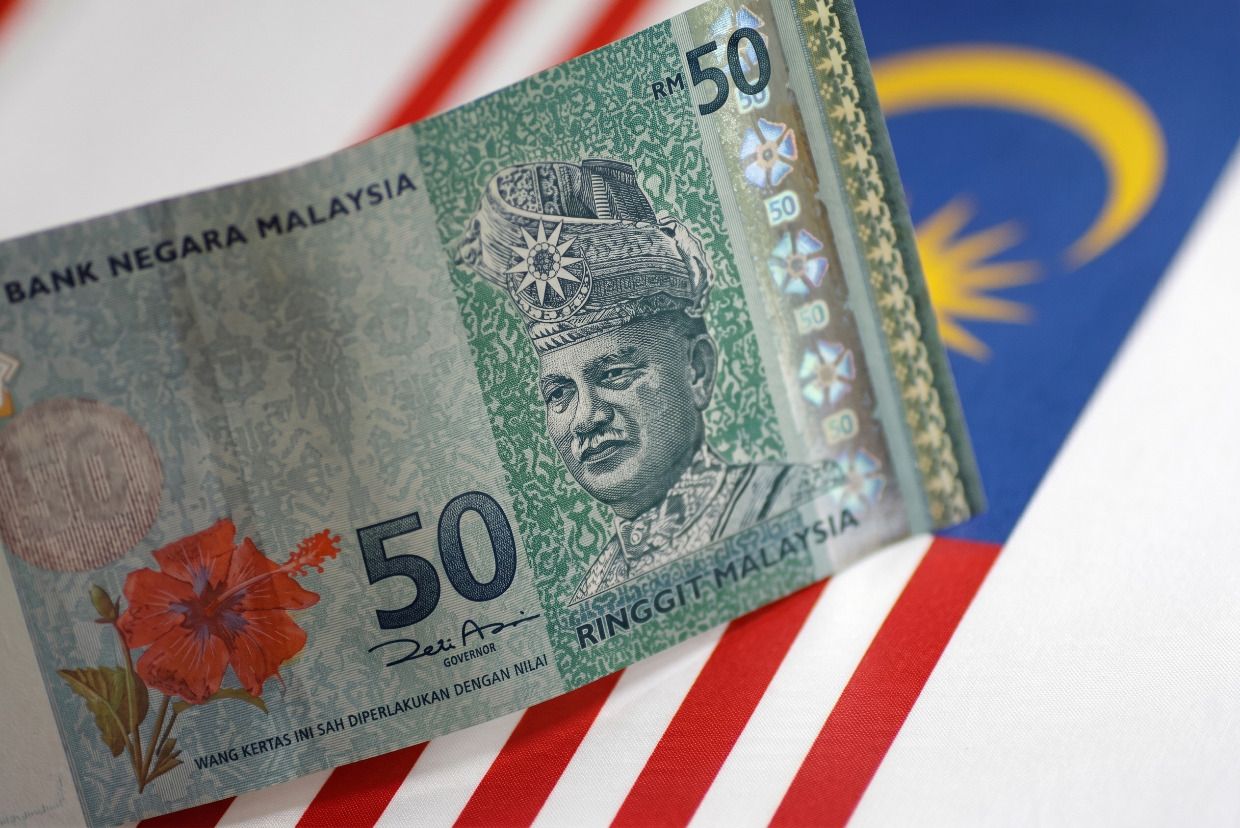
Malaysia's currency appears positioned for meaningful recovery in the second half of 2025 following a disappointing start to the year, as analysts point to a combination of policy support and underlying economic strength that should drive the ringgit higher against the US dollar over coming months. The currency finished June as the region's poorest performer, but recent policy initiatives and data pointing to resilient economic fundamentals have shifted the outlook materially in the ringgit's favour, according to financial institutions tracking regional currency movements.
Bank Negara Malaysia's announcement on June 24 to intensify measures encouraging the repatriation and conversion of overseas corporate earnings marks a strategic shift designed to boost the supply of foreign currency entering the domestic economy. The central bank's focus on facilitating the conversion of foreign-exchange deposits held by Malaysian companies into ringgit represents a targeted approach to addressing the currency's weakness without resorting to broad capital controls. Analysts interpret these moves as addressing a structural mismatch between Malaysia's underlying economic strength—reflected in substantial trade surpluses and robust export performance—and the ringgit's valuation, suggesting the currency has traded below levels justified by fundamentals.
Royal Bank of Canada's economists have modelled a scenario where the ringgit appreciates to 3.95 per dollar by the close of 2025, reflecting confidence that the combination of policy support and economic tailwinds will drive meaningful currency recovery. This projection assumes sustained execution of BNM's foreign-exchange encouragement framework and continuation of current export momentum. Australia & New Zealand Banking Group's analysis goes further, forecasting the ringgit could reach 3.80 per dollar—a level not seen since 2015—provided that foreign investment flows and export performance remain robust through the remainder of the year.
The ringgit's recent performance has already vindicated early expectations that BNM's June policy shift would support currency recovery. Since the central bank's announcement, the Malaysian currency has moved to outperform other major Asian currencies, a reversal from its earlier weakness. Currency traders and portfolio managers have begun repositioning to reflect both the explicit policy signal and the underlying economic conditions that BNM's actions are designed to reinforce. The currency closed Friday's trading at 4.0722 per dollar, representing a modest 0.2% gain that reflects the early stages of what analysts expect to be a more pronounced trend over coming quarters.
Malaysia's external economic position provides substantial support for currency appreciation expectations. The nation's merchandise exports expanded at a brisk 45 percent year-on-year pace during May, powered substantially by demand for electrical and electronic goods alongside infrastructure buildout for artificial-intelligence-related facilities. These export dynamics have generated a record monthly trade surplus reaching 40 billion ringgit, equivalent to approximately $9.8 billion USD. Such outsized trade surpluses create natural demand for ringgit currency as foreign customers settle payments in Malaysian currency, and the scale of current surpluses exceeds levels common in prior years, suggesting a structural shift in Malaysia's external competitiveness.
The artificial-intelligence boom has become a particularly important driver of Malaysia's export dynamism and external demand. Global technology companies have substantially ramped up investment in data-centre capacity across Southeast Asia, with Malaysia emerging as a preferred location due to its combination of competitive power costs, available land, and regional connectivity. This trend has simultaneously boosted demand for Malaysia's electrical and electronic manufacturing base, which supplies components and equipment into the growing data-centre sector. The spillover effects throughout Malaysia's manufacturing and logistics sectors have reinforced external demand and helped maintain the elevated export growth rates observed in recent months.
Foreign portfolio inflows have responded positively to Malaysia's economic backdrop and policy environment. Global fund managers deployed approximately $2.1 billion into Malaysian ringgit-denominated bonds through June 29, according to data released by Bank Negara Malaysia. This inflow volume places the market on track for its largest monthly accumulation of foreign capital since May 2025, suggesting that international investors remain confident in Malaysia's macroeconomic trajectory and attracted by yield opportunities available in the local market. Such portfolio flows directly support currency demand and create the conditions for ringgit appreciation, as foreign investors must acquire ringgit to purchase local bonds.
Analysts emphasize the important transmission mechanism through which BNM's policy measures translate into actual currency support. Abbas Keshvani, macro strategist at Royal Bank of Canada's Singapore office, notes that the policy framework converting foreign-exchange deposits into ringgit represents a crucial mechanism for converting Malaysia's trade surplus advantage into measurable currency strength. Without such policy support facilitating conversion of the foreign currency inflows generated by trade surpluses, the ringgit would remain dependent on portfolio flows alone. BNM's measures address this gap by creating explicit incentives for Malaysian companies to repatriate and convert overseas earnings, thereby tapping an additional source of foreign-currency demand.
The central bank's current approach echoes successful policy initiatives deployed during 2024, when similar foreign-exchange encouragement measures helped the ringgit recover from its weakest level against the dollar since 1998. That recovery was sufficiently pronounced that Malaysia's currency went on to rank as Asia's strongest performer across the full year 2024, demonstrating both the potency of BNM's policy toolkit and the responsive behaviour of foreign-exchange markets to coordinated central bank support coupled with solid economic fundamentals. The precedent from 2024 provides credibility to current analyst forecasts for substantial ringgit appreciation over the remainder of 2025.
Despite the constructive outlook for ringgit performance, several headwinds deserve monitoring by investors and portfolio managers positioning around the currency. The US Federal Reserve's posture remains relatively hawkish compared to expectations prevalent earlier in 2025, and any further delay in interest-rate reductions could support the US dollar more broadly and complicate ringgit appreciation. More immediately relevant to Malaysian circumstances, political uncertainty surrounding state elections that will test public support for Prime Minister Anwar Ibrahim and his ruling coalition introduces an element of unpredictability ahead of national elections. Foreign investors typically place some discount on Malaysian assets during periods of elevated political uncertainty, which could temporarily cap currency gains.
Kausani Basak, foreign-exchange analyst at Australia & New Zealand Banking Group, offers a complementary perspective on the mechanisms supporting ringgit recovery. The accumulation of foreign-currency deposits by Malaysian businesses during the March through May period creates a substantial pool of overseas earnings available for conversion into ringgit under BNM's encouragement framework. Simultaneously, the continued resilience of foreign direct investment inflows into Malaysia—driven substantially by data-centre development and manufacturing expansion related to the artificial-intelligence buildout—creates an additional source of foreign-currency supply that ultimately supports currency appreciation.
The convergence of supportive factors suggests the ringgit's recovery trajectory remains intact despite June's weakness and broader regional currency volatility. The combination of explicit policy support, robust export performance generating substantial trade surpluses, and demonstrated foreign investor appetite for Malaysian assets creates a multi-faceted foundation for currency appreciation. While external headwinds and domestic political considerations merit attention, the consensus among major regional financial institutions points to material ringgit strengthening as the most probable outcome across the remainder of 2025, with year-end projections in the 3.80 to 3.95 per dollar range reflecting broad agreement on the direction if not the precise magnitude of the recovery.

