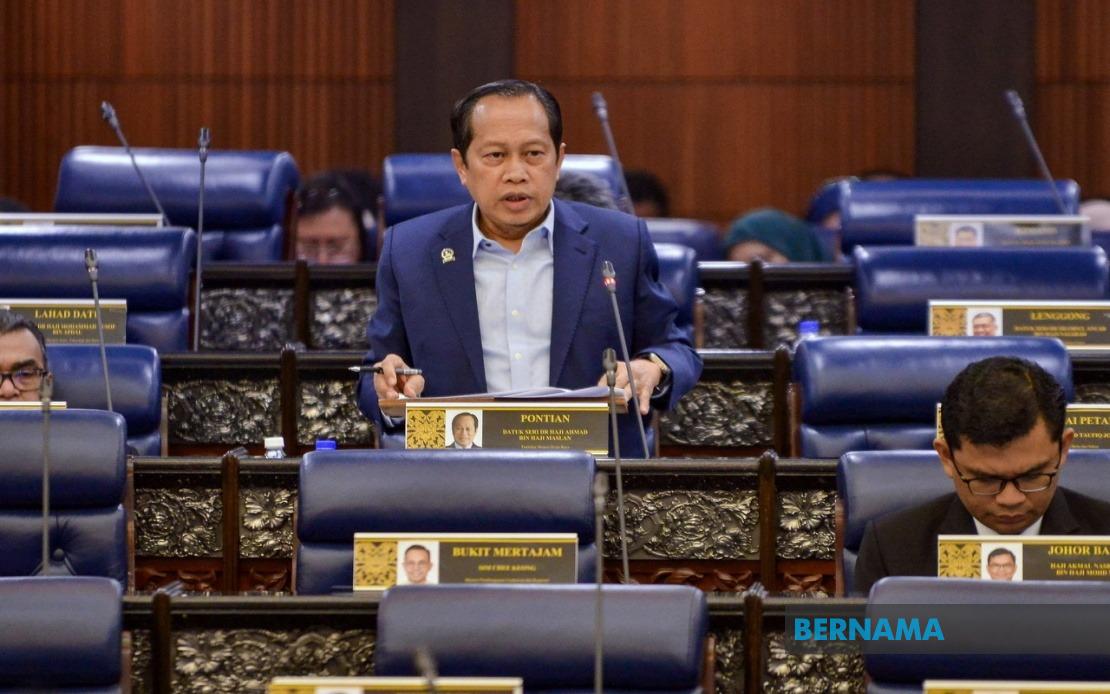
The Malaysian federal government has released RM1.2 billion in compensation payments to landowners affected by the Sabah Pan Borneo Highway Phase 1 project, according to Deputy Minister of Works Datuk Seri Ahmad Maslan. Speaking during parliamentary proceedings on July 14, the minister indicated that a separate RM737 million has been allocated for land compensation in the Sarawak portion of the initiative. The government is assuming full responsibility for all compensation, losses, and related administrative expenses, ensuring that affected property owners do not bear financial hardship from the infrastructure development.
The magnitude of these compensation figures underscores the substantial land acquisition requirements of the Pan Borneo Highway scheme, one of Southeast Asia's most ambitious transportation infrastructure projects. Both states have experienced significant disruptions to communities and livelihoods as the highway corridors take shape across Sabah and Sarawak. The commitment to full government compensation reflects an attempt to balance development imperatives with social responsibility, though questions remain about whether current payment levels adequately reflect land values and relocation costs in rural Borneo communities.
The project has encountered substantial cost escalations since its conception, with Phase 1 in Sabah expanding from an initial RM12.86 billion estimate in 2015 to the current RM24.889 billion—nearly doubling in less than a decade. This dramatic increase prompted parliamentary scrutiny from WARISAN-Kota Belud representative Isnaraissah Munirah Majilis, who questioned the justification for such significant cost growth. Ahmad Maslan attributed the escalation primarily to a fundamental shift in project delivery methodology implemented in 2019, when the federal government terminated the Project Delivery Partner model in favour of the Federal Conventional Contractor approach.
The abandonment of the PDP framework followed national interest considerations that necessitated a comprehensive reassessment of remaining work and project scope. Five years into the original contract period, the transition to direct government contracting required recalibration of technical specifications, engineering standards, and delivery timelines. This structural change introduced complexities that rippled through cost calculations, as the new contracting model demanded fresh environmental assessments, design reviews, and coordination mechanisms differing substantially from the previous partnership structure.
Beyond the contracting methodology shift, Ahmad cited multiple technical factors contributing to cost inflation. Changes in project scope and architectural design proved significant, alongside unexpected geotechnical challenges requiring additional soil treatment and stabilisation work. Large-scale utility relocation operations—involving the rerouting of electricity, water, telecommunications, and other essential services—constituted considerable additional expenditure. These technical adjustments reflect the engineering complexities inherent in constructing major highways through diverse terrain in Sabah and Sarawak, where geological conditions often differ substantially from initial surveys.
The Phase 1 project comprises two distinct segments with separate cost allocations. Phase 1A encompasses 16 work packages valued at RM10.9 billion, while Phase 1B contains 19 work packages totalling RM13.989 billion. This division allows for sequential delivery and staged funding mechanisms, though it also complicates overall project management and coordination. The distribution of costs across these phases reflects varying terrain difficulty, population density, and infrastructure requirements across the two segments.
Macroeconomic pressures have substantially amplified project costs beyond technical and design considerations. Global commodity price volatility, particularly for critical construction materials, has driven significant budget increases. Iron, bitumen, and cement—fundamental inputs for highway construction—experienced pronounced price escalations during the project's timeline, reflecting international market dynamics and supply chain disruptions. Additionally, Malaysia's labour costs and machinery rental expenses have risen substantially, compounding the inflationary pressures affecting per-kilometre construction costs.
For Malaysian stakeholders and regional observers, the Pan Borneo Highway represents critical infrastructure linking Sabah and Sarawak more effectively to broader economic networks. The project promises enhanced connectivity between cities, improved access to natural resources, and strengthened regional integration within Borneo. However, the escalating costs raise questions about project sustainability, funding sources, and whether anticipated economic returns will justify the significant public investment. Southeast Asian infrastructure projects frequently encounter similar cost overruns, making the Sabah experience instructive for neighbouring nations planning comparable developments.
The compensation payments represent only one dimension of the project's broader economic impact on affected communities. Beyond direct land acquisition costs, residents have experienced disruptions to agricultural activities, business operations, and social cohesion. The adequacy of compensation in relation to genuine economic losses, opportunity costs, and relocation expenses remains contested in some communities, particularly among smallholder farmers and indigenous groups whose land relationships extend beyond conventional market valuations.
Looking forward, the federal government faces mounting pressure to demonstrate effective project management and transparent cost accountability. Parliamentary questioning, particularly from opposition benches, signals continued scrutiny of expenditure patterns and delivery mechanisms. The combination of rising costs and compensation payments necessitates robust project oversight to prevent further escalations and ensure value for public money. For Malaysian citizens in Sabah and Sarawak, the balance between development benefits and community impacts will ultimately determine whether the Pan Borneo Highway achieves its intended objectives of regional prosperity and connectivity.

