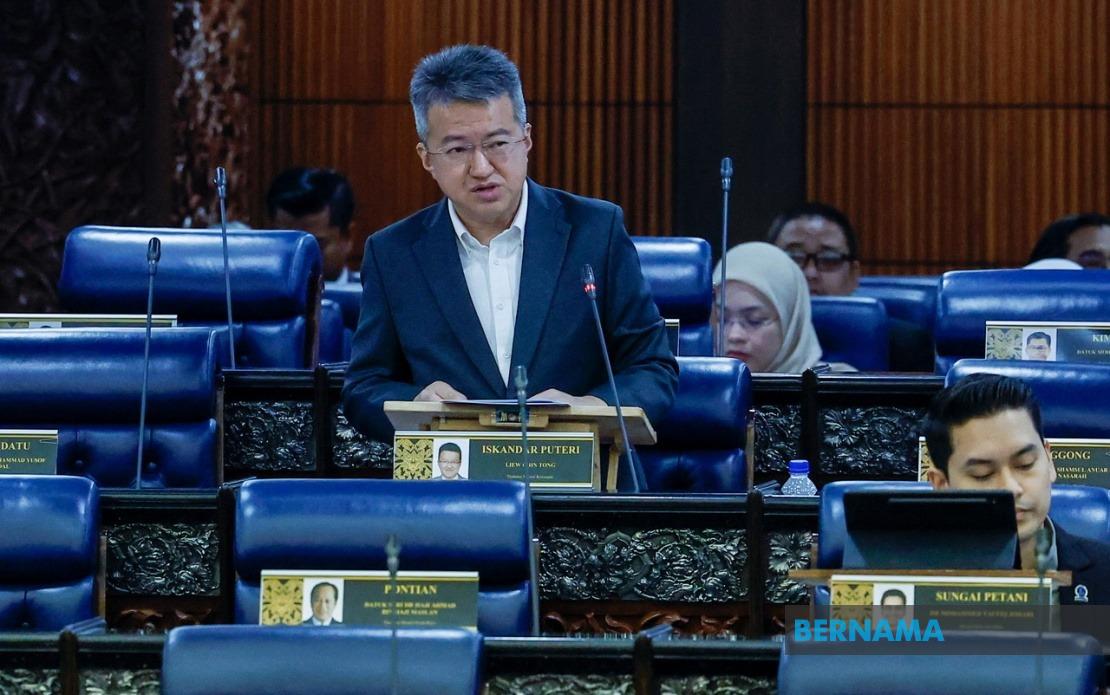
The federal government has moved to calm concerns in Sabah by clarifying that an interim boost to the state's special grant will not translate into reduced development or operational funding. Deputy Finance Minister Liew Chin Tong made the assurance in Parliament on July 14, responding directly to questions about the RM1.5 billion increase that Prime Minister Datuk Seri Anwar Ibrahim announced in May, addressing longstanding constitutional arrangements that have made Sabah's financial settlement with Kuala Lumpur a sensitive political issue.
Liew's statement carries particular weight given the historical tensions surrounding Sabah's special grant entitlements under Articles 112C and 112D of the Federal Constitution. These provisions have been the subject of ongoing litigation and political negotiation since Malaysia's formation, with previous disputes leading to legal challenges and considerable debate about whether the federal government has honoured its constitutional obligations to the East Malaysian state. The government's explicit commitment that the interim grant boost would sit separately from core development budgets represents an attempt to prevent the additional special grant from cannibalizing existing project funding.
The scope of Sabah's current development expenditure underscores the substantial federal commitment to the state's infrastructure. Development allocations have climbed from RM6.7 billion to RM6.9 billion in the current financial year, supporting a diverse portfolio of projects spanning major transport corridors like the Pan Borneo Highway alongside community-focused initiatives in rural electrification and water infrastructure. This layered approach reflects the geographic challenges of serving remote constituencies across Sabah's vast territory, where scattered populations and difficult terrain necessitate sustained federal investment to achieve service parity with Peninsular Malaysia.
Water supply expansion represents a particularly visible indicator of federal commitment to rural Sabah. The allocation for rural water projects nearly increased by forty percent, rising from RM103.5 million in 2025 to RM143 million this year, a trajectory that signals accelerated infrastructure development in underserved areas. These investments address long-standing grievances in communities lacking reliable piped water access, a concern that carries both development and political dimensions in a state where service delivery remains uneven between urban and interior regions.
Electricity subsidies present a more complex policy dimension. Although the state government assumed regulatory control over electricity supply in 2024 under a devolution of powers, the federal government has committed to continuing subsidy provisions that keep power costs manageable for consumers. The 2026 subsidy allocation is projected to reach RM880 million, a substantial ongoing commitment that ensures electricity affordability does not become a flashpoint despite the shift in regulatory authority. This arrangement reflects the delicate balance required when transferring service responsibilities while maintaining uniform pricing principles across Malaysia.
Cost-of-living assistance schemes demonstrate the federal government's broader social protection focus in Sabah. The Sumbangan Tunai Rahmah and Sumbangan Asas Rahmah cash assistance programmes directed toward Sabah residents carry an estimated value of RM1.2 billion, targeting household financial pressures at a time when inflation and supply chain disruptions continue affecting purchasing power across the region. These direct transfer mechanisms complement infrastructure investment by addressing immediate welfare concerns that influence electoral sentiment and public satisfaction with federal performance.
The constitutional framework governing special grants to Sabah and Sarawak reflects the unique political bargain embedded in Malaysia's federation. Articles 112C and 112D establish specific procedures and principles for determining grant amounts, distinguishing these states' financial arrangements from other federal entities. The government's stated respect for these constitutional provisions, even whilst maintaining an appeal against aspects of the Kota Kinabalu High Court's earlier ruling, suggests judicial intervention has forced clarification of federal obligations that were previously subject to administrative discretion or negotiation.
Liew's emphasis on established procedures and precedent—referencing implementation patterns from 2022, 2023, and 2025—indicates that the government views the special grant as an established mechanism requiring consistent application rather than a discretionary policy lever. This institutional framing aims to depoliticize what remains inherently political, by anchoring the grants in constitutional text and procedural regularity rather than executive goodwill or annual negotiation. However, the ongoing appeal against court rulings suggests the government contests interpretation of constitutional obligations, potentially signalling future disputes.
The federal government's commitment to negotiate a new mechanism for determining future grant amounts reflects recognition that current arrangements may lack sustainability or clarity. The existing constitutional formula apparently generates disputes requiring court intervention and repeated clarification, suggesting that a reformed framework with explicit criteria and transparent methodology could reduce ongoing tension. Such negotiations with the Sabah state government would operate within the bounds of Articles 112C and 112D, indicating that any new mechanism would require constitutional alignment rather than extraconstitutional arrangement.
For Malaysian readers beyond Sabah, this development illustrates how resource distribution within a federal system requires careful choreography between national budgetary constraints and regional constitutional entitlements. The assurance that interim grants do not reduce development allocations addresses a legitimate concern that special arrangements might represent zero-sum reallocation from other priorities. Instead, the government's framing suggests the grant increase comes from additional federal revenue or budgetary flexibility rather than reductions elsewhere, though the mechanics of how this occurs remain technical details left unstated.
The broader implications extend to federal-state relations across Malaysia. Sabah's experience with contested constitutional grants and subsequent litigation has established jurisprudential precedents affecting how other states interpret their own constitutional entitlements. The willingness of the federal government to continue subsidy programmes and development investment despite transferring some regulatory authority suggests a hybrid model where fiscal and political control diverge, requiring coordination between different levels of government operating under distinct mandates.

