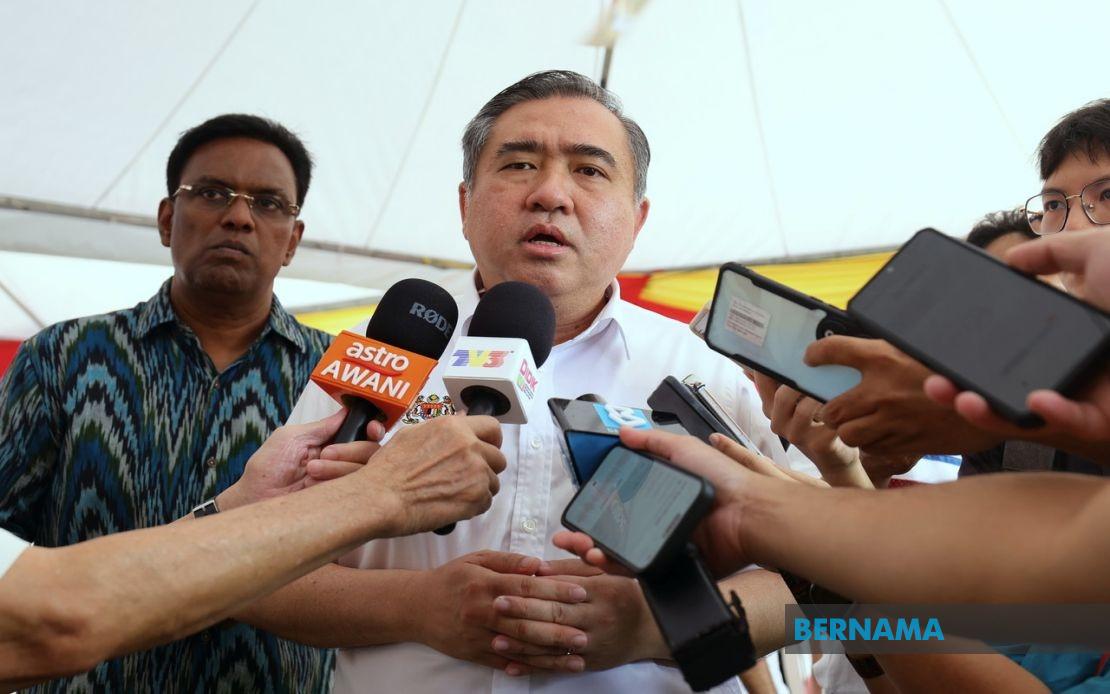
Transport Minister Anthony Loke has pledged RM100,000 in funding to Kampung Bukit Temiang as part of the government's MADANI Adopted Village Programme, marking another step in the administration's push to directly engage with rural communities. The financial commitment brings together resources from two sources: RM50,000 channelled through the Railway Assets Corporation, a Transport Ministry agency, and an equivalent sum drawn from Loke's allocation as Member of Parliament for Seremban. This dual-funding approach demonstrates how federal agencies and parliamentary members can pool resources to maximise impact on the ground.
The allocated funds will flow to the Federal Village Development and Security Committee, or JPKK, which will oversee the phased implementation of improvement projects. According to Loke, consultation with residents has identified several priority areas requiring attention. These include refurbishment of the community hall, roof repairs on residential properties, enhancement of the drainage infrastructure, and other facilities deemed essential by locals. The approach underscores a shift towards bottom-up development planning, where community voices shape investment decisions rather than top-down mandates determining needs.
The Transport Minister emphasised that the programme reflects a broader governmental philosophy centred on active ministry engagement with constituencies. Rather than operating through distant bureaucratic channels, each ministry is expected to develop direct relationships with local communities to comprehend and resolve their specific challenges. This decentralised strategy aims to bridge the gap between policy-makers and residents, ensuring that allocated resources address genuine demands rather than assumed priorities. For Kampung Bukit Temiang residents, this translates to having their concerns heard and acted upon through structured institutional mechanisms.
Implementation flexibility forms another key feature of the initiative. The JPKK possesses discretion in how projects are executed, with options ranging from conventional contractor engagement to community-driven gotong-royong activities that mobilise local volunteerism. Roof repairs and other maintenance works can be undertaken either through RAC-managed initiatives or by appointed local contractors, creating employment opportunities within the village while strengthening community bonds through collaborative effort. This flexibility allows village leadership to adapt implementation methods to local circumstances and resource availability.
Beyond the Kampung Bukit Temiang allocation, Loke outlined parallel developments in the taxi sector under the National MADANI Taxi Renewal Programme. The government recently announced a RM10 million supplementary allocation earmarked for vehicle replacement matching grants targeting taxi drivers. This additional funding follows the initial RM10 million provision under Budget 2026, indicating strong government momentum behind taxi modernisation efforts. The generous response to earlier funding commitments suggests substantial interest among operators, validating the programme's relevance to the transportation sector's needs.
The taxi renewal initiative transcends simple vehicle replacement financing. According to Loke, Prime Minister Datuk Seri Anwar Ibrahim envisioned a comprehensive framework addressing multiple dimensions of driver welfare and industry sustainability. Participating operators receive briefings on available benefits, including driver-friendly financing arrangements, mechanisms for income diversification, social protection schemes, permit procedures, and modernisation incentives. This holistic approach recognises that vehicle replacement alone cannot solve underlying profitability pressures facing traditional taxi operations in an increasingly competitive transport marketplace.
A significant policy dimension involves positioning e-hailing platforms and traditional taxis as complementary rather than adversarial entities. The government has deliberately fostered collaboration between these sectors, viewing them as strategic partners capable of delivering superior public transport outcomes through cooperation. This pragmatic stance departs from zero-sum framing that treats e-hailing expansion as inherently threatening to taxi livelihoods. Instead, the framework encourages knowledge-sharing and operational coordination that could enable taxi drivers to adopt digital tools and service innovations previously associated with platform-based competitors.
The Land Public Transport Agency and other government bodies are coordinating implementation to ensure the programme achieves its stated objectives. Loke actively solicited engagement from multiple stakeholders—taxi associations, financial institutions, automotive manufacturers, and e-hailing operators—recognising that successful taxi modernisation requires ecosystem-wide cooperation. This inclusive approach contrasts with siloed regulatory approaches and acknowledges that lasting transformation requires buy-in from all major industry actors rather than enforcement through state directive alone.
For Malaysian readers, particularly those in rural constituencies or dependent on taxi services, these initiatives signal government attention to livelihood concerns beyond urban commercial hubs. The MADANI Adopted Village Programme demonstrates responsiveness to infrastructure deficits in smaller settlements, while taxi modernisation efforts acknowledge the broader ecosystem supporting affordable urban mobility. The RM100,000 Kampung Bukit Temiang allocation, though modest in absolute terms, exemplifies how strategic allocation of parliamentary and agency resources can catalyse meaningful community improvements when combined with genuine consultation processes and flexible implementation frameworks.

