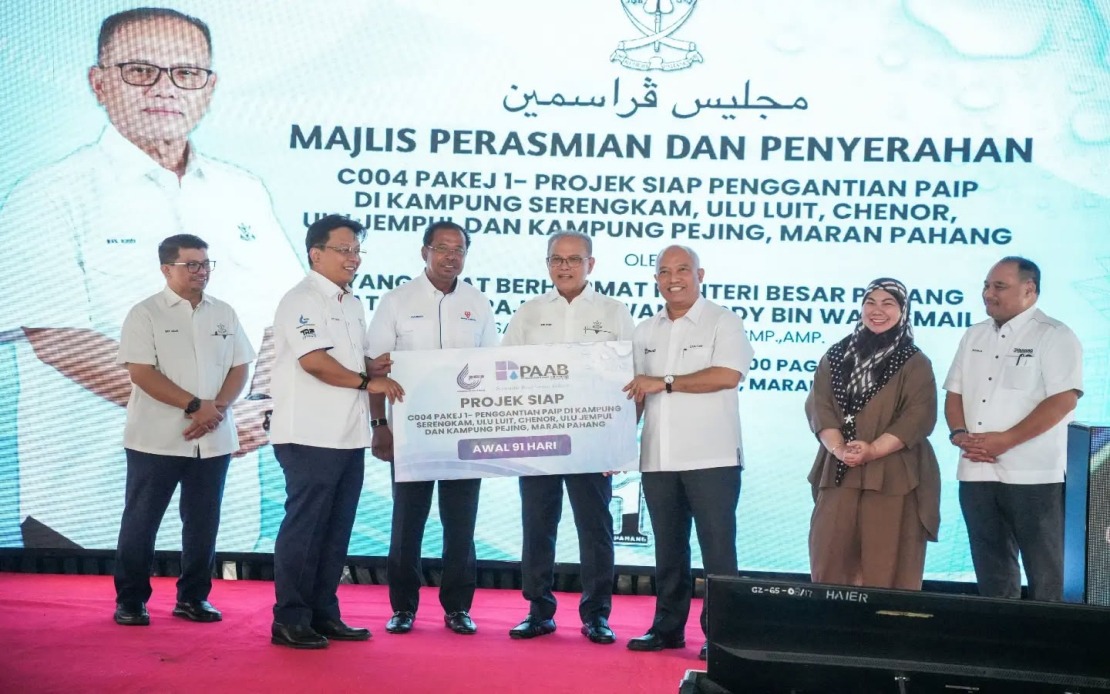
Pengurusan Aset Air Berhad (PAAB) has completed a RM11.19 million pipeline replacement initiative in Maran that finally addresses chronic water supply failures that have plagued the district for nearly two decades. The project, which concluded three months ahead of schedule, represents a major step forward for residents of Chenor and neighbouring communities who have endured frequent service interruptions and pressure inconsistencies.
The scope of the work was substantial, involving the replacement of 29.6 kilometres of deteriorated piping across multiple localities including Kampung Serengkam, Ulu Luit, Pejing, Ulu Jempul and Chenor. These pipelines had become increasingly unreliable, with burst incidents occurring regularly and water quality issues affecting the local population. The completion of this renovation demonstrates a commitment to tackling infrastructure deficits that persist across Malaysia's states, where ageing water systems inherited from earlier decades continue to compromise service quality and economic productivity.
The benefits extend beyond merely stopping leaks. By replacing outdated infrastructure, PAAB has simultaneously reduced non-revenue water losses—the technical term for water lost through leakage and theft—and stabilized pressure throughout the network. This improvement proves particularly valuable during periods of peak demand, such as the dry season and major festive celebrations when water shortages typically intensify. Nearly 10,000 residents directly benefit from these enhancements, marking a meaningful advancement in living standards and public health for the Maran district.
Pahang Menteri Besar Datuk Seri Wan Rosdy Wan Ismail officially handed over the project at the Chenor Water Treatment Plant, with participation from Deputy Energy Transition and Water Transformation Minister Datuk Seri Abdul Rahman Mohamad and Deputy Economy Minister Datuk Mohd Shahar Abdullah. This high-level attendance underscores the strategic importance of water infrastructure as a pillar of regional development and economic resilience. PAAB chief executive officer Zulkiflee Omar and Pengurusan Air Pahang Berhad (PAIP) chief executive officer Datuk Saiful Zaini Mohd Bokhari were also present, reflecting the collaborative approach between federal and state water authorities.
Maran represents merely one district within a broader, multi-year transformation strategy for Pahang's entire water network. Over the next three years, PAAB and PAIP intend to pursue additional infrastructure upgrades across several other areas. One initiative involves modernizing the electrical systems at the Jengka Utama Water Treatment Plant's clean water pumping station, targeting relief for the Felda Jengka settlement, which has similarly experienced service interruptions.
The investment pipeline is ambitious. PAAB is pursuing a RM35.7 million undertaking to replace 76.2 kilometres of pipes in Jerantut and Lipis, encompassing communities near Pulau Tawar and Kuala Tahan. Simultaneously, another RM13 million project is underway in Felda Keratong, where 11 kilometres of pipes will be renewed to enhance water distribution efficiency across Rompin. These parallel initiatives reveal the scale of infrastructure deterioration across Pahang and the magnitude of capital required to modernize the state's water systems.
Financially, PAAB's commitment to Pahang is substantial. As of July, the asset management entity had allocated RM1.17 billion for water infrastructure projects throughout the state. Of this total, RM69.79 million had been spent on completed projects, RM66.94 million was allocated to ongoing construction, and RM981.04 million was earmarked for projects still in planning and design phases. This distribution indicates that the majority of anticipated expenditure remains ahead, suggesting sustained construction activity and investment momentum for several years.
For Malaysian readers and policymakers, the Maran project carries broader implications about infrastructure governance and the costs of deferred maintenance. Water systems built decades ago now require systematic renewal, consuming substantial public resources. The acceleration of PAAB's programme reflects federal recognition that failing infrastructure undermines economic competitiveness and public health simultaneously. States with deteriorating water networks struggle to attract investment and face higher operational costs due to excessive leakage.
PAAB itself operates within a structured regulatory framework established in 2006 under the Water Services Industry Act. The entity is wholly owned by Minister of Finance Incorporated and reports to the Ministry of Energy Transition and Water Transformation (PETRA), ensuring alignment with national water sector transformation objectives. This institutional arrangement seeks to professionalize water asset management and separate service delivery from ownership, a model that has proven effective in various international jurisdictions.
The relationship between PAAB and PAIP crystallized through the Pahang State Water Supply Services Restructuring Agreement signed in 2020. This partnership delineates roles and responsibilities, enabling coordinated planning and execution of infrastructure projects. Such formal agreements reduce jurisdictional ambiguity and facilitate faster decision-making compared to fragmented approaches where multiple agencies operate independently.
The federal government's overarching vision frames these state-level initiatives within a national agenda to transform water services into a more resilient, efficient and sustainable system. This mirrors global trends, where water scarcity and climate variability are driving urgent infrastructure modernization. For Southeast Asia, where rapid urbanization and competing water demands are intensifying, the urgency of such upgrades cannot be overstated. Maran's transformation serves as a demonstration project that systematic investment, combined with professional asset management, can resolve chronic service deficiencies.
For communities like Maran that have suffered extended service disruptions, the completion of this project represents concrete progress toward normalcy. However, the sheer scale of remaining work across Pahang and beyond suggests that water infrastructure challenges will preoccupy Malaysian policymakers for years ahead. The financial commitments and timelines announced indicate that state and federal authorities recognize the strategic importance of water resilience, positioning infrastructure renewal as essential to Malaysia's medium-term development trajectory.

