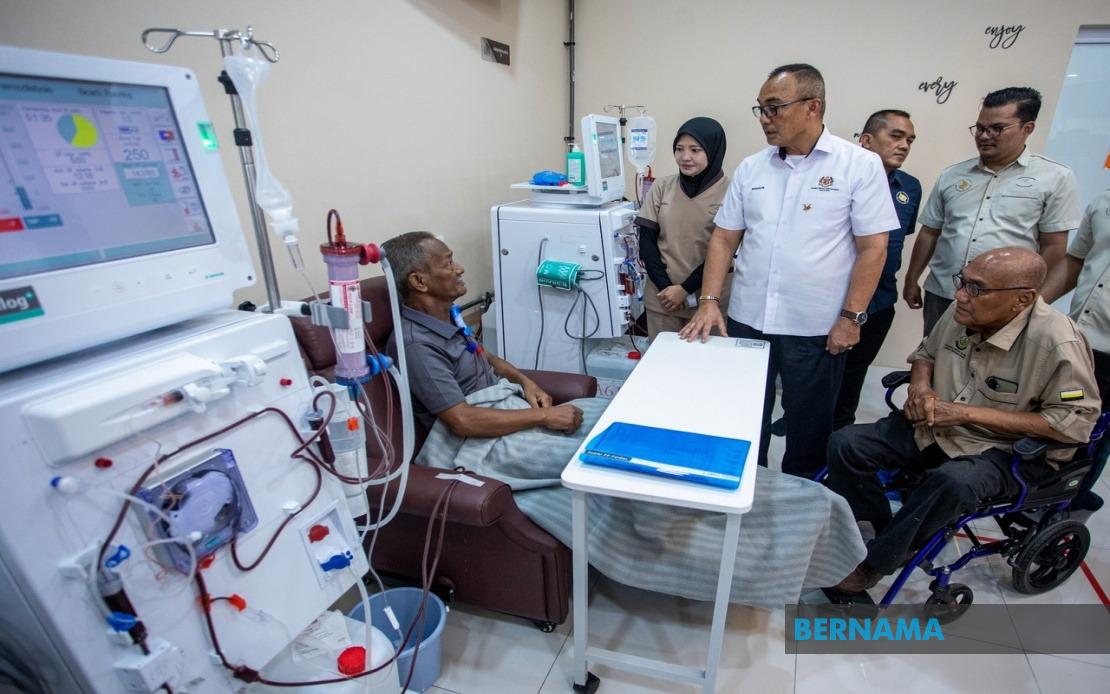
The Yayasan Veteran Angkatan Tentera Malaysia (YVATM) has embarked on a significant healthcare expansion, allocating over RM18 million to construct nine dialysis centres strategically positioned across the country. The initiative represents a commitment to improving medical access for Malaysia's armed forces veterans and their dependents, as well as the broader public. The announcement came during the official opening of the MAF Veterans Foundation Dialysis Centre branch in Batu Kurau, Perak, underscoring the foundation's determination to strengthen its healthcare footprint beyond urban centres.
The geographic distribution of these facilities reflects a careful planning approach designed to serve veteran populations across multiple regions. Four centres will operate in Selangor, the nation's economic heart, while Perak benefits from two locations. Individual centres have been established in Negeri Sembilan, Johor, and Pahang, ensuring that veterans in less urbanised areas gain access to specialised kidney care. This decentralisation strategy addresses a critical gap in dialysis service availability, particularly for veterans residing outside the Klang Valley who previously faced considerable travel burdens to access treatment.
Major General Datuk Semaon Marjuki, director-general of the Malaysian Armed Forces Veterans Affairs Department (MAF JHEV), emphasised that the expansion represents more than infrastructure development. He characterised the initiative as a strategic repositioning of YVATM's role in the healthcare ecosystem, moving beyond serving only military personnel to function as a community health resource. The dialysis centres are not exclusively reserved for veterans but explicitly open to family members and the general public, reflecting an inclusive approach to healthcare delivery that recognises the interconnected health needs of military-connected communities.
The operational standards of these facilities align with Ministry of Health requirements, ensuring consistency with national healthcare protocols. Each centre incorporates modern medical equipment, trained nursing personnel, and patient-focused design elements aimed at creating treatment environments that minimise anxiety and discomfort during dialysis sessions. This attention to facility quality becomes particularly important given that dialysis patients typically require treatment three times weekly for three to four hours, making the quality of their clinical environment a significant factor in treatment outcomes and overall wellbeing.
Operational responsibility for these centres rests with DVET Holding Sdn Bhd, a wholly-owned subsidiary of the MAF Veterans Foundation. This arrangement allows the foundation to maintain direct control over service quality and strategic direction while leveraging professional management expertise. The subsidiary structure also provides operational flexibility and potential financial sustainability pathways that might not be available under direct government administration.
The scale of need within the veteran population is substantial. Currently, 2,055 military veterans nationwide are undergoing dialysis treatment across facilities operated by JHEV, the Social Security Organisation, and other approved providers. This figure illustrates both the prevalence of chronic kidney disease among this demographic and the existing distributed nature of their treatment arrangements. By consolidating and expanding dedicated facilities, YVATM seeks to centralise care coordination and potentially improve patient outcomes through specialised institutional knowledge.
End-stage renal disease presents particular challenges for veterans, many of whom may have occupational or service-related health complications that contribute to their condition. The availability of accessible, quality dialysis services directly impacts their quality of life, employment prospects, and broader social integration. For families of veterans, having treatment centres within reasonable reach reduces transportation costs and logistical burdens that can exacerbate financial strain already associated with chronic disease management.
The timing of this expansion reflects broader regional healthcare trends. Southeast Asian countries have experienced rising incidence of chronic kidney disease linked to ageing populations, increasing diabetes prevalence, and hypertension. Malaysia specifically faces growing demand for dialysis services, with both public and private sectors expanding capacity. YVATM's investment positions the veteran community to access services without straining the already-stretched public healthcare system while maintaining quality standards.
Beyond immediate clinical benefits, the dialysis centre expansion carries symbolic significance for government commitment to veteran welfare. Malaysia's armed forces veterans represent a demographic that served national security interests; providing dedicated healthcare infrastructure acknowledges this service while recognising that military life can carry long-term health consequences. This approach aligns with international best practices in veteran care, where comprehensive health provision is viewed as a reciprocal obligation.
The foundation's positioning of dialysis centres as community facilities rather than veteran-exclusive services generates additional value. Communities adjacent to these centres gain access to specialised nephrology infrastructure that might otherwise be concentrated in tertiary hospitals. This distribution model could reduce patient loads in major medical centres while creating local employment opportunities and stimulating healthcare-related economic activity in smaller towns.
The government's aspiration, as articulated by Major General Semaon, frames this expansion within a broader wellness agenda for Malaysians. Rather than viewing veteran healthcare as a separate concern, the initiative integrates it into national health improvement objectives. This framing potentially opens pathways for integrated policy development and resource allocation that benefits both veterans and wider public health goals.
Looking forward, the success of these nine centres will likely influence subsequent healthcare infrastructure decisions affecting other vulnerable populations. If the dialysis centre model demonstrates effective service delivery and patient outcomes, it could serve as a template for expanding other specialised services through foundation-operated facilities. The initiative therefore represents both an immediate response to veteran healthcare needs and a potential proof-of-concept for alternative healthcare delivery mechanisms in Malaysia's evolving medical landscape.

