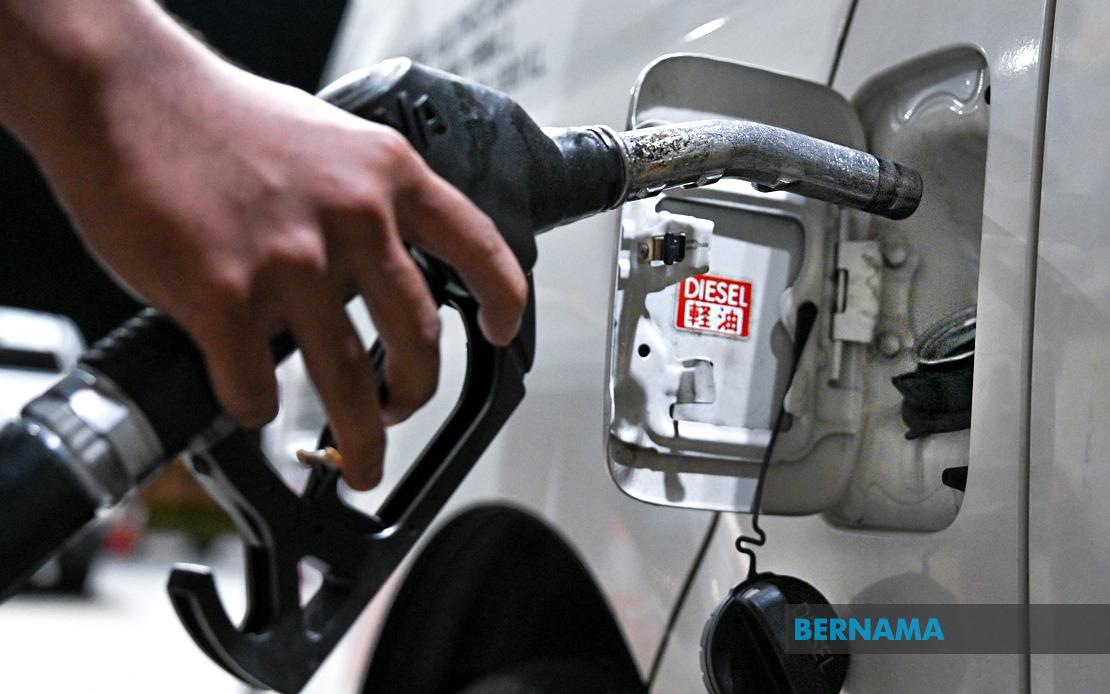
The Malaysian government has moved to reduce subsidised diesel prices to RM2.10 per litre starting from July 2026, a decision that has been widely welcomed by transporters, traders, and small business operators who shoulder significant fuel costs in their daily operations. Prime Minister Datuk Seri Anwar Ibrahim unveiled the initiative today, framing it within the broader MADANI government framework that has already successfully implemented targeted fuel subsidies through the BUDI MADANI RON95 programme. The new scheme will employ MyKad verification to ensure that only eligible Malaysian citizens benefit from the price reduction, marking a continuation of the government's pivot toward means-tested rather than universal fuel subsidies.
The timing of this announcement carries particular significance for Malaysia's informal and small-scale business sector, which has borne mounting pressure from volatile fuel costs over the past several years. Night market traders, delivery workers, and independent contractors—categories that represent substantial portions of Malaysia's workforce—stand to realise meaningful monthly savings through even marginal price reductions. Mohd Faizal Ahmad, a 43-year-old night market trader from Shah Alam, articulated the sentiment of many in this segment, noting that the reduction would translate into tangible financial relief that could be reinvested into their operations or families. More significantly, he emphasised his appreciation for the targeted approach, expressing confidence that restricting the subsidy to Malaysian citizens would direct assistance toward those genuinely dependent on diesel rather than enabling leakage to neighbouring countries or speculators.
The implementation mechanics warrant close examination, as the success of this programme will ultimately depend on the seamlessness of the MyKad verification process at the pump. The government has tasked Second Finance Minister Datuk Seri Amir Hamzah Azizan with providing detailed implementation guidelines, suggesting that considerable administrative work remains before the scheme's July 2026 rollout. For business operators like Tan Chee Keong, a 52-year-old contractor from Johor Bahru whose four-wheel drive vehicle is essential to his construction materials delivery business, the critical variable is not merely the price reduction itself but whether verification systems will prevent subsidy abuse whilst remaining practical for daily users who refuel frequently.
The agricultural and horticulture sectors, which depend heavily on diesel-powered transport for market distribution, stand to gain particularly from this development. R. Mageswaran, a vegetable farm operator in Sungai Siput, Perak, highlighted how fuel costs represent one of the largest controllable expenses in produce logistics. For farmers who must transport perishable goods across considerable distances to markets and food service establishments, even a five-sen saving per litre compounds into meaningful operational savings across dozens of refueling cycles monthly. This sector's support for the measure reflects recognition that agricultural competitiveness in Southeast Asia increasingly turns on logistics efficiency.
The geographic scope of the reform extends the subsidy uniformity programme to Sabah, Sarawak, and Labuan, addressing a longstanding disparity in fuel pricing across Malaysian territory. Currently, diesel in Sabah and Sarawak is priced at RM2.15 per litre with subsidy protection, whilst Peninsular Malaysia's unsubsidised rate stands at RM4.37 per litre—a gap that has created incentives for cross-border smuggling and pricing distortions. By establishing a single subsidised price point of RM2.10 across all regions through MyKad verification, the government theoretically eliminates these arbitrage opportunities whilst extending the subsidy regime into East Malaysia in a controlled fashion.
The Ministry of Finance's statement clarifying nationwide coverage signals a deliberate effort to avoid the political and economic complications that have historically surrounded regional fuel pricing variations. Malaysia's eastern states have long viewed fuel subsidy differentials as compensation for geographic remoteness and higher distribution costs, making any adjustment to this arrangement politically sensitive. The announcement's emphasis on nationwide access suggests the government has calculated that the optics of universal subsidy coverage, even at a reduced price, outweigh the fiscal costs compared to maintaining previous regional distinctions.
Understanding the subsidy's fiscal dimensions illuminates the government's strategic calculus. By setting the price at RM2.10 rather than lower levels, authorities have calibrated the initiative to provide material relief whilst containing the budgetary exposure that blanket subsidies traditionally impose. This represents a refinement of subsidy policy toward targeted rather than universal approaches—a pattern consistent with International Monetary Fund recommendations for emerging market fiscal discipline. The MyKad verification mechanism effectively functions as a gatekeeping device, theoretically limiting the beneficiary pool to citizens whilst reducing opportunities for foreigners or speculators to access subsidised fuel.
The announcement arrives within a broader context of Malaysian economic policy recalibration. Over recent years, the government has transitioned from blanket fuel subsidies—which historically benefited wealthier vehicle owners disproportionately—toward targeted assistance programmes designed to reach lower-income households and productive sectors. The BUDI95 programme for petrol established this template successfully, and extending similar logic to diesel represents policy consolidation rather than innovation. However, the implementation quality remains paramount; if verification systems prove cumbersome or unreliable, the measure risks becoming ineffective or generating public frustration.
For regional observers, Malaysia's diesel subsidy adjustment reflects broader Southeast Asian trends toward fiscal consolidation and targeted welfare rather than universal support programmes. Thailand, Indonesia, and the Philippines have all grappled with similar subsidy reform debates, each navigating the tension between fiscal sustainability and political feasibility. Malaysia's approach—combining modest price reductions with citizenship-based verification—occupies a middle ground between full subsidy abandonment and unchanged universal programmes. The July 2026 implementation date allows adequate time for administrative preparation and public communication, potentially reducing implementation friction.
The business community's cautiously optimistic reception suggests recognition that sustainable subsidy frameworks ultimately serve economic interests better than unsustainable ones. Trade and transport associations have historically resisted subsidy reductions, yet contemporary statements from individual operators reflect sophisticated understanding that subsidy leakage and black-market trading undermine legitimate users. This evolved sentiment creates political space for reform that previous administrations lacked. Success depends fundamentally on whether the MyKad verification infrastructure functions reliably and whether the government resists political pressures to expand eligibility criteria post-launch.
Looking ahead, this reform establishes a template for potential subsequent adjustments. Should the RM2.10 subsidy prove fiscally unsustainable or if fuel price pressures mount, the government possesses an administrative framework for future modifications. Conversely, if verification systems prove ineffective, pressure will mount for alternatives. The measure thus represents both an end-point—the completion of nationwide subsidy harmonisation—and a potential waypoint toward deeper subsidy restructuring. The coming months before July 2026 will prove crucial in determining whether the administrative apparatus can deliver on the policy's promise, and whether the political consensus supporting targeted subsidies can withstand the inevitable pressure campaigns from those ineligible or inconvenienced by verification requirements.

%22%2F%3E%3C%2Fpattern%3E%3C%2Fdefs%3E%3Crect%20width%3D%22100%25%22%20height%3D%22100%25%22%20fill%3D%22url(%23ph44qleg)%22%2F%3E%3Crect%20width%3D%22100%25%22%20height%3D%22100%25%22%20fill%3D%22url(%23ph44qlep)%22%2F%3E%3Ctext%20x%3D%2250%25%22%20y%3D%2250%25%22%20text-anchor%3D%22middle%22%20dominant-baseline%3D%22central%22%20fill%3D%22rgba(255%2C255%2C255%2C0.95)%22%20font-family%3D%22Georgia%2C%20'Times%20New%20Roman'%2C%20serif%22%20font-weight%3D%22700%22%20font-size%3D%22320%22%20letter-spacing%3D%22-0.02em%22%3EMUDA%3C%2Ftext%3E%3C%2Fsvg%3E)