Petaling Jaya is set to gain a new recreational facility following confirmation from Selangor's local government authorities that a RM400,000 park development project will proceed along Jalan PJS1/30 in the Taman Medan area. The initiative represents part of a wider strategy to enhance green spaces and improve the urban landscape in one of the Klang Valley's most established residential zones.
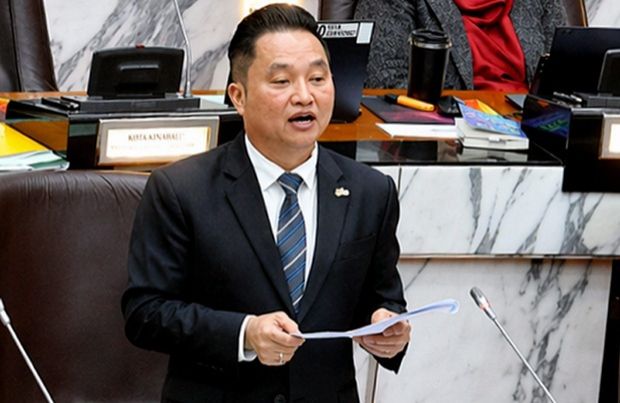
Datuk Ng Suee Lim, chairman of Selangor's local government and tourism committee, outlined the project during the state assembly sitting at Bangunan Dewan Negeri Selangor in Shah Alam on August 10. Construction timelines remain contingent upon Petaling Jaya City Council's budgetary allocations and priorities, with work anticipated to commence in the following year. The delay allows MBPJ to incorporate the project into its financial planning while ensuring adequate resources for quality execution.
The envisioned park will serve multiple objectives beyond simple recreation, addressing longstanding concerns about underutilised public spaces in the municipality. By transforming an open area into a curated community facility, planners aim to enhance safety, accessibility, and overall environmental quality. The development reflects a broader municipal commitment to creating spaces that encourage outdoor engagement whilst maintaining ecological integrity and contributing to the city's sustainability agenda.
The Taman Medan initiative forms part of a comprehensive framework known as the Damansara Damai People's Park Landscape Masterplan, which MBPJ has developed in alignment with the Petaling Jaya Strategic Plan 2030. This overarching vision prioritises the creation of five distinct urban parks throughout the municipality, each designed to serve specific community functions whilst advancing environmental objectives. The phased approach allows for measured implementation and ensures that resources are allocated efficiently across multiple sites.
The masterplan establishes clear principles guiding park development, emphasizing recreation, environmental conservation, biodiversity protection, community participation, and advancement toward a low-carbon urban model. These priorities reflect evolving expectations regarding municipal governance in the post-pandemic era, where residents increasingly demand accessible green infrastructure that promotes both physical wellbeing and ecological awareness. The framework demonstrates recognition that modern urban planning must balance density with livability.
Among the five planned parks, Taman Damai Belantara, designated as Urban Park 3, will emphasise nature education and experiential learning opportunities. The facility will incorporate an urban farming zone enabling residents to engage in small-scale cultivation, an amphitheatre supporting community events and outdoor gatherings, and an information gallery dedicated to environmental education. This combination suggests an intention to move beyond passive recreation toward active community engagement with ecological principles and sustainable practices.
Meanwhile, upgrades to Taman Damai Setia, classified as Urban Park 1, have already commenced this year with continued implementation anticipated throughout the coming year. These enhancements will introduce a family recreation zone catering to multigenerational use, a multipurpose hall facilitating community activities and events, a bioswale system supporting natural water management, a compost centre promoting organic waste reduction, and operational sites for food and merchandise vendors. These facilities reflect contemporary understanding that well-designed parks must serve multiple functions and accommodate diverse user needs.
The municipal vision extends beyond individual park sites to encompass linear green corridors linking disparate areas. A significant portion of this strategy involves transforming the Sungai Klang riverbank into a cohesive recreation space, a transformation that would reshape how residents interact with the municipality's natural waterways. Development of river reserve zones surrounding both Sungai Klang and Sungai Penchala will establish these areas as green corridors whilst simultaneously creating recreational opportunities for nearby communities.
The riverbank development strategy emphasises connectivity between natural areas and developed zones, with planned infrastructure including walkways and access points linking the river corridors to adjacent commercial and residential precincts. This approach acknowledges that effective green infrastructure requires physical and psychological accessibility; isolated parks serve limited populations, whereas well-connected systems encourage broader community utilisation. By integrating riverbank zones with surrounding development, planners aim to create destinations rather than peripheral amenities.
Implementation of these interconnected projects depends substantially on MBPJ's budget allocation and strategic priorities, suggesting that whilst the vision is clear, execution will necessarily unfold incrementally. For residents and property owners in Petaling Jaya, this represents an opportunity to advocate for prioritisation of projects affecting their neighbourhoods. The transparent articulation of planning intentions, whilst conditional upon funding, provides stakeholders with actionable information for civic engagement.
These developments carry implications extending beyond Petaling Jaya itself. As one of Malaysia's most mature suburban municipalities with a diverse demographic profile, the city's approach to urban renewal and green infrastructure serves as a potential model for other local authorities seeking to balance density, sustainability, and livability. The emphasis on community-centred design and ecological integration reflects international best practices in municipal planning, adapted to Malaysian urban contexts.
For the broader Klang Valley region, the Petaling Jaya initiatives demonstrate how established suburban areas can evolve and improve without wholesale redevelopment. Rather than pursuing intensive reconstruction that displaces residents and businesses, the measured addition of quality public spaces and green infrastructure preserves community character whilst enhancing environmental performance. This approach may prove particularly relevant for ageing suburbs throughout Malaysia's urban corridors seeking renewal without disruption.

