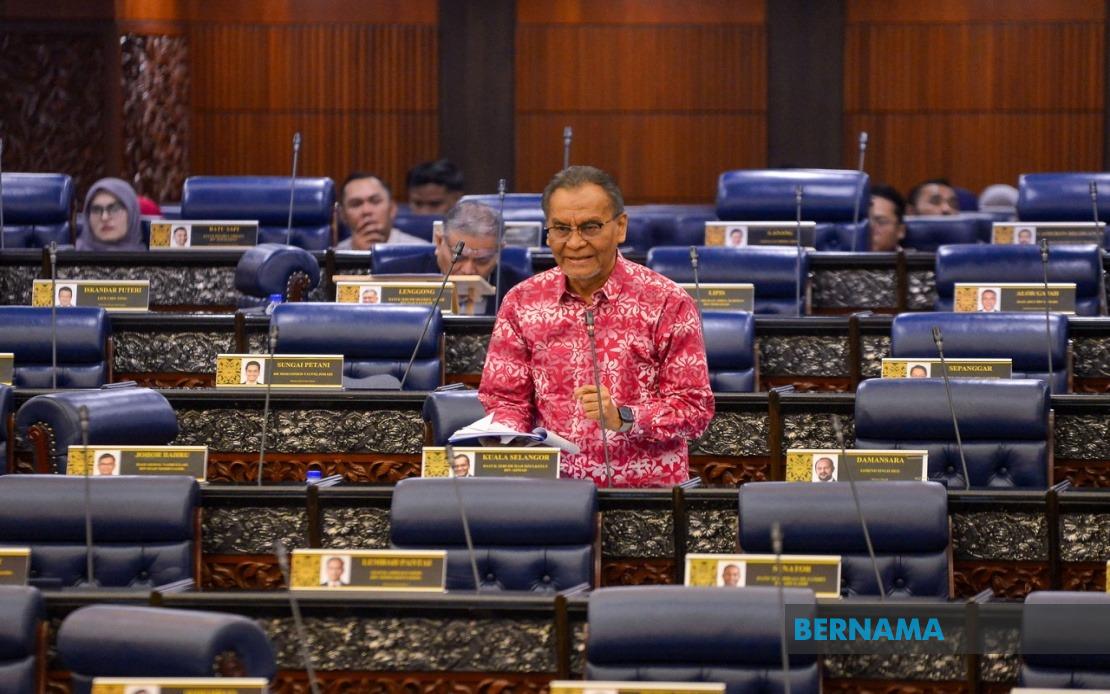
Health Minister Datuk Seri Dr Dzulkefly Ahmad moved to calm public concerns over budget constraints on the Ministry of Health, clarifying that a RM500 million expenditure restriction imposed by the Finance Ministry represents nothing more than a technical reallocation of surplus funds rather than a genuine operational squeeze. The restriction warrant, issued on June 5, amounts to approximately 1.07 per cent of the ministry's total annual allocation of nearly RM46.52 billion, the minister explained during parliamentary questioning on July 2.
The core issue underlying the budget adjustment centres on a fundamental human resources challenge facing the health sector. The MOH has approval for 18,641 positions under the Public Service Department, yet the ministry has been unable to fill all of these vacancies despite active recruitment efforts. Rather than permitting these funds to remain unutilised, the government has chosen to redirect the allocation, thereby creating the appearance of a budget cut without actually reducing monies available for front-line services. Dzulkefly characterised this as prudent financial management in an environment where healthcare workers remain in short supply across the country.
Critically, the minister emphasised that the RM500 million adjustment bypassed all operational, development, staff compensation, training, and medical equipment budgets entirely. The restriction affects only the surplus allocation associated with positions that could not be staffed, meaning the money was theoretically available but practically unable to be deployed. This distinction is vital for understanding why the government insists the cut poses no threat to patient care, emergency services, or capital projects at public health facilities. The reallocation demonstrates how budget management can function differently depending on whether funds are genuinely committed to service delivery or exist in reserve pending recruitment.
Responding to questions from Datuk Shahelmey Yahya of Putatan and supplementary queries from Abdul Latiff Abdul Rahman of Kuala Krai, both of whom raised anxieties about rural healthcare facility impacts, Dzulkefly offered categorical assurances. He rejected characterisations that the adjustment would diminish hospital services, particularly in underserved provincial and remote communities where healthcare infrastructure remains contested political terrain. All fundamental healthcare functions and scheduled development initiatives would proceed without interruption, he stated, reflecting the government's determination to maintain the facade of uninterrupted service provision during periods of fiscal constraint.
Beyond the immediate budget debate, the health minister used the parliamentary forum to announce initiatives addressing a separate but related concern: the escalating expense of private healthcare. Through the Joint Committee on Private Healthcare Costs, the MOH will introduce a basic health protection scheme termed the Base Medical and Health Insurance or Takaful product during July at selected hospitals. This scheme represents an attempt to address the deepening affordability crisis affecting middle-income Malaysians who fall outside the public system's embrace but lack resources for premium private coverage. A comprehensive nationwide rollout is scheduled for January 2027, providing a roughly six-month pilot window to refine operational modalities and iron out implementation challenges.
The proposed MHIT scheme positions itself as a middle-ground option pitched toward consumers increasingly squeezed between public sector waiting periods and private sector premiums that have climbed substantially over the past decade. By designing a basic rather than comprehensive coverage model, policymakers hope to make health insurance accessible to segments of the population currently uninsured or underinsured. The scheme's pricing architecture emphasises affordability and simplicity, avoiding the complex exclusions and coverage gaps that characterise many existing private health insurance products. For Malaysian readers, this initiative signals growing official recognition that healthcare financing mechanisms require fundamental restructuring to remain viable.
Complementing the consumer-focused MHIT initiative is a parallel effort to standardise private sector hospital pricing structures through introduction of a Diagnosis Related Groups payment system. The DRG model, already established internationally as a mechanism for benchmarking hospital charges against procedures and patient complexity rather than arbitrary institutional pricing, would apply across public, private, university, and military hospitals. Implementation of such a system represents a significant intervention in private healthcare markets, effectively constraining profit margins and pricing autonomy among private operators. The standardisation objective reflects policy concern that unchecked private sector pricing contributes substantially to overall healthcare inflation.
For Malaysian healthcare stakeholders, these developments unfold against a backdrop of persistent workforce shortages, geographical inequalities in service provision, and escalating costs that threaten access for substantial population segments. The RM500 million technical adjustment, while characterised as operationally neutral, nonetheless symbolises budget pressures constraining health sector expansion. Simultaneously, private healthcare cost escalation has become politically salient enough to warrant government intervention through both demand-side schemes like MHIT and supply-side price standardisation mechanisms like DRG systems. These parallel initiatives suggest policymakers recognise that neither the public system alone nor the unregulated private system adequately serves population healthcare needs.
The government's dual-track approach—maintaining public service neutrality while engineering private sector restructuring—reflects difficult political positioning. Public sector health workers remain far below required staffing levels, yet budgets cannot easily accommodate rapid recruitment at competitive salaries. Private healthcare, meanwhile, has become accessible primarily to affluent Malaysians, creating a two-tier system inconsistent with equitable health policy aspirations. The MHIT scheme and DRG standardisation represent attempts to bridge these divides through market mechanisms rather than direct government expenditure expansion. How effectively these initiatives address underlying affordability and access challenges will substantially influence healthcare policy debates throughout the region.
For Southeast Asian observers, Malaysia's approach to healthcare financing restructuring offers instructive lessons regarding how governments navigate cost control imperatives alongside service universalisation commitments. The emphasis on technical budget reallocation rather than acknowledged service reduction, combined with market-based pricing standardisation and subsidised basic insurance products, reflects pragmatic policy evolution under fiscal constraint. Whether such mechanisms ultimately prove sufficient to ensure healthcare access across income strata remains an open question shaping both domestic political discourse and broader regional health policy trajectories.

