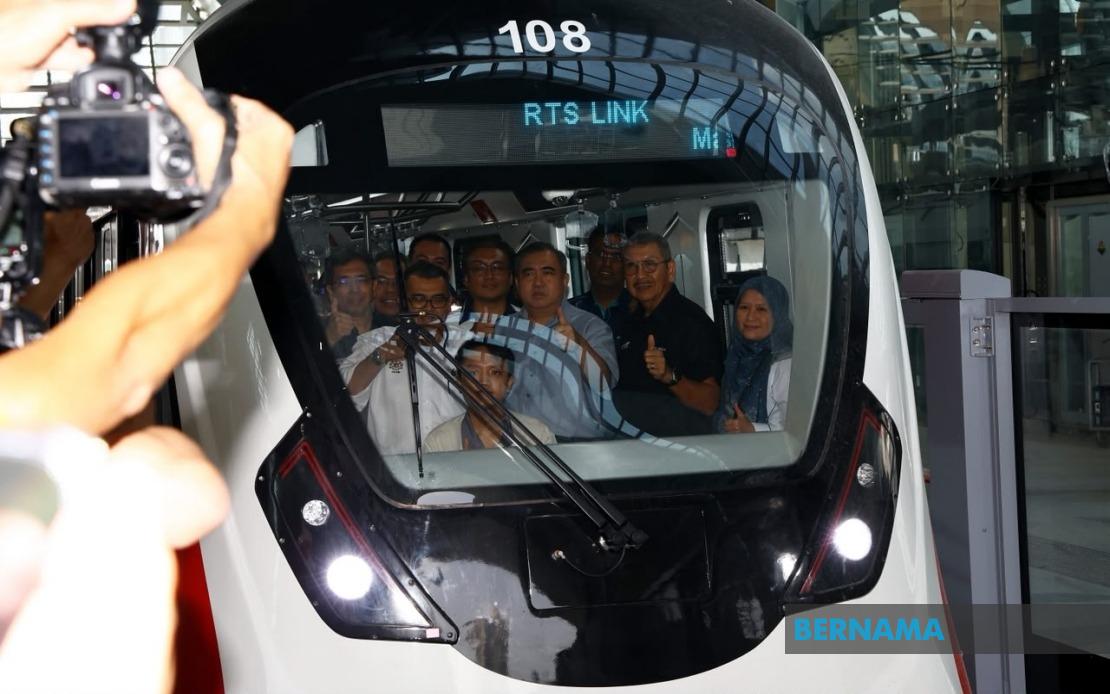
The Malaysian government is moving forward with a major infrastructure initiative designed to streamline passenger connectivity in Johor Bahru's evolving public transport landscape. A RM60 million bridge will connect the Bukit Chagar RTS Link Station directly to the KTMB Komuter service, eliminating the need for passengers to navigate through JB Sentral to access the new rapid transit link. Transport Minister Anthony Loke announced the project has received approval from the Ministry of Economy and will be overseen by the Ministry of Transport, underscoring the government's commitment to seamless multimodal travel experiences in the region.
The strategic value of this connectivity improvement lies in addressing a fundamental passenger pain point. Currently, commuters using KTMB Komuter would need to undertake a circuitous route through JB Sentral to reach the RTS Link. By constructing a dedicated pedestrian bridge, the government seeks to dramatically reduce walking distances and transfer times, making the RTS Link a more attractive option for those already using the commuter rail network. Loke emphasised that this measure will facilitate greater uptake of public transport by removing friction from the journey experience, a critical consideration in cities competing to shift travellers away from private vehicles.
Timeline and execution details indicate the project maintains an aggressive schedule aligned with the RTS Link's broader deployment timeline. The bridge construction is expected to take approximately 12 months to complete, positioning its opening to coincide with or shortly after the RTS Link's commencement of operations on January 1 next year. This synchronisation reflects careful coordination among multiple government agencies and demonstrates strategic thinking around infrastructure rollout, ensuring that complementary projects are delivered in lockstep rather than in isolation.
The bridge project represents only one component of a comprehensive initiative to transform Bukit Chagar into a genuine multimodal transport hub. Integration plans encompass connections with JB Sentral, e-hailing platforms, and broader bus networks, creating a unified ecosystem where passengers can seamlessly transition between different transport modes. This approach aligns with contemporary urban planning best practices, where transit stations serve as integrated mobility centres rather than isolated endpoints. Such integration is particularly significant for Johor Bahru, which faces mounting congestion pressures and requires strategic interventions to manage mobility demands.
Parallel enhancements to bus services underscore the government's holistic approach to transport restructuring. The Stage Bus Service Transformation (SBST) 2.0 initiative will deploy at least 200 additional buses, specifically designed to connect residential areas throughout Johor Bahru with the Bukit Chagar hub. These service additions aim to create comprehensive first-mile and last-mile connectivity that extends the RTS Link's reach beyond the station itself. By capturing travellers from dispersed locations and channelling them through the new rapid transit corridor, the government maximises the infrastructure investment's practical benefit.
Operator agreements for the expanded bus service are currently in finalisation stages, with the Ministry of Finance set to formally approve the final award. This process, while routine in government procurement, indicates the substantial commercial implications of the project. The successful operator will manage a significantly enlarged fleet deployment, representing a meaningful business opportunity within Johor Bahru's transport sector. Coordinating the service launch with the RTS Link's opening will be essential; premature or delayed deployment could undermine the integrated network's effectiveness.
From a construction perspective, physical development has largely concluded, with the Bukit Chagar station building, the Customs, Immigration and Quarantine (CIQ) complex, and the RTS Link infrastructure now moving into intensive testing and commissioning phases. These stages are critical for ensuring operational reliability; system integration testing, fault-free trial runs, and comprehensive commissioning protocols must all be completed before passenger operations commence. Any deficiencies identified during this phase will be rectified, though such delays could potentially affect the January 1 target date.
The RTS Link itself represents a transformative addition to the region's transport infrastructure. Designed to carry up to 10,000 passengers per hour in each direction, it will connect Bukit Chagar in Johor Bahru with Woodlands North in Singapore, fundamentally reshaping cross-border commuting patterns. This capacity underscores the strategic importance of ensuring strong connectivity at the Bukit Chagar terminal; insufficient ground transport integration could create bottlenecks that undermine the corridor's functionality despite high-capacity rail infrastructure.
For Malaysian stakeholders, the bridge project carries broader implications beyond Johor Bahru. It demonstrates government willingness to invest in solving connectivity problems within transport networks, suggesting a shift toward systems-thinking rather than siloed infrastructure development. The RM60 million investment, while significant, is proportionate to the problem being solved—enabling efficient passenger flows that support the far larger RTS Link investment. This approach could serve as a template for other Malaysian transport initiatives where integrated mobility ecosystems require investment in bridging infrastructure.
The project also highlights evolving regional cooperation dynamics. The RTS Link represents unprecedented collaboration between Malaysia and Singapore on transport infrastructure, and the supporting ecosystem around Bukit Chagar reflects both nations' commitment to facilitating seamless cross-border mobility. Strong station connectivity enhances the corridor's competitiveness against alternative routes and modes, reinforcing the partnership's strategic value to both economies.
From a passenger perspective, the bridge removes administrative and logistical barriers to accessing the RTS Link, potentially expanding its user base beyond initial projections. When transport infrastructure is well-integrated, demand typically exceeds forecasts as latent travellers who previously avoided inconvenient routes find them now accessible. For Johor Bahru residents and workers, this translates to improved connectivity with Singapore, reduced commute times, and enhanced employment and commercial opportunities across the border.
Looking forward, the success of this integration exercise will likely influence how Malaysian authorities approach future multimodal transport development. If the bridge and bus service expansion successfully create a functional transport hub, it will validate the investment thesis and encourage similar projects elsewhere. Conversely, any failures in coordination or execution would demonstrate the risks of complex, multi-agency infrastructure projects and potentially constrain appetite for similarly ambitious initiatives.

