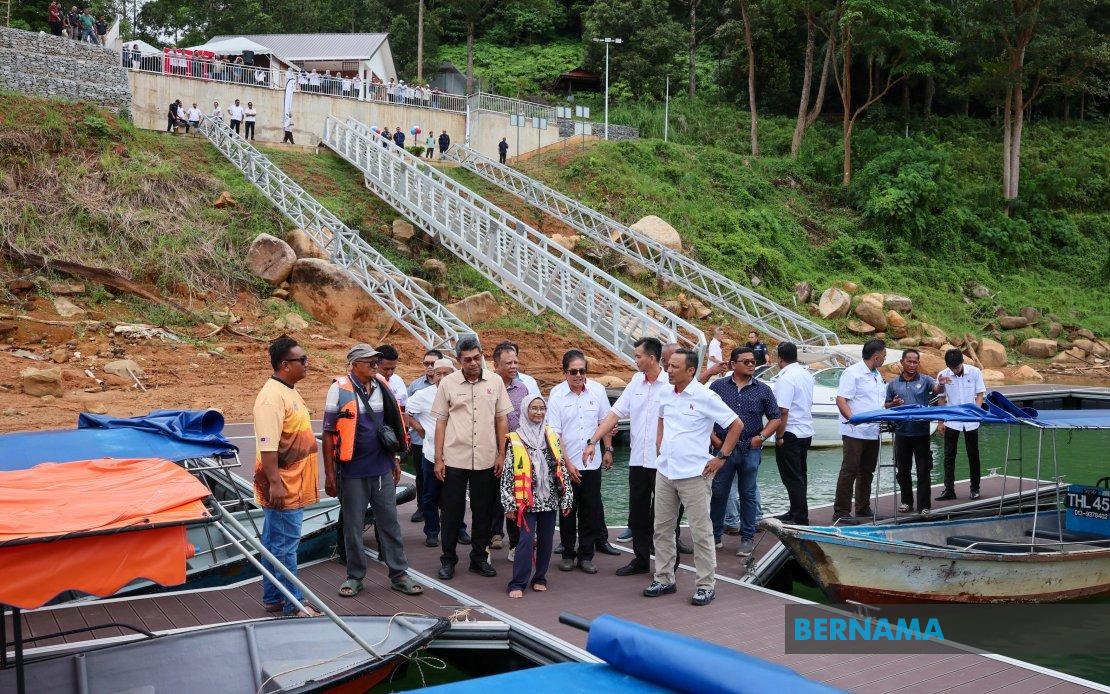
Terengganu's tourism infrastructure has taken a significant leap forward with the completion of a RM8.7 million jetty development at Tasik Kenyir, one of Southeast Asia's most distinctive man-made lake destinations. The facility, which officially opened on July 6, represents a substantial investment in modernising the lake's tourism operations and addressing longstanding challenges around vessel management and visitor experience. Developed under the Third Rolling Plan of the 11th Malaysia Plan (RMK-11), the project addresses critical infrastructure gaps that have constrained the lake's ability to compete as an international tourism hotspot.
According to Terengganu Tengah Development Authority (KETENGAH) chairman Datuk Rozi Mamat, the jetty was specifically designed to create an organised docking environment for speedboat and houseboat operators who previously berthed vessels in an uncoordinated manner around the Pengkalan Gawi area. The new facility can accommodate more than 80 houseboats and speedboats simultaneously, a capacity that reflects the growing demand for water-based activities at the lake. This structured approach to vessel management is expected to gradually eliminate the scattered boat berthing that has historically detracted from the site's aesthetic appeal and created operational difficulties for tourism providers.
The infrastructure extends well beyond simple mooring capabilities. The jetty complex incorporates a comprehensive suite of amenities designed to enhance both operational efficiency and visitor satisfaction. A pedestrian walkway stretching approximately 600 metres connects various zones, while 86 parking bays provide convenient vehicle access. The facility includes public toilet blocks, a staffed guard post for security and visitor assistance, an electrical substation to power modern houseboat operations, a pump house for water management, and designated waste disposal infrastructure. These supporting facilities represent an understanding that modern ecotourism requires more than basic docking—it demands comprehensive visitor services and environmentally responsible operations.
For Malaysian travellers and operators, the completion of this facility carries immediate practical implications. The provision of electricity and water supply at berthing points will enable houseboat operators to offer enhanced accommodation standards, potentially attracting the upmarket tourism segment. The organised parking and pedestrian infrastructure reduce friction in the visitor experience, from arrival through embarkation. Safety improvements derived from modern design standards and active security presence address a concern that has occasionally limited family tourism at the lake. The waste disposal system signals commitment to environmental protection—critical for an ecotourism destination where ecosystem integrity directly influences visitor experience quality.
Rozi emphasised that Tasik Kenyir possesses exceptional ecotourism potential that has remained partially underdeveloped due to infrastructure limitations. The lake's unique ecosystem, diverse wildlife, and scenic landscape have attracted regional and international visitors, yet the absence of modern facilities has prevented it from achieving its competitive position relative to other Southeast Asian lake destinations. The jetty project represents a deliberate strategic effort to unlock this potential by removing infrastructure constraints that discourage higher-spending tourists who expect contemporary amenities and safety standards.
The broader development context reveals sustained commitment to the Tasik Kenyir area. KETENGAH received RM48.36 million in development allocations for the current financial year, distributed across 28 programmes and projects spanning its three jurisdictions of Dungun, Hulu Terengganu, and Kemaman. Within Tasik Kenyir specifically, six concurrent projects are underway, demonstrating a coordinated approach to tourism development. These include restoration work at the Sungai Petang Kelah Sanctuary Complex, which preserves the lake's natural heritage; structural rehabilitation at established tourist attractions; redevelopment initiatives at Pulau Petang; a new public mini park at Gawi Point designed to enhance visitor gathering spaces; and facility improvements at the Herbal Park, which capitalises on growing interest in botanical tourism.
This multi-project approach reflects recognition that competitive ecotourism destinations require ecosystem protection alongside infrastructure development. The Kelah Sanctuary work preserves the freshwater fish species that constitutes part of the lake's ecological appeal, while the herbal park development taps into the wellness tourism trend gaining momentum across Southeast Asia. The island redevelopment at Pulau Petang and the Gawi Point park creation suggest strategic effort to distribute visitor activity across multiple nodes rather than concentrating pressure on single locations—a sustainable tourism practice that protects natural resources while enhancing the overall visitor journey.
The economic implications extend beyond the tourism sector itself. Construction and ongoing facility operations create employment opportunities within Terengganu's central region, where diversification beyond traditional extractive industries has been a policy priority. The jetty's capacity to accommodate 80 vessels means hundreds of annual jobs across boat operations, hospitality services, guided tours, and support services. Increased visitor expenditure at the lake generates revenue for local food vendors, accommodation providers, and retail operators—economic ripple effects that benefit communities throughout the Tasik Kenyir vicinity.
For Malaysian policymakers, the project validates the Malaysia Plan's investment in tourism infrastructure as a regional development strategy. Tasik Kenyir's development sits within the broader effort to position Terengganu as a competitive tourism destination. Unlike beach resort destinations that require continuous international marketing and face seasonal demand fluctuations, lake-based ecotourism offers year-round appeal and attracts demographics—nature enthusiasts, families seeking active recreation, wellness tourists—that typically generate sustainable, repeat visitation. The jetty's completion demonstrates that strategic infrastructure investment can transform underperforming destinations into regional attractions.
The project also signals Malaysia's commitment to sustainable tourism development principles. The emphasis on organised facilities, waste management, and environmental protection systems reflects evolved thinking about tourism as a long-term economic asset requiring careful stewardship. Rather than pursuing rapid, extraction-focused tourism models that damage natural resources, the Tasik Kenyir approach prioritises facility standards that preserve the lake's ecological integrity while maximising visitor satisfaction and operator profitability. This model has relevance across Southeast Asia, where competing destinations increasingly recognise that environmental quality and tourism competitiveness are mutually reinforcing rather than contradictory objectives.

