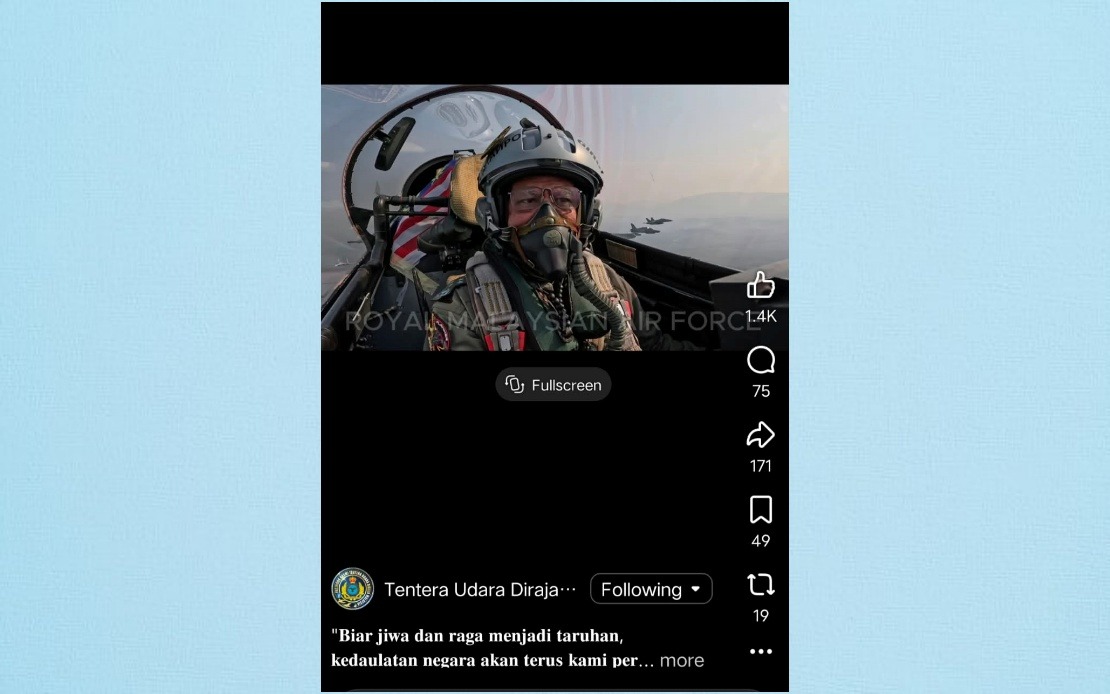
The skies above Putrajaya erupted with the roar of military jets on August 31 as the Royal Malaysian Air Force delivered one of the centrepiece moments of Malaysia's 69th National Day celebration. The precision aerial display underscored the nation's defence capabilities while captivating thousands of spectators gathered at Dataran Putrajaya for the festivities. The performance represented more than ceremonial pageantry—it offered a rare public glimpse into the operational readiness and technological sophistication of Malaysia's air arm.
Leading the formation was RMAF chief General Tan Sri Muhamad Norazlan Aris, who took direct command of a Sukhoi Su-30MKM fighter jet to head the aerial parade. His personal piloting of the mission marked the second consecutive year the service chief has undertaken this symbolic role, establishing it as a signature element of the National Day air show. The decision to have the commander in the cockpit carries layered significance—it demonstrates operational confidence in the force's training protocols while projecting leadership visibility at a moment of national celebration.
The choreographed ten-minute display commenced at 9.30 am with a carefully orchestrated sequence of formations designed to showcase different aspects of air force capability. Four Su-30MKM fighters, representing the backbone of Malaysia's multi-role combat fleet, flew in coordinated patterns alongside four F/A-18D Hornets and three BAE Hawk 208 trainer aircraft. The inclusion of the Hawk 208s, which serve primarily in advanced training and light attack roles, illustrated the breadth of the RMAF's inventory and the progression pathway through which Malaysian pilots develop their skills.
The formations themselves carried symbolic weight. The Kite, Diamond, Delta and Victory Combine configurations required exceptional precision flying—any deviation in speed, altitude or spacing would disrupt the visual pattern. These manoeuvres reflected thousands of hours of coordinated training and highlighted the technical proficiency of RMAF pilot corps. For Malaysian defence observers, such displays serve as periodic reassurance of the air force's continued operational standards despite budget constraints and ageing platforms that characterise regional air forces.
Commentary from three RMAF officers—Major Patrick Dinnesh, Major Neny Suhaida Ab Suki and Captain Muhammad Iqbal Nasrudin—provided real-time explanation of the aircraft capabilities and tactical manoeuvres unfolding overhead. This narrative dimension transformed the spectacle from mere entertainment into an educational component, helping civilian audiences understand the sophistication of military aviation. The inclusion of Major Neny Suhaida Ab Suki in this commentary role also highlighted women's participation in technical and leadership positions within the RMAF, a progressive element often overlooked in military displays.
The aerial show expanded beyond fighter aircraft to encompass the full spectrum of air force operations. Transport aircraft including the C-130H Hercules, A400M Atlas and CN235 demonstrated the RMAF's strategic airlift and logistical capabilities—functions essential to national defence but typically invisible to the public. These slower, bulkier platforms presented a striking contrast to the agile fighter jets, illustrating how modern air forces require diverse aircraft types to fulfil their contemporary missions of humanitarian assistance, disaster relief and force projection across the sprawling Malaysian archipelago.
Helicopter formations featuring the EC725 and AW139 models added vertical dimension to the display while showcasing capabilities crucial for search and rescue operations, transport and medical evacuation. The inclusion of aircraft from the Malaysian Army, Royal Malaysian Navy, Fire and Rescue Department of Malaysia and Royal Malaysia Police underscored the integrated, whole-of-government approach to national security and emergency response. Such inter-agency participation during National Day ceremonies reinforces to civilian populations the coordination mechanisms that protect them during crises.
The spectator response throughout the ten-minute display remained animated, with thousands maintaining fixed attention on the dramatically transformed airspace above Malaysia's administrative centre. The visceral impact of supersonic jets executing synchronized manoeuvres at low altitude creates emotional resonance that static military displays cannot achieve. For many Malaysians, particularly younger citizens, such aerial shows constitute their primary exposure to the technological capabilities their defence forces deploy.
Beyond the ceremonial aspects, the display carried strategic messaging for regional audiences. The showcase of Su-30MKM and F/A-18D fighters, combined with transport and support aircraft, projects an image of a modernizing air force with multi-role capabilities. Within the context of evolving geopolitical dynamics in Southeast Asia—including territorial sensitivities and shifting power balances—such public demonstrations of military preparedness serve both domestic confidence-building and subtle signalling to the international community.
The RMAF's commitment to leading the National Day air show personally through its highest-ranking officer also reflects institutional priorities within Malaysia's defence establishment. The air force, historically the smallest of the three armed services in budgetary terms, gains elevated public visibility through such high-profile performances. This media exposure and spectator engagement contribute to broader efforts to sustain parliamentary and public support for air force modernization and operational funding in an increasingly competitive budgetary environment.
National Day celebrations in Malaysia serve multiple functions beyond patriotic commemoration. They provide platforms for institutions to reinforce their public identity and demonstrate relevance to national aspirations. For the RMAF, the annual air display over Putrajaya accomplishes this while simultaneously validating the value of public investment in air defence capabilities, pilot training and aircraft maintenance. The transformation of federal airspace into a temporary exhibition hall of military power, accomplished safely and with precision, represents a carefully calibrated display of state capacity.
The spectators who gathered at Dataran Putrajaya on August 31 witnessed more than impressive flying. They observed a distillation of years of institutional development, technological procurement, pilot training and operational coordination. As Malaysia navigates evolving regional security challenges and debates defence spending priorities, such public demonstrations of air force competence carry understated but significant political importance within democratic discourse surrounding national security.

