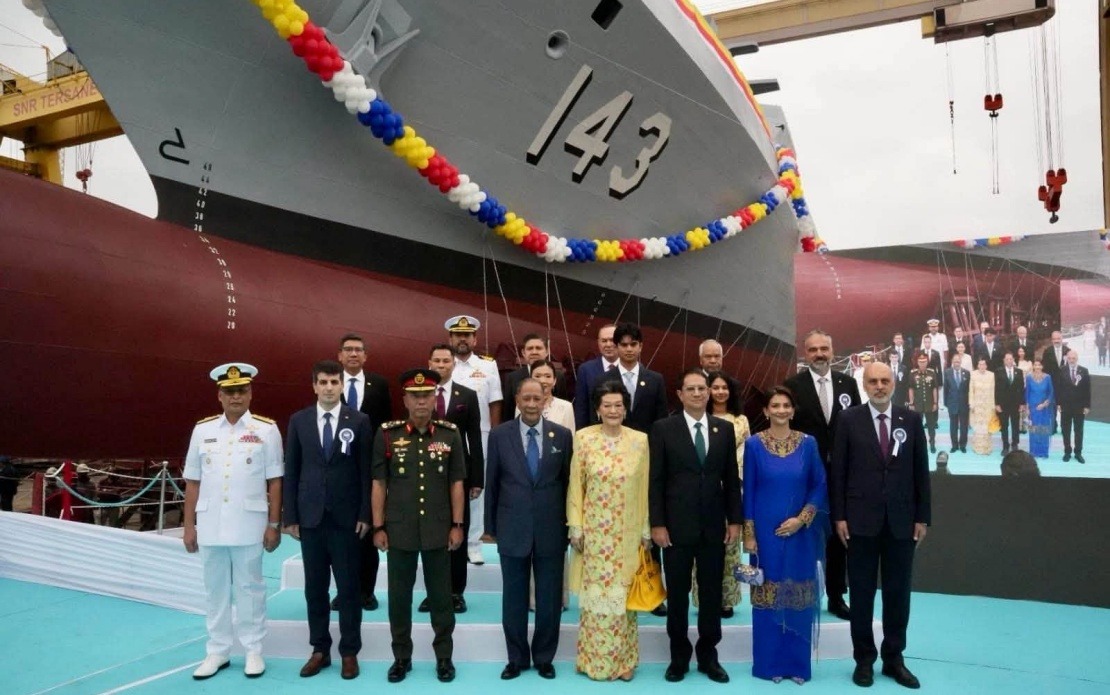
Defence Minister Datuk Seri Mohamed Khaled Nordin has underscored the critical importance of equipping the Royal Malaysian Navy with state-of-the-art vessels and systems to confront the multifaceted maritime security challenges that continue to evolve across Southeast Asian waters. Speaking during the formal naming and launching ceremony of the third Littoral Mission Ship Batch 2 vessel, Mohamed Khaled articulated the government's unwavering commitment to ensuring the RMN possesses adequate technological and operational capabilities to safeguard Malaysia's territorial waters, maritime resources, and strategic interests in the region.
The latest vessel, named Tunku Osman Jewa in honour of the late General Tan Sri Tunku Osman Tunku Mohammad Jewa—a respected military figure and former Armed Forces chief with deep connections to the Kedah royal household—represents a tangible manifestation of this modernisation agenda. The naming ceremony drew significant dignitaries, including the Sultan of Kedah, Al Aminul Karim Sultan Sallehuddin Sultan Badlishah, and the Sultanah of Kedah, Sultanah Maliha Tengku Ariff, underscoring the ceremonial and symbolic importance attached to the naval acquisition programme. The christening honours not merely a vessel but preserves the institutional memory of Malaysia's military leadership whilst advancing the nation's contemporary defence posture.
The completion of all three Littoral Mission Ship Batch 2 vessels marks a watershed moment for Malaysia's naval development trajectory. These ships represent the culmination of extensive construction efforts and reflect a deliberate strategic pivot towards enhancing the RMN's operational reach and deterrent capacity. Each vessel embodies advanced engineering capabilities designed to enable the Navy to conduct sustained maritime operations across Malaysia's extensive waters, addressing everything from sovereignty patrols to humanitarian and disaster relief operations. The successive launches demonstrate the project's momentum and the government's determination to deliver tangible improvements to naval capabilities within defined timeframes.
Particularly noteworthy is the classification of the LMSB2 procurement as the first Government-to-Government collaborative warship acquisition initiative between Malaysia and Türkiye. This bilateral partnership represents a significant diplomatic and strategic alignment, expanding Malaysia's international defence relationships beyond traditional suppliers and opening avenues for technological transfer and operational cooperation with a NATO-aligned maritime power. Such collaborations often yield secondary benefits including enhanced interoperability standards, shared training protocols, and potential future joint exercises that strengthen regional maritime security architecture.
The acquisition programme forms an integral component of the RMN's overarching modernisation blueprint designated as the 15-to-5 Transformation Plan. This comprehensive strategy envisions a technologically advanced, operationally efficient fleet capable of addressing 21st-century maritime challenges ranging from counterpiracy operations to environmental protection and exclusive economic zone surveillance. By systematically replacing ageing vessels with modern platforms, the transformation initiative aims to position Malaysia as a credible maritime power within ASEAN, capable of managing complex security dynamics whilst contributing meaningfully to regional stability mechanisms.
Delivery timelines extending through the end of 2027 establish realistic parameters for integrating these vessels into operational squadrons. The staggered completion schedule permits the Navy adequate opportunity to conduct comprehensive crew training, establish logistical support infrastructure, and coordinate seamlessly with existing fleet assets. This measured approach to capability absorption reflects mature defence acquisition practices that prioritise operational readiness over mere numerical fleet expansion. Furthermore, phased induction allows the RMN to evaluate performance metrics and optimise maintenance protocols based on actual operational experience with the new platforms.
The maritime environment confronting the RMN encompasses multifaceted dimensions extending far beyond conventional naval warfare scenarios. Piracy remains a persistent concern in certain waters, whilst illegal fishing activities, human trafficking, drug smuggling, and unregulated maritime commerce represent significant operational challenges requiring sustained enforcement capability. Environmental degradation and climate-induced maritime disruptions add additional layers of complexity to naval operations. Modern vessels equipped with sophisticated surveillance systems, advanced navigation capabilities, and extended endurance characteristics prove essential for addressing these variegated threats effectively and maintaining continuous maritime domain awareness.
Regional maritime tensions, territorial disputes, and competing claims over maritime resources underscore the strategic imperative driving naval modernisation across Southeast Asia. Malaysia's positioning within this contested landscape necessitates a credible naval posture capable of communicating resolve whilst maintaining proportional responses to security challenges. The RMN's modernised fleet contributes to regional stability through visible presence, professional maritime practices, and participation in multilateral cooperation frameworks that establish behavioural norms and conflict prevention mechanisms. This deterrent dimension, though understated in official announcements, remains fundamentally important for maintaining the rules-based maritime order essential to Malaysia's prosperity.
The domestic procurement and international partnership dimensions of this programme carry substantial economic implications for Malaysian shipbuilding and defence industries. Collaboration with Turkish naval contractors potentially catalyses technology transfer, skills development, and industrial capacity building within Malaysia's maritime sector. Local suppliers and subcontractors engaged throughout the manufacturing process gain exposure to international quality standards and advanced production methodologies. These secondary economic effects contribute to broader industrial upgrading whilst generating skilled employment opportunities within Malaysia's engineering workforce.
Investment in naval modernisation inevitably intersects with broader fiscal considerations and budgetary priorities facing the Malaysian government. Defence expenditures must be weighed against competing demands for healthcare, education, and social infrastructure investment. The government's demonstrated commitment to sustained naval capability development signals confidence in long-term strategic planning and suggests conviction regarding maritime security's centrality to Malaysia's national interests and regional role. This prioritisation reflects calculated assessment that contemporary security threats cannot be adequately addressed through legacy systems, necessitating measured but decisive capital investment in modern platforms and supporting infrastructure.

