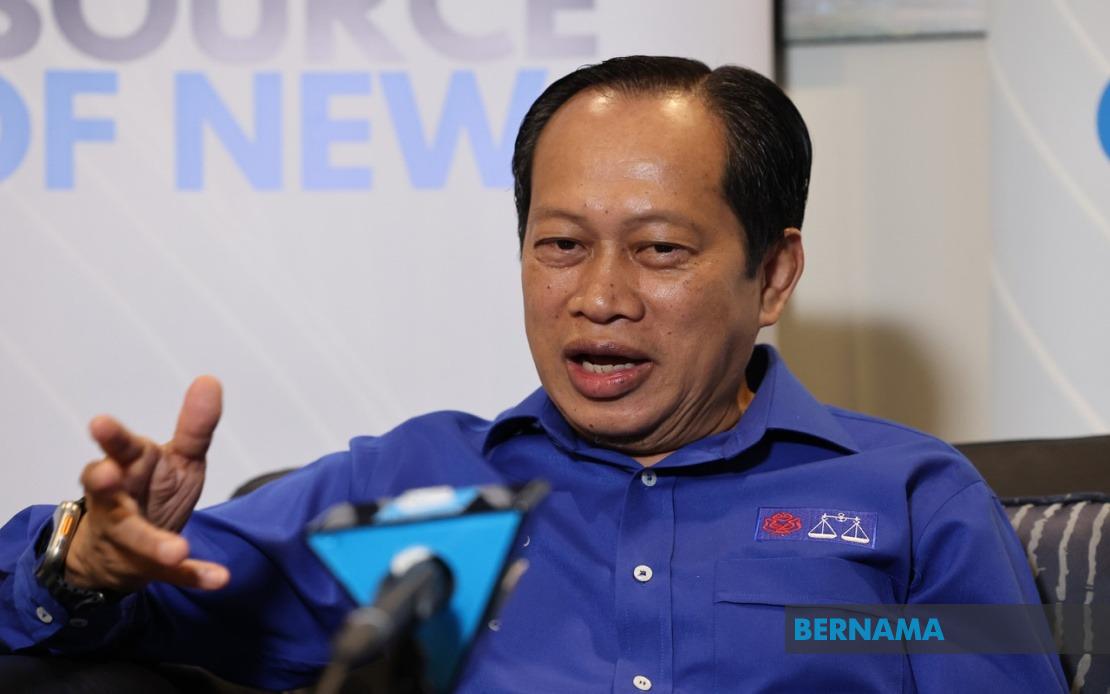
Addressing the persistent challenge of deteriorating road conditions across Malaysia, Deputy Works Minister Datuk Seri Dr Ahmad Maslan has stressed that resolving this infrastructure crisis demands the collective commitment of all stakeholders, from elected representatives to relevant government departments. Speaking in Johor Bahru on July 2, Ahmad outlined a comprehensive approach that places responsibility not just on the Public Works Department but across the entire governance structure, signalling a shift towards accountability at multiple levels of administration.
The minister's call for unified action comes as the Public Works Department faces mounting pressure to accelerate repairs on damaged roads nationwide. Ahmad has personally directed the department to prioritise damaged sections and expedite the repair timeline, recognising that road deterioration directly impacts economic productivity and public safety. This intervention reflects growing awareness within the federal government that the current pace of maintenance activities has fallen short of public expectations and infrastructure needs.
The governance structure Ahmad described reveals how road maintenance decisions flow through multiple approval channels. Ahmad explained that allocations for federal roads, highways, and bridges are first channelled through the State Economic Planning Unit, known as UPEN, and subsequently reviewed by the state executive council. This tiered process enables applications to be systematically assessed and ranked according to priority before resources are committed, though it also introduces potential delays that critics argue have contributed to the backlog of necessary repairs.
Ahmad's remarks came specifically in response to recent actions by Dr Maszlee Malik, a Pakatan Harapan candidate contesting the Puteri Wangsa state seat, who has been actively documenting road conditions to highlight infrastructure failures. On June 29, Maszlee undertook a high-profile inspection drive along Jalan Tebrau in a Perodua Myvi, traversing from Kampung Melayu Majidi to Ulu Tiram after receiving numerous complaints through social media about deteriorating road surfaces and traffic gridlock during peak hours. His journey resulted in firsthand experience of the problem, with the vehicle jolting repeatedly across sections marred by uneven surfaces, a visceral demonstration of the quality gap between expected and actual conditions.
This episode highlights a broader political dynamic in which opposition figures are increasingly using infrastructure deficiencies as rallying points for public criticism. By documenting and publicising road conditions, opposition representatives are leveraging grassroots discontent to challenge the government's management record. Ahmad's response suggests the federal government recognises it must demonstrate visible progress on this issue to maintain public confidence, particularly in critical states like Johor where political competition remains intense.
To address such concerns, Ahmad revealed that he has embarked on a systematic visitation programme across Johor's administrative structure. He has visited all ten district Public Works Department offices in the state and received detailed development briefings from each location. During these visits, Ahmad has personally directed each office to respond with greater urgency whenever roads require maintenance attention, underlining the importance of quick action at the local implementation level. This hands-on approach suggests the ministry recognises that enforcement of maintenance standards depends on regular oversight and clear communication of priorities.
The distribution of JKR offices across ten districts in Johor underscores the complex administrative landscape governing road maintenance in Malaysia. Each district office operates within its jurisdiction with responsibility for a specific geographical area and budget allocation. By visiting each office, Ahmad attempted to establish a direct line of communication between the federal ministry and ground-level implementers, potentially circumventing bureaucratic layers that might otherwise slow decision-making. However, the effectiveness of such visits ultimately depends on sustained follow-up and adequate resource allocation.
For Malaysian readers, particularly those in Johor where the comments were made, this statement reflects ongoing challenges in transforming road infrastructure from a political issue into a efficiently managed public service. The Jalan Tebrau situation exemplifies broader concerns about highway quality, with frequent complaints about potholes, uneven surfaces, and congestion affecting both daily commuters and commercial transport. These roads carry significant traffic volumes and poor conditions impose real costs on vehicle maintenance and journey times.
The emphasis on cooperation among all parties—including assemblymen, Members of Parliament, and local agencies—introduces an important principle: that road maintenance cannot remain solely the responsibility of the Public Works Department. This distributed accountability model theoretically empowers elected representatives to advocate for their constituents' needs and allows local knowledge to inform prioritisation decisions. However, it also creates potential confusion about which authority bears ultimate responsibility if maintenance standards slip, potentially enabling blame-shifting when repairs lag behind public expectations.
Looking forward, Ahmad's approach suggests the government intends to demonstrate greater responsiveness to road conditions by tightening communication channels and establishing clearer timelines for action. The pressure from opposition politicians documenting infrastructure problems indicates that road maintenance will remain a politically salient issue heading into any electoral cycle. For voters concerned about infrastructure quality, Ahmad's statements represent acknowledgment of the problem but the ultimate test will be whether road conditions visibly improve within measurable timeframes across Johor and other states.
The broader implications extend beyond Johor's borders. As Malaysia's road network ages and maintenance demands increase, establishing effective coordination mechanisms between federal, state, and local authorities becomes crucial. The model Ahmad is attempting to implement through increased oversight and clearer directives could serve as a template for addressing similar infrastructure challenges elsewhere. However, success will depend on whether increased political attention translates into sustained resource allocation and operational efficiency rather than temporary improvements that fade once public scrutiny shifts to other issues.

