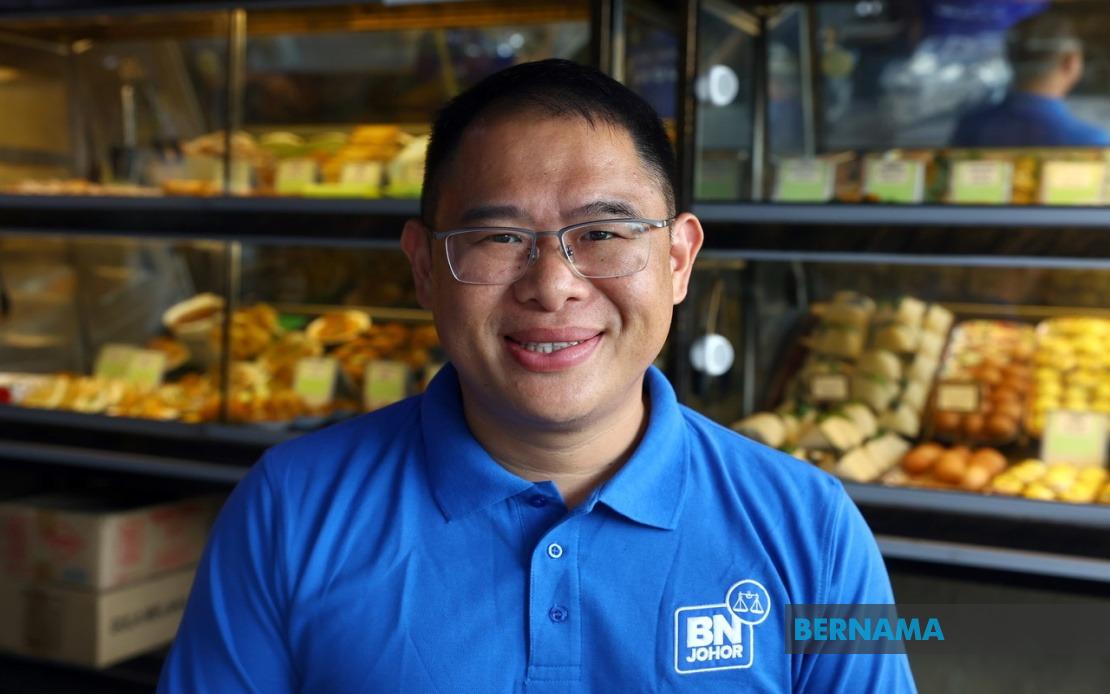
Ling Tian Soon, better known locally as Ah Soon, is banking heavily on a dramatic infrastructure transformation to convince voters in Yong Peng to give him a second term when Johor heads to the polls. The 42-year-old state assemblyman has made the rehabilitation of a notorious stretch of road—once derisively known as 'Jalan Koyok' for its pothole-riddled surface—a centrepiece of his campaign narrative, demonstrating how basic development can catalyse broader economic momentum in a constituency many overlooked.
When Ling first took office in 2022, he identified ageing infrastructure as a critical impediment to Yong Peng's potential. The area, situated approximately 100 kilometres south of Johor Bahru's central business district, had long suffered from underinvestment despite its geographic advantages. He committed substantial development allocations to remedying this deficit, channelling roughly RM23 million across a three-year period into comprehensive road repairs spanning from Ayer Hitam to the Segamat boundary. This investment reflects a philosophy rooted in a well-known Chinese business aphorism: that economic activity flows naturally along well-maintained infrastructure.
The payoff from this focused spending has become evident on the ground. Companies operating in logistics, warehousing, and courier services have increasingly chosen Yong Peng as their operational headquarters. This shift represents far more than cosmetic improvement; it signals to investors that the district possesses the foundational utilities necessary for industrial operations. A prominent e-commerce enterprise is currently evaluating Yong Peng as the site for its largest regional distribution facility, a decision that would substantially enlarge the local employment ecosystem, particularly for younger residents seeking career opportunities beyond agriculture or traditional commerce.
Yong Peng's geographic positioning underpins much of this emerging industrial appeal. Located roughly one hour's drive from Port Tanjung Pelepas—Malaysia's deepwater facility handling significant container traffic—the constituency offers logistics operators efficient access to maritime shipping networks. The district also sits centrally within Johor state, making it a logical hub for companies requiring strategic distribution points. This convergence of proximity to major port infrastructure and central location within the state has begun attracting land acquisitions for manufacturing and warehousing ventures, positioning Yong Peng at an inflection point toward becoming an established industrial centre rather than remaining a primarily agricultural region.
Ling's re-election manifesto, scheduled for unveiling this Saturday, constructs a three-pillar framework encompassing infrastructure continuation, expanded social safety provisions, and tourism-driven economic diversification. The infrastructure pillar promises sustained investment in foundational utilities. The social component targets historically underserved demographics including elderly residents, young families, and newly married couples through enhanced facilities and support programmes. The tourism dimension represents a secondary economic engine, with Ling arguing that Yong Peng's agrarian heritage and rural character can be developed into attractions complementing its industrial trajectory.
Particularly telling is Ling's focus on retaining young people within the constituency. Migration of youth to larger urban centres represents a persistent challenge for Malaysian state assembly districts lacking sufficient employment diversity. By simultaneously nurturing industrial expansion and improving quality-of-life amenities, Ling argues that Yong Peng can become a destination where young professionals and families choose to establish themselves rather than a place they depart from upon completing education. This addresses a structural challenge many rural and semi-rural Malaysian constituencies face as regional economies polarise around major metropolitan areas.
Ling's political narrative rests substantially on his track record of consistent grassroots engagement. He earned the colloquial designation 'YB Kedai Kopi'—literally 'coffee shop assemblyman'—through his practice of conducting near-daily informal interactions at local establishments, pasar malam stalls, and mamak restaurants. This hands-on approach extends back sixteen years, predating his state assembly election, during his tenure managing parliamentary liaison work in the Ayer Hitam division under Member of Parliament and MCA president Datuk Seri Dr Wee Ka Siong. Ling emphasises that these relationships transcend transactional electoral cycles; instead, he portrays them as familial bonds forged through persistent presence and responsiveness to community concerns.
This grassroots positioning carries significance beyond mere political theatre. In Malaysian electoral politics, particularly at state assembly level, the personal relationship between representative and constituent often outweighs party affiliation or policy platforms. A legislator perceived as genuinely accessible and invested in resolving local grievances frequently commands loyalty independent of broader political winds. Ling's narrative positions him as precisely this variety of representative—one who builds political capital through authentic community immersion rather than ceremonial appearances.
His confidence in defence of the Yong Peng seat projects from this foundation, though Ling characteristically defers final judgement to voters. He frames his argument as a straightforward performance assessment: voters should evaluate his four years of service, compare visible results against stated objectives, and make their determination based on this evidence. This rhetorical approach—inviting scrutiny rather than demanding loyalty—reflects confidence in the tangibility of his achievements, particularly the road transformation and emerging industrial activity.
The upcoming contest sees Ling facing a direct challenge from Pakatan Harapan candidate Yong Hui Yi. While limited information about the opposition candidate's platform is currently available, the election shapes as a referendum on Ling's infrastructure investment strategy and his ability to attract industrial development to Yong Peng. For PH, the campaign will likely emphasise alternative visions for economic development, governance accountability, or social priorities, though Ling's demonstrated capacity to deliver visible infrastructure improvements and secure corporate investment commitments presents a formidable baseline.
Broader implications for Johor's state elections extend beyond Yong Peng itself. The constituency represents a microcosm of how rural and semi-rural Malaysian assembly districts can position themselves for economic modernisation without abandoning their character. Ling's emphasis on infrastructure-enabled industrial transition, targeted social investments, and tourism development offers a replicable framework other constituencies might adopt. Furthermore, the political durability of consistently applied grassroots engagement—the coffee shop visits, the mamak restaurant stops—suggests that electoral success in these constituencies depends less on sophisticated campaign machinery than on authentic community presence sustained across political cycles.
The road transformation symbolically encapsulates this broader argument. A street once derided as 'Jalan Koyok' becomes testimony to incremental but meaningful development that residents encounter daily. This visibility matters enormously in local politics; voters respond to tangible improvements they witness directly. Whether this translates into electoral success for Ling remains ultimately a voter determination, but his calculation that infrastructure excellence combined with persistent community engagement constitutes a compelling re-election platform appears strategically sound within the Yong Peng electorate's parameters.

