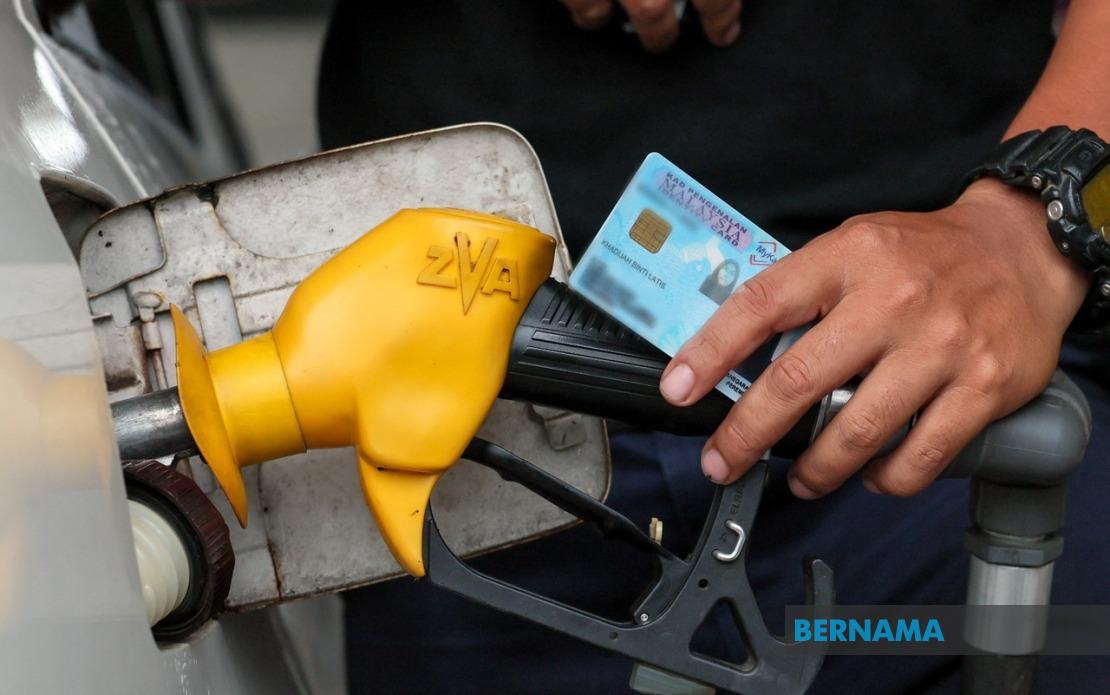
Prime Minister Datuk Seri Anwar Ibrahim announced during the 2026 National Day address at the Putrajaya International Convention Centre that the government would expand fuel assistance quotas under its BUDI MADANI targeted subsidy programme, a decision that has generated considerable relief among commuters, traders, and low-income earners across the country. The announcement marks a significant policy shift in how Putrajaya manages fuel assistance, raising the basic eligibility threshold for RON95 petrol from 200 litres to 300 litres while simultaneously increasing the diesel quota from 300 litres to 400 litres, changes that took effect immediately following the National Day address.
The BUDI MADANI programme represents the government's attempt to ensure that fuel subsidies reach intended beneficiaries in an equitable manner rather than being distributed universally. By setting differentiated quotas based on vehicle type and usage patterns, policymakers aim to balance fiscal responsibility with the very real pressures facing ordinary Malaysians navigating an increasingly expensive cost-of-living environment. The announcement reflects growing political acknowledgment that the previous quota levels were creating genuine hardship for workers dependent on personal transport and small business operators reliant on fuel for their livelihoods.
For commuters, the expanded quota translates into concrete monthly savings that can be redirected toward other essential expenses. Twenty-four-year-old Furzani Ahmad, who commutes nearly 30 kilometres daily to his workplace, estimates that the restored 300-litre monthly allowance for RON95 petrol now sufficiently covers his transportation needs with room to spare. His assessment reflects the practical mathematics that many Malaysian workers perform each month, carefully tracking whether their fuel allocation will bridge the gap between home and office, or whether they will face unexpected out-of-pocket expenses. The additional 100 litres represents a meaningful expansion for individuals traversing longer urban and peri-urban distances, where public transport options remain limited or inconvenient.
Even shorter-distance commuters recognise the practical value of the expanded allocation. Darwisy Khairudin, aged 23, operates within a 20 to 25 kilometre radius between home and workplace but frequently undertakes ad-hoc assignments that push his fuel consumption beyond predictable levels. For workers in his position, the uncertainty of whether their monthly quota will prove sufficient has been a persistent source of stress. The increase to 300 litres provides greater flexibility and reduces the need for careful rationing, allowing him to respond to unexpected work demands without immediately calculating whether he can afford unsubsidised petrol prices.
Beyond individual commuters, the diesel quota increase carries particular significance for small and medium-sized traders whose business models depend on personal vehicle usage for goods transport. Abdul Manan, a 63-year-old fruit stall operator, uses a diesel vehicle to transport supplies from distant wholesale markets to his retail location. For traders like Manan, fuel represents a direct component of operating costs that directly influences retail pricing. By raising the diesel quota from 300 to 400 litres, the government has effectively reduced the logistics burden that traders absorb, creating space to maintain competitive fruit prices without raising them to cover unsubsidised fuel expenses. This cascading economic effect ultimately benefits consumers who purchase these goods, as traders can more easily sustain reasonable pricing structures.
The timing of the announcement during National Day festivities carries symbolic weight beyond the policy mechanics. By positioning the quota expansion as part of broader national unity messaging, the government has connected fuel relief to themes of shared prosperity and collective wellbeing. This framing acknowledges that cost-of-living pressures represent a genuine national challenge affecting Malaysians across economic strata, from entry-level workers to established business operators. The announcement thus serves both practical and rhetorical functions, immediately improving household finances while reinforcing government responsiveness to citizen concerns.
For Malaysia's broader economic environment, the quota expansion represents a calculated bet on inflation management and social stability. Fuel subsidies carry significant fiscal costs, and their design reflects ongoing tensions between maintaining affordability for lower-income groups and preserving government budgetary capacity for other priorities. The BUDI MADANI approach attempts to thread this needle through targeting rather than universal subsidies, though the expansion of quotas inevitably increases overall subsidy expenditure. Policymakers must weigh the immediate political and social benefits of expanded fuel access against longer-term fiscal sustainability concerns.
The reception among beneficiaries also reflects broader anxieties about household finances in contemporary Malaysia. Workers and traders expressing relief about restored quotas are essentially testifying to the fragility of their monthly budgets, where fuel costs consume a meaningful percentage of disposable income. This reality underscores why fuel policy has become such a politically sensitive issue, capable of generating public discontent when quotas are reduced or prices increase. The government's willingness to expand quotas demonstrates recognition that previous levels had created genuine difficulties for working Malaysians.
Regional observers may note that Malaysia's targeted fuel subsidy approach contrasts with strategies adopted by several Southeast Asian neighbours, some of whom have pursued more comprehensive subsidy systems or price controls. The BUDI MADANI model, by contrast, attempts to channel support toward defined beneficiary groups through quota mechanisms, theoretically reducing waste while targeting assistance more precisely. The programme's expansion suggests that even targeted approaches require periodic adjustments as economic conditions evolve and political considerations shift.
Looking forward, the sustainability of expanded fuel quotas depends partly on international petroleum price movements and Malaysia's downstream energy sector capacity. Volatile global crude oil markets mean that subsidy costs can fluctuate significantly based on factors entirely beyond government control. The expanded quota announcement thus carries implicit assumptions about the stability or trajectory of global energy prices over coming months. Should crude oil prices spike substantially, the fiscal implications of maintaining the expanded quotas could become considerably more challenging.
The announcement also underscores the importance of fuel policy in Malaysia's electoral and social politics. With the next general election potentially approaching, the government's willingness to expand fuel quotas reflects recognition that cost-of-living issues have mobilised voter sentiment in previous campaigns. By acting decisively to expand fuel assistance, the government has attempted to address a politically salient concern before it becomes a flashpoint in electoral competition. This political dimension does not diminish the genuine relief experienced by beneficiaries, but rather illustrates how policy decisions often emerge from the intersection of practical economic needs and political calculation.

