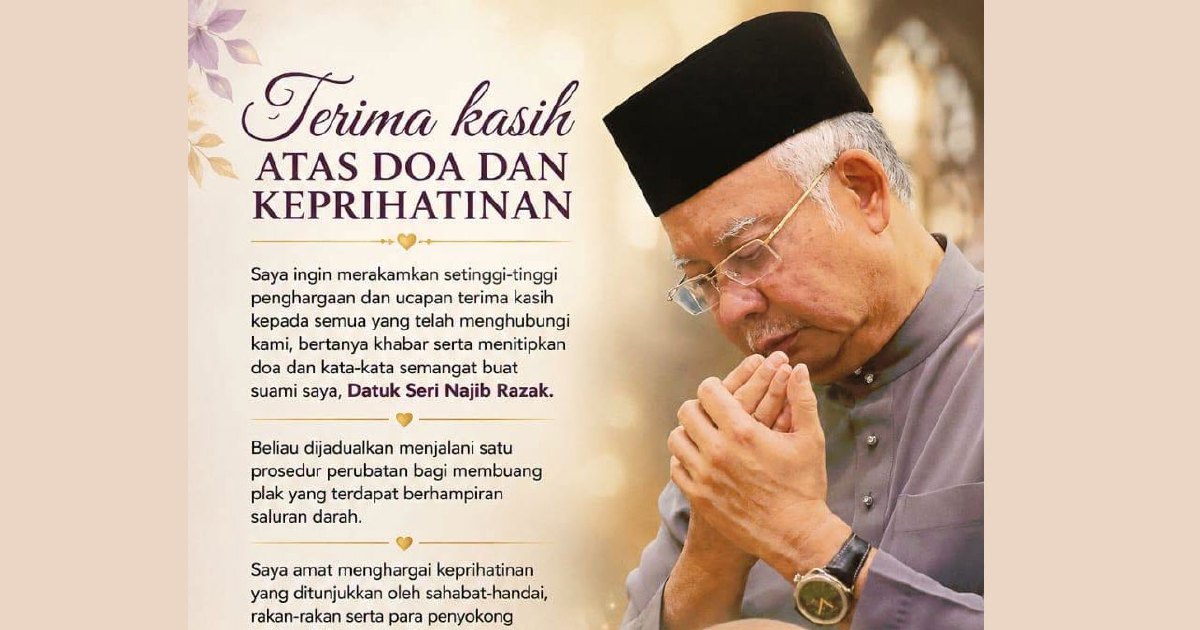
The wife of former prime minister Datuk Seri Najib Razak has made a public appeal for prayers and support as her husband prepares for a scheduled medical intervention. Datin Seri Rosmah Mansor expressed gratitude for the backing she and her family have received, while requesting that the public keep them in their thoughts during the forthcoming healthcare procedure.
The former prime minister is scheduled to undergo treatment designed to remove plaque accumulation near a blood vessel, a condition that requires clinical management to prevent potential cardiovascular complications. Such procedures are commonly performed to restore proper blood flow and reduce the risk of vessel blockage, which can lead to serious health events if left untreated. The decision to proceed with the intervention reflects medical advice regarding the state of Najib's vascular health.
Rosmah's public statement represents a significant moment for the high-profile family, who have navigated considerable public and legal scrutiny in recent years. The former first lady's decision to address supporters directly demonstrates an attempt to maintain personal dignity and seek community support during a vulnerable period. Her appeal for prayers reflects the importance of faith and collective well-wishing in Malaysian society, where such public gestures often resonate deeply with the broader population.
The timing of this announcement comes amid continued public interest in the affairs of the former premier and his family. Najib has faced numerous legal and political challenges since stepping down from office, including high-profile court proceedings that have dominated Malaysian headlines. This medical development adds another dimension to the family's circumstances and may influence public perception during a period already marked by significant personal and institutional scrutiny.
Vascular procedures of this nature, commonly referred to as angioplasty or related interventions, are routine medical treatments in modern healthcare systems. Modern techniques and advanced medical technology have made such procedures relatively safe, though like all surgical interventions, they carry some element of clinical risk. The success rates for removing arterial blockages have improved substantially over recent decades, offering patients improved outcomes and reduced recovery periods compared to historical approaches.
For Malaysians following the situation, the health challenges facing a former national leader represent a human dimension beyond political narrative. Regardless of one's views regarding Najib's tenure as prime minister or subsequent controversies, the family's request for sympathetic consideration during a medical crisis touches on shared human values across Malaysian society. Many Malaysians understand the anxiety and uncertainty that accompanies serious health interventions, making Rosmah's appeal for public support broadly relatable.
The medical procedure also highlights the importance of preventive healthcare and early detection of vascular conditions in Malaysia's ageing population. Plaque accumulation in blood vessels occurs gradually and often without noticeable symptoms until a blockage becomes clinically significant. Regular health screening and prompt medical intervention when issues are detected represent crucial components of managing cardiovascular health, a leading cause of mortality and morbidity across Southeast Asia.
From a broader perspective, the visibility of high-profile figures undergoing medical treatment can serve to raise awareness about vascular health among ordinary Malaysians. The public discussion surrounding Najib's procedure may prompt others with similar risk factors to seek medical evaluation and appropriate preventive care. Healthcare professionals often note that prominent public figures' health challenges can indirectly benefit public health by encouraging individuals to take their own medical conditions seriously.
The role of social and family support during medical procedures is well-established in medical literature. Patients with strong family and community backing typically experience better psychological outcomes and potentially improved recovery trajectories following surgical interventions. Rosmah's public acknowledgment of supporter backing may serve a dual purpose: reassuring loved ones of the family's resilience while also mobilising the emotional support networks that can facilitate better health outcomes for Najib during and after his treatment.
Looking forward, the success of the procedure will likely be closely monitored by Malaysian media and public observers, given Najib's prominence in national affairs. The family's willingness to seek public support suggests an understanding that transparency regarding significant life events can help maintain public goodwill during challenging periods. As the former premier faces this health challenge, his recovery and return to fuller activity will undoubtedly feature in ongoing public discourse about his legacy and current circumstances.
The broader implications for Malaysian society extend beyond one family's medical situation. The incident underscores how even those who have wielded considerable national power remain subject to the same health vulnerabilities as any citizen. This shared human experience transcends political divisions and reminds the nation that health challenges affect individuals regardless of their previous status or current controversies. As Najib undergoes treatment, the period ahead will test both the family's resilience and the society's capacity for measured compassion during personal medical crises.

