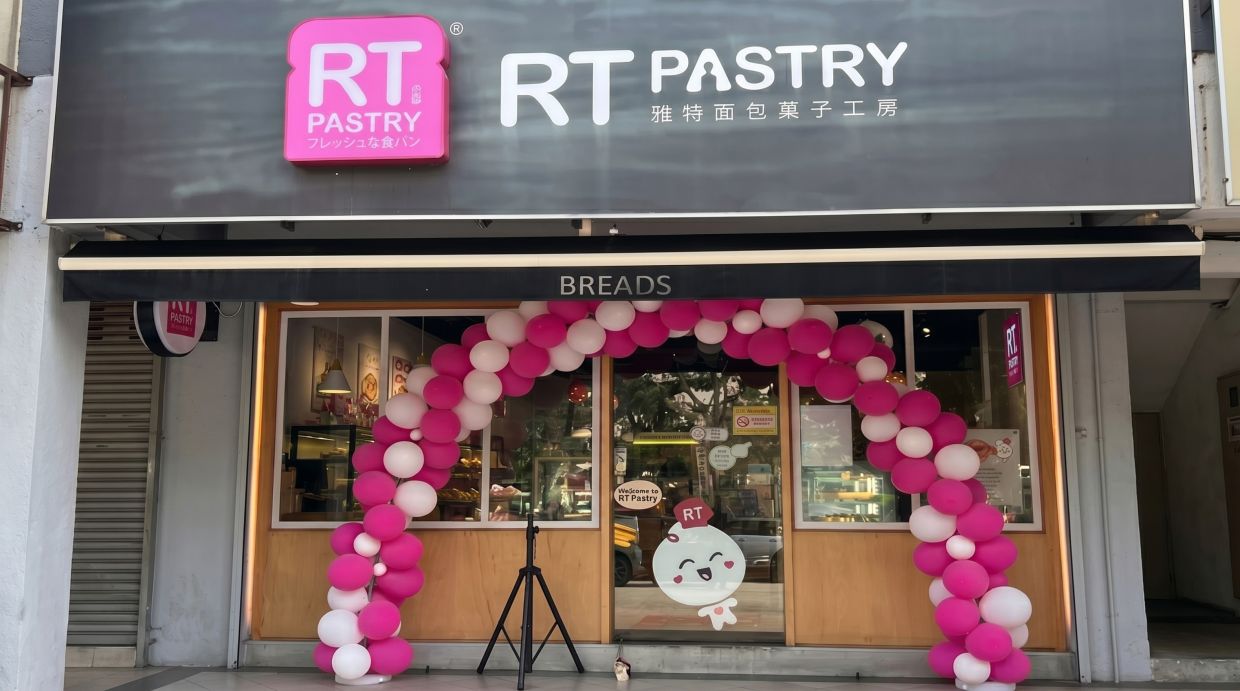
RT Pastry Holdings Bhd has achieved a significant milestone in Malaysia's competitive halal food sector by securing halal certification from the Department of Islamic Development Malaysia (JAKIM) for its primary manufacturing operation. The Plant 1 facility, located in Taman Bukit Serdang, Seri Kembangan, now holds the official credential that signals full compliance with Malaysia's stringent Islamic dietary requirements. The certification, dated July 1, remains valid for five years until June 30, 2028, providing the bakery operator with an extended runway to leverage this credential across its domestic operations and potential export markets.
The scope of the newly certified facility extends across RT Pastry's entire product portfolio, encompassing cakes, Swiss rolls, pastries, cookies, desserts and an array of other baked goods. This breadth of coverage means consumers purchasing any item from the company's lines can rely on the JAKIM mark as assurance that manufacturing processes, ingredient sourcing and handling protocols meet Malaysia's halal standards. The certification reflects rigorous evaluation against the Malaysian Halal Standard MS1500:2019, a detailed framework that governs everything from raw material procurement through to final packaging and storage conditions.
The regulatory framework underpinning halal certification in Malaysia has become increasingly sophisticated over the past decade. The MS1500:2019 standard represents the government's commitment to establishing consistent, science-based protocols that align Islamic principles with modern food safety practices. Manufacturers seeking certification must demonstrate traceability of inputs, implement segregation of halal and non-halal production lines where applicable, and maintain documentation that proves compliance. For a multi-product facility like RT Pastry's Plant 1, achieving comprehensive certification across diverse product categories signals substantial investment in process control and regulatory adherence.
RT Pastry's portfolio now encompasses dual JAKIM-certified manufacturing sites following the earlier accreditation of its Plant 2 facility in Glenmarie in 2023. The sequential certification of both plants suggests a deliberate corporate strategy to build redundancy in halal-compliant capacity while expanding production capabilities. This operational structure provides the company with flexibility to manage demand fluctuations, undertake maintenance without disrupting supply chains, and potentially segregate products destined for different market segments. The geographic separation of facilities, spanning the Klang Valley region, also offers logistical advantages for serving retailers and distributors across Peninsular Malaysia.
For Malaysian consumers, halal certification has transcended its original religious significance to function as a comprehensive quality assurance mechanism. The JAKIM mark increasingly signals to purchase-conscious shoppers that a product has undergone rigorous scrutiny across multiple dimensions, from ingredient authenticity to manufacturing hygiene. This perception has been deliberately cultivated through government messaging and industry partnerships, transforming halal certification into a competitive advantage even among non-Muslim consumers who associate it with premium standards and trustworthiness. For bakery products specifically, where freshness and ingredient integrity matter considerably to quality-conscious households, the certification provides tangible market differentiation.
Lu Chun-Neng, RT Pastry's executive director and group chief executive officer, characterised the certification as extending beyond regulatory compliance to embody the company's foundational commitment to consumer welfare and product integrity. This framing reflects broader industry acknowledgment that certification serves multiple stakeholder interests simultaneously: it satisfies the requirements of Muslim consumers observing dietary laws, reassures corporate clients purchasing for institutions or food service operations, and supports the company's own quality management objectives. The statement's emphasis on enabling more Malaysians to consume RT Pastry products with assurance suggests the company anticipates certification will facilitate market expansion, whether through new retail channels, institutional contracts, or geographic penetration.
The timing of the Plant 1 certification carries strategic significance given Malaysia's positioning as a halal food hub within Southeast Asia and globally. The national halal ecosystem represents a competitive advantage that the government actively promotes through trade missions, industry development funding, and regulatory modernisation. Companies like RT Pastry that invest in dual certification across multiple facilities signal confidence in Malaysia's medium-term market prospects and willingness to embed themselves within the formal halal supply chain infrastructure. Such investments also create employment in manufacturing, logistics and quality assurance roles that support broader economic development objectives.
From an investor perspective, halal certification functions as a risk mitigation instrument and market access facilitator. Retailers and institutional buyers increasingly conduct supplier audits that verify JAKIM status as a baseline requirement for stocking bakery products. Certification reduces friction in business-to-business negotiations by pre-emptively satisfying a critical procurement criterion. Additionally, the five-year validity period provides certainty that the company can market products under this credential without interruption, assuming manufacturing standards remain consistent and JAKIM audit schedules proceed as planned. The certification also creates minor barriers to market entry for competitors lacking similar credentials, though such advantages are typically temporary as other manufacturers pursue their own certification pathways.
RT Pastry's dual-facility certification strategy also reflects lessons learned from Malaysia's halal sector maturation over the past fifteen years. Early-stage halal businesses often operated single production sites with limited capacity, constraining growth and creating operational fragility. Contemporary halal food companies increasingly adopt multi-site models that provide redundancy, capacity scalability and production specialisation opportunities. The Glenmarie plant certification in 2023 followed by Plant 1 certification in 2024 suggests RT Pastry is executing a planned infrastructure modernisation that positions the company to capture market share in Malaysia's growing demand for premium bakery products among both Muslim and non-Muslim consumers.
Looking forward, the certification landscape in Malaysia continues evolving as JAKIM refines evaluation protocols and explores recognition agreements with international halal bodies. Companies holding current certifications benefit from first-mover advantages in markets that increasingly expect or require halal credentials. For RT Pastry, the achievement of comprehensive Plant 1 certification represents a platform for potential export expansion into neighbouring Southeast Asian markets where significant Muslim populations represent growth opportunities. However, such expansion would require additional certifications from respective national halal authorities, suggesting that Malaysia's halal infrastructure, while advanced regionally, still operates within largely national regulatory frameworks.

