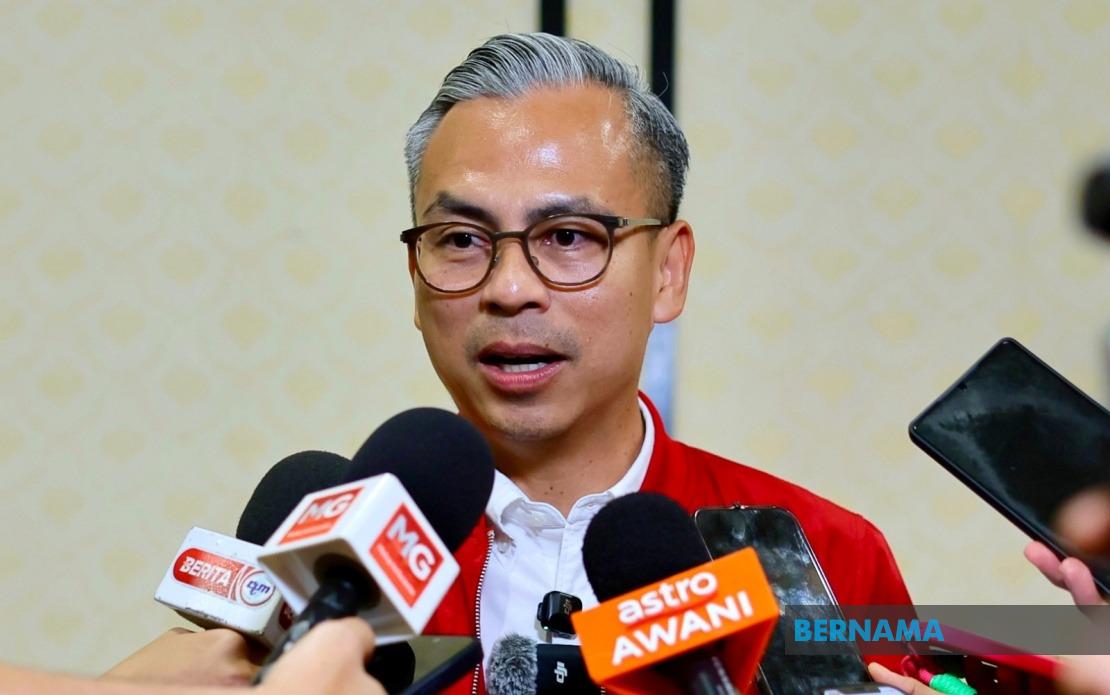
Communications Minister Datuk Fahmi Fadzil has extended an invitation to use national broadcaster RTM as a neutral venue for direct engagement between Johor's incumbent Menteri Besar Datuk Onn Hafiz Ghazi and Pakatan Harapan's Puteri Wangsa state seat candidate Dr Maszlee Malik, offering to facilitate the dialogue on RTM TV1 should both parties accept. The proposal marks an effort by the ruling coalition to demonstrate its commitment to democratic discourse during the heated campaign period leading up to the July 11 polling day.
Fahmi, who holds the dual portfolio of Communications Minister and serves as PH's Communications Director, made the offer while addressing reporters in Muar. He emphasised that the proposed dialogue would serve a constructive purpose fundamentally different from traditional political campaigning or partisan scoring of points. Instead, the session would focus on substantive discussions about Johor's development trajectory and long-term vision for the state, creating space for both leaders to articulate their respective strategies for the electorate's consideration. The minister indicated flexibility regarding logistics, stating the broadcast could be arranged at any mutually convenient time and location, whether in Johor Bahru or elsewhere.
The initiative comes amid pressure from some political quarters questioning whether PH should first declare its Menteri Besar candidate before engaging in any high-profile debates. Fahmi's remarks directly address this tension, suggesting that the willingness to face scrutiny and opposing viewpoints should not be contingent on preliminary announcements but rather reflects the maturity and leadership capability expected of senior political figures. His framing positions openness to dialogue as a character trait essential for effective governance, implying that a leader's readiness to engage with criticism transparently is predictive of their ability to manage state affairs responsibly.
The emphasis on professional conduct and respectful exchange reveals broader concerns within PH about the tone of campaign discourse in Johor. By positioning RTM as a platform for ideas rather than confrontation, Fahmi attempts to elevate the conversation beyond partisan theatrics. The minister acknowledged Maszlee's prior engagement with 41 young voters to discuss the state's future, commending this grassroots approach as consistent with the values the proposed dialogue would embody. This positioning suggests PH views generational inclusion and substantive policy discussion as distinguishing features of its campaign approach.
Onn Hafiz, the incumbent Menteri Besar representing Barisan Nasional, currently occupies a position of considerable political strength in Johor. However, the challenge from Dr Maszlee in Puteri Wangsa represents a concentrated effort by opposition forces in a state traditionally viewed as BN stronghold. The Puteri Wangsa constituency, contested by multiple candidates including Teow Chia Ling from BN, Nicholas Paul Vincent of Parti Bersama Malaysia, Rashifa Aljunied representing MUDA, and independent candidate Wang Wee Seong, exemplifies the fragmented opposition landscape in Malaysian state politics. Simultaneously, Onn Hafiz faces a separate electoral contest in Machap against PH's Nor Hafiz Roslan, creating a direct two-way race in that seat.
The timing of Fahmi's proposal warrants examination given the compressed campaign schedule. With early voting set for July 7 and polling day on July 11, the window for organising and broadcasting such a dialogue remains narrow. This temporal constraint suggests either remarkable organisational efficiency or the possibility that the offer functions partly as a rhetorical gesture demonstrating PH's openness to democratic engagement. For Malaysian voters accustomed to traditional campaign formats, a live televised dialogue between major candidates addressing substantive governance issues represents a departure from conventional electoral communication patterns.
The Johor state election holds significance beyond the immediate state context, functioning as a bellwether for broader political trends in Malaysia. Johor's large voter population and its economic importance as a major commercial and industrial hub mean that the electoral outcome carries implications for national political momentum. For PH, which performs strongly in urban areas and among younger demographics, the Johor contest tests its capacity to replicate these successes in a state where BN has historically maintained dominance. For BN, retaining or expanding its position in Johor demonstrates continued relevance after years of political turbulence.
Fahmi's explicit appeal to young voters to overcome logistical challenges and participate reflects recognition of demographic shifts reshaping Malaysian politics. The minister's framing of electoral participation as a civic responsibility tied to five-year state development trajectories attempts to motivate turnout among cohorts sometimes characterised as disengaged from traditional political processes. By highlighting the concrete consequences of electoral choices for youth employment, education, and infrastructure investment, Fahmi connects abstract civic duty to tangible personal interest.
The communications minister's offer also reflects evolving media strategy within Malaysian political parties. RTM, as the state broadcaster, carries particular weight and neutrality perceptions that commercial media outlets may lack. By proposing RTM rather than private channels, Fahmi signals confidence in the broadcaster's impartiality while potentially reaching broader audiences spanning demographic segments. The national reach of RTM TV1 ensures visibility across socioeconomic strata, distinguishing such a dialogue from social media engagement that typically skews towards urban, educated viewers.
The response to this proposal, should Onn Hafiz accept or decline, will itself constitute political messaging. Acceptance would signal confidence in engaging opponents on substantive policy grounds, while declining might be interpreted as reluctance to face direct scrutiny on the Menteri Besar performance record. Either outcome carries electoral implications, as voter perceptions of leadership willingness to engage transparently influence evaluations of competence and trustworthiness. The proposal thus functions as both a genuine institutional offer and a strategic gambit within the broader campaign narrative.
Looking forward, the success or failure of this dialogue proposal may influence the conduct of future Malaysian electoral campaigns, particularly regarding the role of public broadcasters in facilitating candidate engagement. If implemented effectively, such formats could establish precedent for more substantive campaign discourse focused on governance issues rather than personal attacks. Conversely, if either camp dismisses the opportunity, it may reinforce perceptions that Malaysian politics remains dominated by tactical positioning rather than genuine engagement with competing visions for development and public service.

