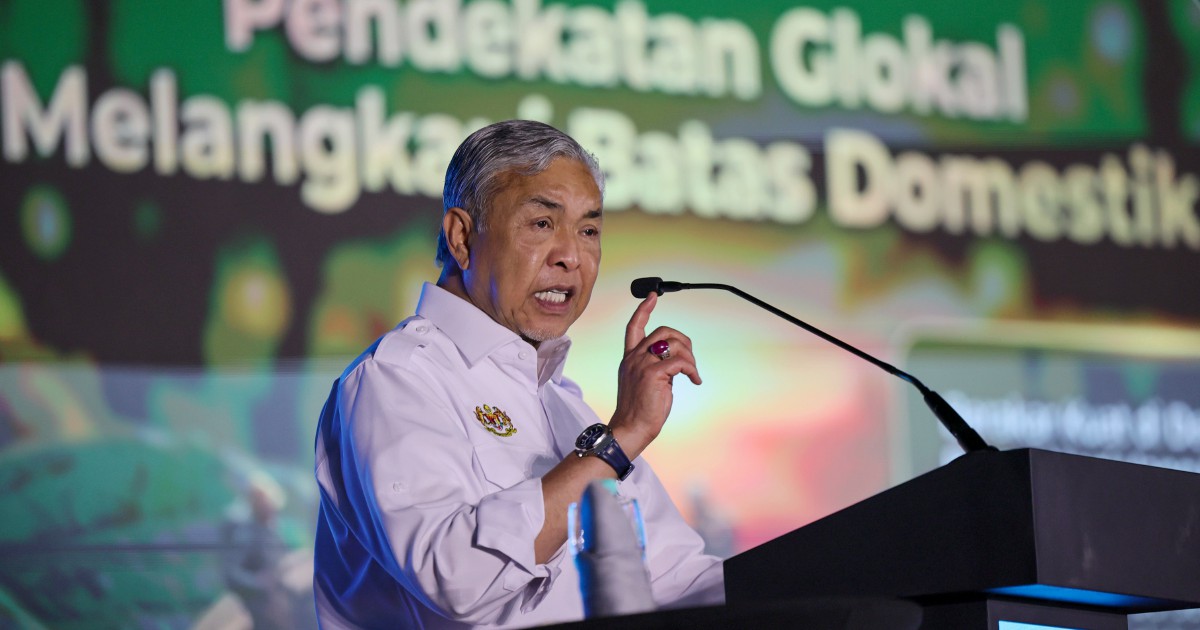
Deputy Prime Minister Datuk Seri Dr Ahmad Zahid Hamidi has called for rural development efforts across Malaysia to be calibrated with broader international economic frameworks and objectives. Speaking in Maran, he emphasised that the National Rural Economic Agenda should function as a comprehensive blueprint capable of charting a fresh trajectory for countryside advancement, one that bridges local aspirations with the demands of an interconnected global marketplace.
Zahid's remarks underscore a growing recognition within government circles that rural prosperity cannot be pursued in isolation from worldwide economic trends and standards. The Deputy PM's position reflects an acknowledgment that Malaysian rural communities must be equipped not merely to meet domestic needs, but to participate meaningfully in supply chains, trade arrangements, and development initiatives that increasingly transcend national boundaries. This framing positions rural development as integral to Malaysia's broader competitive standing rather than as a domestic welfare concern operating separately from macroeconomic strategy.
The National Rural Economic Agenda, which appears to function as a strategic roadmap for countryside development, has been elevated to central importance in government planning. By positioning it as a blueprint capable of guiding development across multiple sectors and regions, Zahid signalled that rural advancement requires systematic coordination rather than ad-hoc interventions. This suggests the government views fragmented approaches to rural issues as insufficient for addressing complex challenges spanning infrastructure, skills development, market access, and technology adoption.
For Malaysia's rural heartland, the implications are substantial. Regions like Pahang, where Maran is located, have historically experienced slower growth relative to urban centres, with younger residents often migrating to cities in search of economic opportunity. A development model explicitly linked to global economic participation could theoretically create pathways for rural entrepreneurs to access international markets, whether through agricultural exports, digital commerce, or value-added manufacturing. This would require substantial investments in digital infrastructure, logistics networks, and business training unavailable in many rural areas today.
The Deputy PM's emphasis on synchronisation with global agendas likely references Malaysia's commitments under regional trade arrangements and development frameworks. Southeast Asian nations have increasingly adopted strategies positioning rural and agricultural sectors within broader regional supply chains. Malaysia's own rubber, palm oil, and agricultural exports depend on alignment with international quality standards, environmental regulations, and market preferences. A rural agenda attuned to these realities could help farmers and agricultural processors adapt to evolving global demand rather than facing disruption from unexpected policy shifts or market changes.
However, the tension between global integration and local welfare deserves scrutiny. Aligning rural development with global agendas can prioritise export-oriented agriculture and capital-intensive projects over subsistence farming or small-scale traditional enterprises that sustain many rural families. Communities may face pressure to consolidate landholdings, adopt expensive technologies, or pivot toward crops determined by international commodity prices rather than local food security. Without deliberate safeguards, an overly globalised rural development strategy could accelerate rural depopulation among those unable to transition to export-oriented models.
The Maran announcement also reflects possible competition for rural attention among Southeast Asian governments. Thailand, Vietnam, and Indonesia have pursued various strategies to revitalise countryside economies, from agricultural modernisation to rural manufacturing and digital entrepreneurship. Malaysia's positioning of rural development as a sophisticated, globally-integrated agenda may signal an attempt to match regional peers in articulating modern development visions rather than relying on traditional rural subsidies or welfare spending.
Skills development emerges as crucial under this framework. Rural communities must access vocational training aligned with export-sector requirements, digital literacy programmes for e-commerce participation, and management education for farmers transitioning to commercial scales. Current rural education infrastructure often falls short of these demands, particularly in remote areas. The success of Zahid's vision depends substantially on whether the government allocates resources to bridge this capability gap.
The timing of this emphasis on globally-aligned rural development coincides with Malaysia's broader digital economy initiatives and efforts to enhance competitiveness amid regional slowdowns. Rural areas represent significant untapped potential if effectively integrated into digital platforms, agricultural technology networks, and regional value chains. Yet realising this potential requires sustained investment, coordination across multiple government agencies, and honest assessment of which rural communities possess realistic prospects for export-oriented development versus those requiring targeted support to maintain viable, locally-focused livelihoods.
Zahid's framing also suggests that rural development may increasingly be evaluated against international benchmarks and standards rather than domestic poverty metrics alone. This shift in evaluation criteria could reshape priorities and resource allocation, potentially benefiting commercially viable rural enterprises while marginalising subsistence activities or traditional practices deemed uncompetitive globally. The National Rural Economic Agenda, therefore, represents not merely a development tool but a reorientation of rural Malaysia toward integration with transnational economic structures and frameworks that will determine rural prosperity or stagnation in coming decades.

