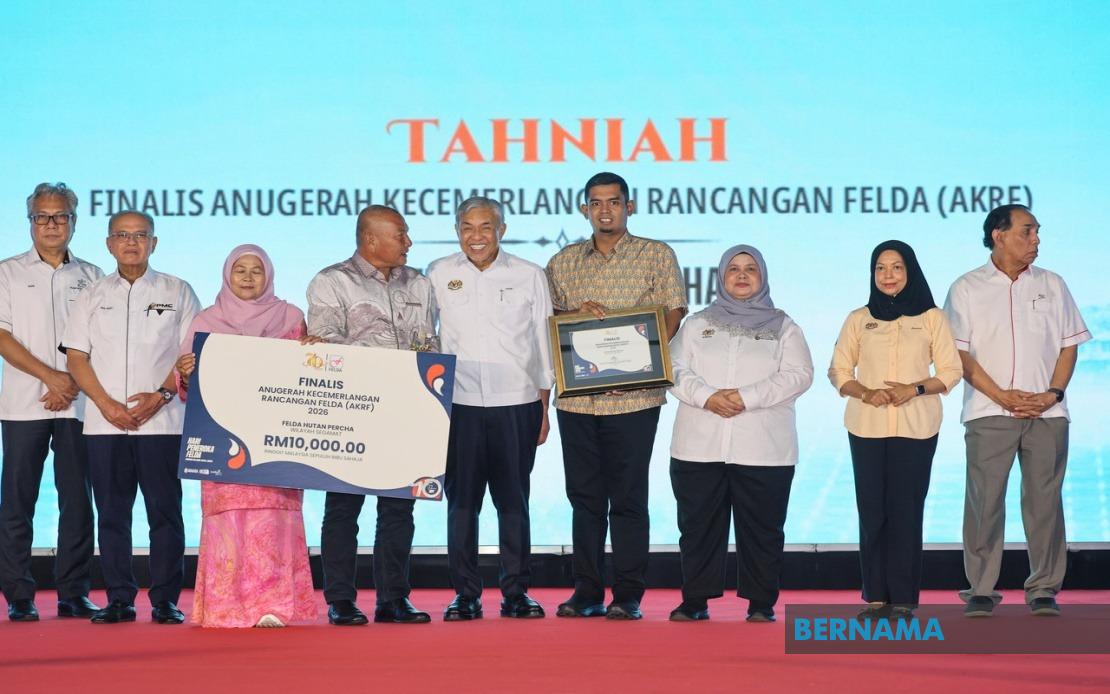
Deputy Prime Minister Datuk Seri Dr Ahmad Zahid Hamidi has issued a clarion call for Malaysia's rural development sector to abandon its inward-looking approach and embrace cross-border opportunities, arguing that parochial thinking no longer serves the nation's agricultural and entrepreneurial communities. Speaking at the World Rural Development Day 2026 celebration at Bandar Tun Razak Stadium in Maran, Ahmad Zahid, who doubles as Rural and Regional Development Minister, stressed that tomorrow's prosperity hinges on rural stakeholders' willingness to think regionally and globally, particularly in tapping the burgeoning ASEAN marketplace and the worldwide halal economy.
The Deputy Prime Minister's remarks signal a strategic pivot away from infrastructure-centric rural policies towards a more market-driven, export-oriented paradigm. By characterising rural development as integral to Malaysia's international competitiveness rather than merely a domestic welfare concern, Ahmad Zahid is repositioning the narrative around rural entrepreneurship. This framing carries particular significance for Southeast Asian economies grappling with rural-urban disparities and seeking to leverage agricultural and artisanal sectors as engines of inclusive growth. For Malaysian policymakers, the shift reflects growing recognition that rural communities possess untapped potential to contribute to the nation's export earnings and global brand presence.
The Deputy Prime Minister highlighted that Malaysian rural products and enterprises must possess the confidence and capability to penetrate international markets, a aspiration that can only materialise if rural development networks transcend geographical confines. This perspective acknowledges that rural entrepreneurs often lack the institutional scaffolding and market intelligence necessary for cross-border expansion, constraints that Ahmad Zahid's ministry has attempted to address through targeted interventions. The implicit acknowledgement of these structural barriers underscores the complexity of integrating rural producers into global value chains, where quality standards, logistics, regulatory compliance, and brand positioning become critical success factors.
Central to Ahmad Zahid's policy framework is the National Rural Economy Agenda, which he positions as the overarching strategic blueprint for Malaysia's rural development pathway. This agenda represents an attempt to consolidate fragmented rural initiatives into a coherent, forward-looking strategy capable of addressing contemporary challenges whilst capitalising on emerging opportunities. The elevation of this agenda to policy prominence suggests that rural development has moved beyond sectoral advocacy into mainstream economic planning, reflecting a broader governmental commitment to inclusive growth frameworks that neither marginalise rural populations nor treat rural development as peripheral to national prosperity.
To operationalise this vision, the Rural and Regional Development Ministry has rolled out several initiative over the preceding three years, notably RisSMart and IkonDesa, programmes specifically engineered to facilitate wider market access for rural entrepreneurs. The government's investment in these schemes has yielded quantifiable results: more than seven thousand newly developed rural entrepreneurs have catalysed the creation of fifteen thousand employment opportunities and generated sales surpassing RM1.77 billion. These figures, whilst impressive on their surface, warrant deeper scrutiny as indicators of sustainable, scalable rural economic transformation. Whether these entrepreneurs can maintain momentum post-initial support, diversify their product portfolios, and genuinely access regional markets remains an open question that will test the efficacy of Malaysia's rural development model.
Parallel to entrepreneurship promotion, Ahmad Zahid underscored the ministry's commitment to human capital development, particularly among indigenous communities. The admission of nearly five hundred Orang Asli students to universities represents a historic milestone, reflecting concerted efforts to bridge educational disparities that have historically constrained opportunities for Malaysia's most marginalised populations. This initiative assumes particular importance in Southeast Asia, where indigenous and minority communities frequently experience systematic exclusion from higher education pathways. By prioritising tertiary access for Orang Asli learners, Malaysia signals recognition that rural development cannot succeed without addressing foundational equity gaps in educational opportunity.
Infrastructure investment has equally commanded ministerial attention during the 12th Malaysia Plan period. Nearly five thousand kilometres of rural roads underwent upgrading to enhance connectivity, a necessary though insufficient condition for rural prosperity. Concurrently, electricity supply was extended to over seven thousand homes and clean water reached more than ten thousand rural households, initiatives that address basic service deficits which continue to constrain rural living standards across the region. Additionally, nearly ten thousand homes were constructed or refurbished, benefiting approximately forty thousand rural residents. Collectively, these interventions represent substantial capital allocation and demonstrate government willingness to invest in the foundational infrastructure upon which economic dynamism depends.
The significance of these infrastructural advances extends beyond Malaysia's borders, offering instructive lessons for other Southeast Asian nations wrestling with rural-urban service disparities. The systematic approach to electrification, water supply, and housing reflects integrated thinking about what constitutes adequate rural living standards in the twenty-first century. However, policymakers recognising that infrastructure provision, whilst essential, constitutes a necessary precondition rather than a sufficient cause for rural economic transformation. Without complementary investments in skills development, market linkages, and institutional capacity, infrastructure improvements risk becoming underutilised assets.
The occasion of World Rural Development Day itself warrants contextualisation for Malaysian readers. The United Nations General Assembly formally proclaimed this observance on September 6, 2024, designating July 6 as its annual commemoration to acknowledge the establishment of the Centre on Integrated Rural Development for Asia and the Pacific. The first global celebration occurred on July 6, 2025, and Malaysia officially began observing this occasion in 2026. For Southeast Asian policymakers, this international recognition of rural development's centrality to sustainable development provides both validation for existing initiatives and impetus for renewed commitment to rural-focused programming.
The attendance of Pahang Menteri Besar Datuk Seri Wan Rosdy Wan Ismail and Rural and Regional Development Deputy Minister Datuk Rubiah Wang alongside Ahmad Zahid underscores the multi-level governance engagement that rural development demands. Rural advancement cannot be orchestrated from federal ministries alone but requires coordination across state governments, local authorities, and civil society stakeholders. The visible presence of state-level leadership at this celebration signals alignment between federal and state rural development visions, a coordination challenge that many Southeast Asian federations struggle to navigate effectively.
Looking forward, Ahmad Zahid's articulation of a transnational rural development vision raises important questions about implementation mechanisms. How will Malaysian rural entrepreneurs actually access ASEAN markets given regulatory heterogeneity, tariff structures, and varying quality standards across member states? What institutional support mechanisms will facilitate this market penetration? These practical challenges separate aspirational policy rhetoric from tangible economic outcomes. The Deputy Prime Minister's framing suggests recognition that Malaysia's rural sector possesses latent competitive advantages that remain underexploited, an assessment that aligns with broader Southeast Asian trends towards agricultural modernisation and value-addition in primary production sectors.
The data Ahmad Zahid presented regarding entrepreneurial development and employment creation, whilst encouraging, requires contextualisation within broader labour market trends and rural income dynamics. Employment generation figures reveal the scale of initiative investment but obscure questions about job quality, wage levels, and income sustainability. Similarly, sales generation figures demonstrate market traction for rural products but leave unspecified the profit margins, market concentration, and competitive sustainability of rural enterprises. These metrics, though positive indicators, represent snapshots rather than comprehensive assessments of rural economic transformation. For Malaysian policymakers and Southeast Asian observers, the challenge remains translating headline statistics into durable, inclusive rural prosperity that genuinely improves living standards and opportunities for rural populations historically marginalised from national economic growth.

