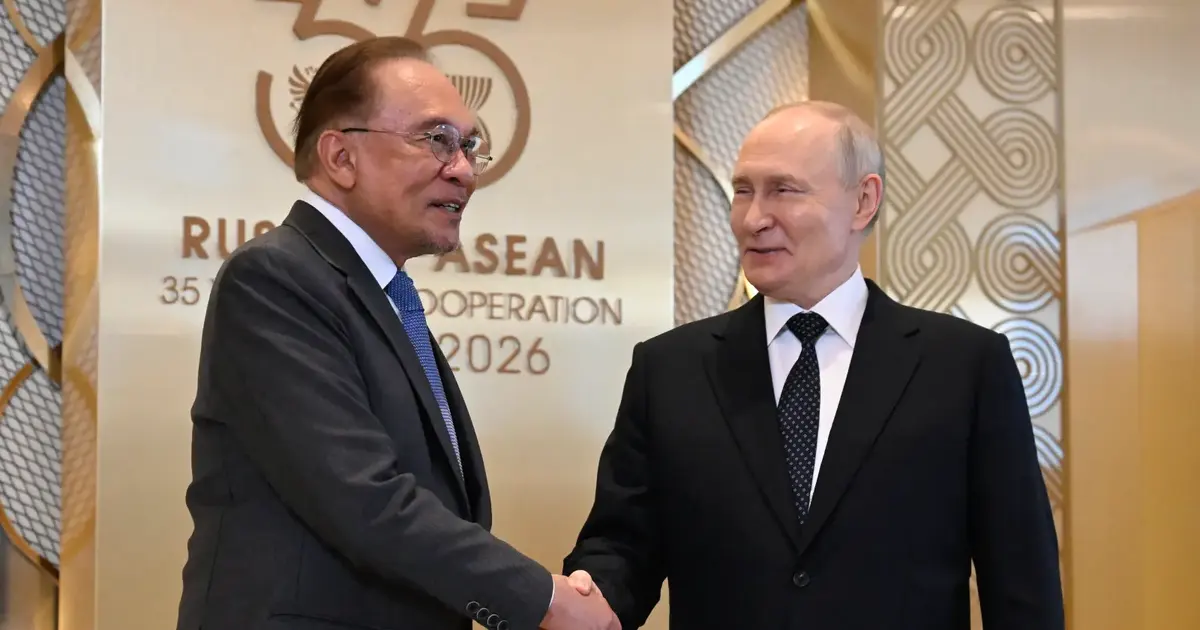
Prime Minister Anwar Ibrahim has secured assurances from Russia regarding sustained supplies of oil and natural gas over the next two decades, marking a significant development in Malaysia's energy security strategy at a time of global market volatility and shifting geopolitical alignments across the Asia-Pacific region.
The commitment addresses long-standing Malaysian concerns about diversifying energy sources beyond traditional suppliers. With global energy markets experiencing considerable turbulence following regional conflicts and sanctions regimes, securing a predictable supply arrangement with Russia represents a strategic hedge against future supply disruptions and price volatility. The 20-year timeframe provides Malaysian refineries, petrochemical plants, and power generation facilities with confidence in their feedstock availability for medium-to-long-term planning and investment decisions.
Energy security constitutes a critical pillar of Malaysia's economic infrastructure, directly influencing manufacturing competitiveness, industrial production costs, and overall economic growth. The country's dependence on hydrocarbon imports, combined with domestic production limitations, necessitates maintaining relationships with multiple suppliers across different regions. Russia's position as a major global energy producer offers Malaysia an alternative to Middle Eastern suppliers and potential leverage in negotiating terms with existing partners.
Beyond energy considerations, Anwar's engagement with regional partners reflects a broader diplomatic initiative to strengthen Malaysia's commercial footprint throughout the Asia-Pacific. The Prime Minister's visit to Turkmenistan signals intent to cultivate relationships in Central Asia, a region increasingly critical to global supply chains and trade patterns. Turkmenistan itself holds significant hydrocarbon reserves and serves as a potential logistics hub for connecting Malaysian products to markets across the Caucasus, Central Asia, and beyond.
The timing of these diplomatic overtures suggests Malaysia is positioning itself strategically within emerging geopolitical blocs. As major powers recalibrate their international relationships, Malaysian officials appear determined to maintain pragmatic engagement across multiple spheres rather than restricting trade and partnership to any single camp. This approach aligns with Malaysia's historical foreign policy framework of strategic autonomy and balanced diplomacy.
Expanding Malaysian exports to primary Asian markets—particularly China, Japan, and South Korea—addresses core economic objectives. China absorbs considerable Malaysian shipments of electrical and electronic components, rubber products, and agricultural goods, while Japanese companies maintain significant investment in Malaysian manufacturing. South Korea represents growing opportunities in technology sectors and defence-related industries. Enhanced market access to these nations would support Malaysian manufacturing employment and contribute to achieving export revenue targets outlined in national economic plans.
Regional trade dynamics favour nations capable of offering reliable, cost-competitive product flows with minimal supply chain disruptions. Malaysian exporters face competition from Vietnam, Thailand, and Indonesia across numerous categories. Strengthening diplomatic relationships with major consuming markets creates opportunities for preferential treatment, simplified customs procedures, and reduced non-tariff barriers—advantages that translate directly into enhanced competitiveness for Malaysian producers.
The energy supply arrangement potentially delivers additional commercial benefits beyond direct hydrocarbon purchases. Energy-intensive industries such as petrochemicals, steel production, and semiconductor manufacturing typically concentrate in regions with reliable, affordable power supplies. Securing stable energy costs could attract regional headquarters functions and manufacturing investment from companies seeking to optimize their Asia-Pacific operations while minimising exposure to energy price volatility.
Malaysia's strategic location along major shipping lanes and its existing free trade relationships position the country as an attractive transshipment hub and processing centre. Companies exporting to China, Japan, and South Korea increasingly establish regional production and distribution facilities in Malaysia to capture tariff advantages and reduce logistics costs. Stable energy supplies support the economics of locating such facilities within Malaysian jurisdiction.
The diplomatic initiative reflects recognition that economic growth increasingly depends on securing supply chain relationships and energy sources outside traditional alignments. Malaysia, unlike some regional peers, maintains flexibility in navigating complex international relationships while prioritizing commercial and developmental interests. This pragmatic approach has historically enabled Malaysian prosperity despite external pressures to align exclusively with particular geopolitical camps.
Longer-term implications for Malaysian competitiveness remain significant. Securing energy supplies at competitive rates removes a major cost variable affecting industrial profitability and export competitiveness. Similarly, sustained diplomatic engagement with major Asian markets creates frameworks for expanding trade relationships beyond current volumes. These factors collectively contribute to Malaysia's ability to attract multinational investment, support small and medium enterprises serving export-oriented supply chains, and maintain employment growth across manufacturing and related sectors.
The 20-year commitment suggests both Russia and Malaysia anticipate stable bilateral relations extending well beyond current political cycles. Such long-term arrangements typically incorporate mechanisms addressing price adjustments, quantity flexibility, and dispute resolution, protecting both parties' interests across varying economic and political conditions. The stability offered through such frameworks provides Malaysian planners with more reliable inputs for infrastructure development and industrial policy formulation.

%22%2F%3E%3C%2Fpattern%3E%3C%2Fdefs%3E%3Crect%20width%3D%22100%25%22%20height%3D%22100%25%22%20fill%3D%22url(%23ph2xbtwg)%22%2F%3E%3Crect%20width%3D%22100%25%22%20height%3D%22100%25%22%20fill%3D%22url(%23ph2xbtwp)%22%2F%3E%3Ctext%20x%3D%2250%25%22%20y%3D%2250%25%22%20text-anchor%3D%22middle%22%20dominant-baseline%3D%22central%22%20fill%3D%22rgba(255%2C255%2C255%2C0.95)%22%20font-family%3D%22Georgia%2C%20'Times%20New%20Roman'%2C%20serif%22%20font-weight%3D%22700%22%20font-size%3D%22226%22%20letter-spacing%3D%22-0.02em%22%3EPenang%3C%2Ftext%3E%3C%2Fsvg%3E)
%22%2F%3E%3C%2Fpattern%3E%3C%2Fdefs%3E%3Crect%20width%3D%22100%25%22%20height%3D%22100%25%22%20fill%3D%22url(%23phyt7eg)%22%2F%3E%3Crect%20width%3D%22100%25%22%20height%3D%22100%25%22%20fill%3D%22url(%23phyt7ep)%22%2F%3E%3Ctext%20x%3D%2250%25%22%20y%3D%2250%25%22%20text-anchor%3D%22middle%22%20dominant-baseline%3D%22central%22%20fill%3D%22rgba(255%2C255%2C255%2C0.95)%22%20font-family%3D%22Georgia%2C%20'Times%20New%20Roman'%2C%20serif%22%20font-weight%3D%22700%22%20font-size%3D%22194%22%20letter-spacing%3D%22-0.02em%22%3EPakatan%3C%2Ftext%3E%3C%2Fsvg%3E)