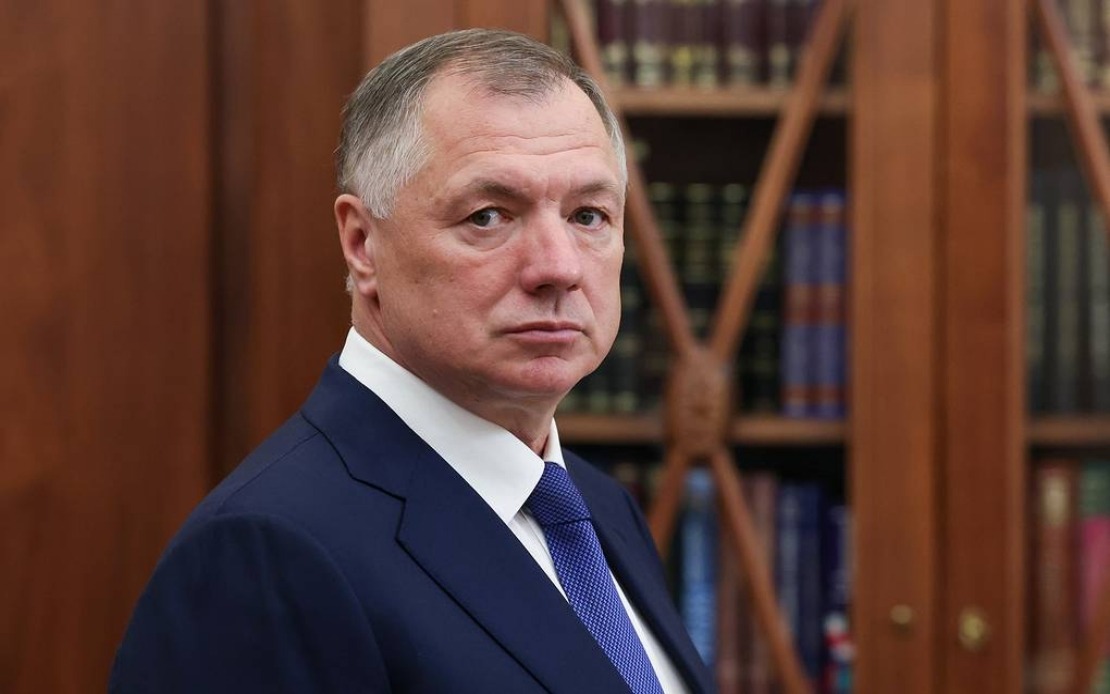
Russia is examining plans to construct a major railway route connecting to the Indian Ocean as a strategic response to mounting vulnerabilities in global shipping lanes, according to Russian Deputy Prime Minister Marat Khusnullin. Speaking to TASS, the senior official highlighted the need for alternative pathways that would reduce Moscow's exposure to disruptions at critical maritime chokepoints that currently serve as vital arteries for international trade.
The proposed corridor would traverse through Turkmenistan, Iran, Afghanistan, and Pakistan before reaching India, offering Russia and potentially other nations a terrestrial alternative to the congested waterways constraining regional commerce. Khusnullin framed the initiative within the context of broader infrastructure modernization, emphasizing that developing land-based routes could provide greater stability and predictability for trade flows. The geopolitical calculus appears straightforward: by diversifying transportation networks away from contested maritime zones, Russia seeks to insulate itself from sanctions regimes and military confrontations that could disrupt shipping.
For Malaysian policymakers and regional observers, this Russian initiative carries significant implications for Southeast Asian trade dynamics and the broader architecture of Eurasian connectivity. The Strait of Hormuz, through which approximately 25 per cent of global oil trade and roughly 20 per cent of liquefied natural gas shipments pass annually, represents a vulnerability that extends far beyond the Middle East. Malaysia's energy security and export competitiveness depend substantially on unfettered passage through these chokepoints; any major disruption reverberates across supply chains that feed the region's manufacturing and petrochemical sectors.
The geopolitical turbulence informing Khusnullin's proposal stems from escalating tensions between the United States and Iran. Following military operations that commenced in late February, with major Iranian population centres including Tehran experiencing airstrikes, the Islamic Revolutionary Guard Corps announced retaliatory strikes against Israeli and American military installations spread across Bahrain, Jordan, Iraq, Qatar, Kuwait, the United Arab Emirates, and Saudi Arabia. These confrontations have created genuine uncertainty about maritime traffic flow through the Strait of Hormuz, with Iranian authorities announcing intentions to restrict passage for vessels connected to the United States, Israel, and their allies.
Within this volatile environment, Russia's exploration of overland trade corridors through Central Asia and the Middle East acquires heightened strategic urgency. A functioning railway network stretching from Russian territory through Iran and Pakistan to Indian markets would fundamentally reorder regional connectivity patterns and potentially redirect significant volumes of trade away from maritime routes. Khusnullin's emphasis on exploring multiple options and accepting any arrangement providing access to India suggests Moscow's willingness to engage with diverse stakeholders across the region, including countries like Iran that face Western sanctions.
The financial dimensions of this ambitious infrastructure project reveal another layer of complexity. Khusnullin indicated that Russia's construction sector currently possesses capacity to absorb an additional one trillion rubles in annual financing, with potential for substantial expansion should financing be guaranteed over a five-year horizon. This commitment to long-term capital allocation demonstrates the seriousness with which Moscow views the project, despite the significant engineering and political obstacles that such a transcontinental railway would inevitably encounter.
For Southeast Asia specifically, the emergence of alternative Eurasian trade corridors carries mixed implications. Enhanced connectivity between Russia, Central Asia, and South Asia might divert some traffic flows that currently pass through regional maritime chokepoints, potentially reducing congestion and volatility in the Strait of Malacca and surrounding waters. Conversely, should such overland routes prove efficient and reliable, they could diminish the relative importance of Southeast Asian ports and transshipment facilities that have historically profited from their geographic positioning along major global trade arteries.
The proposed railway also intersects with existing regional connectivity initiatives, most notably China's Belt and Road Initiative and various Central Asian development programmes. Any Russian-led corridor would need to coordinate with or complement these existing frameworks, creating complex negotiations around standardization, tariffs, and investment responsibilities. Pakistan and Afghanistan's involvement in such a project would simultaneously address their own connectivity aspirations while creating new dependencies on Russian and Iranian cooperation—relationships that carry their own political sensitivities.
Iran's central position in this hypothetical network deserves particular emphasis. A functioning railway through Iranian territory would represent a significant economic opportunity for Tehran, generating transit revenues and facilitating trade with regional partners. However, it would also deepen Iran's integration into Eurasian supply chains in ways that might complicate its broader foreign policy objectives and increase its vulnerability to disruptions in relations with Russia.
The underlying principle animating this Russian initiative—the need for diversified, resilient transportation networks that reduce dependence on contested maritime zones—resonates across the Indo-Pacific region. As geopolitical competition intensifies and the risks of disruption in the Strait of Hormuz and other critical passages increase, multiple stakeholders worldwide are considering overland alternatives. For Malaysia and other Southeast Asian economies deeply integrated into global shipping networks, the proliferation of alternative routes could ultimately enhance overall system resilience, though the transition period may create significant adjustment pressures.
Khusnullin's remarks should be understood not as an imminent infrastructure project but as an expression of Russian strategic thinking about long-term economic resilience. Whether such an ambitious corridor ultimately materializes depends on factors extending well beyond Russian capacity or intentions—including political stability in transit countries, international financing availability, and broader trends in global trade patterns. Nonetheless, the proposal illuminates how geopolitical stress is prompting nations to reimagine fundamental patterns of economic interconnection across Eurasia and beyond.

