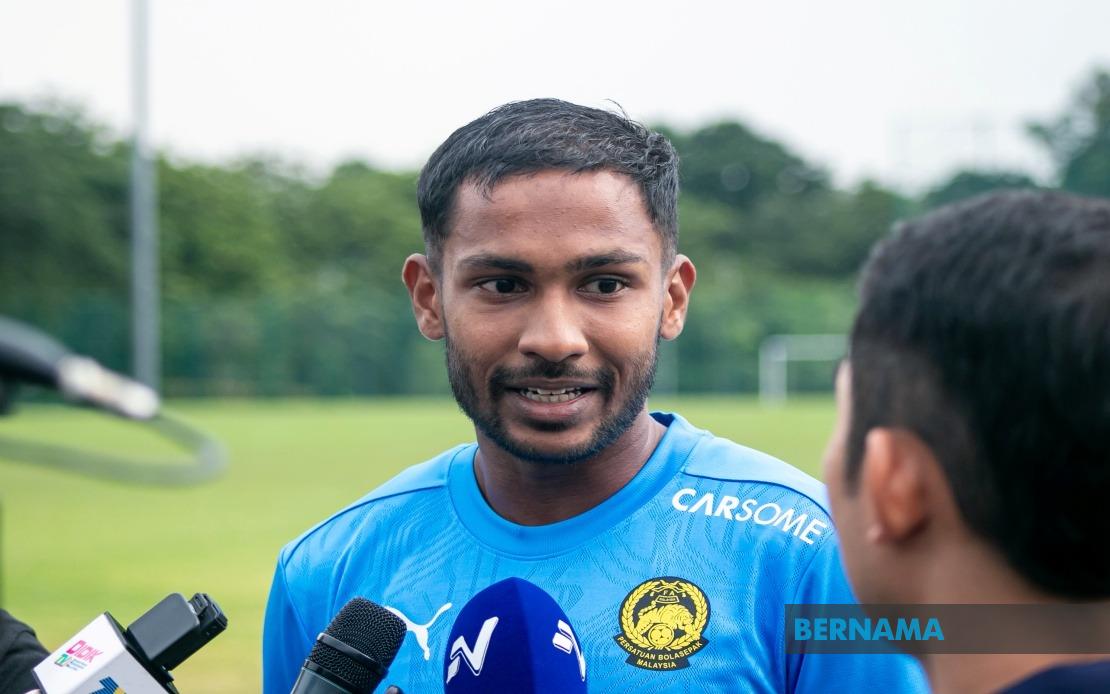
Malaysia's national football team is preparing for a critical test of character and resilience as the 2026 Hyundai ASEAN Cup approaches, with key players making emotional appeals for public backing and personal redemption. Speaking during a centralised training camp in Shah Alam, veteran defender V. Ruventhiran articulated what has become a persistent challenge for Malaysian football: reconnecting supporters with the national side. His message was straightforward yet weighted with deeper significance—the relationship between fans, players, and the national badge requires conscious renewal, particularly as the team embarks on a continental tournament where home advantage can prove decisive.
Ruventhiran's appeal transcends the typical pre-tournament rhetoric often heard from national squads. His emphasis on the "12th man" reference speaks to a tangible gap in recent Malaysian football support, where domestic attendance figures have fluctuated amid shifting public interest and economic pressures. The defender's acknowledgment that upcoming home fixtures—particularly matches at the Kuala Lumpur Football Stadium in Cheras—depend heavily on crowd atmosphere reflects a strategic reality: psychological momentum matters significantly in knockout competitions. When Malaysia faces Laos on July 28 and the Philippines on August 8 at their home venue, the energy from spectators could provide crucial motivation during intense passages of play.
The tournament structure itself presents both opportunities and challenges for Malaysia's Group B campaign. Beginning with an away fixture against Myanmar at Thuwunna Stadium on July 25 immediately tests the squad's mental fortitude and travel readiness. This opening match serves as a barometer for team cohesion and tactical execution before the team returns home for consecutive group-stage matches. The subsequent encounter with Laos and then a challenging trip to Bangkok to face Thailand at Rajamangala Stadium on August 1 suggests the group's competitive intensity remains moderate, yet the accumulation of fixtures across different venues demands excellent fitness management and consistency.
Within this competitive context, individual redemption stories carry weight for team morale and public engagement. Aliff Haiqal Lokman Hakim Lau's injury struggles during the previous season had sidelined the Penang FC player from the national setup, creating uncertainty about his future at the highest level. His inclusion in the centralised training camp represents more than administrative selection; it symbolises faith in his recovery and a second chance to contribute meaningfully to Malaysian football's current aspirations. His characterisation of the call-up as a "blessing" and a fresh start demonstrates the psychological importance many players attach to national team involvement.
The injuries that plagued Aliff Haiqal's recent campaign are unfortunately not uncommon in Malaysian football, where domestic league demands and inadequate recovery infrastructure sometimes compound physical setbacks. The player's determination to use the ASEAN Cup as a platform for proving his restored fitness resonates with supporters who understand that club form and national team readiness are distinct challenges requiring different preparation approaches. Penang FC's recent season provided him limited opportunities to demonstrate full capacity, making this tournament potentially transformative for his career trajectory.
For Malaysian football administrators and coaching staff, the twin messaging from Ruventhiran and Aliff Haiqal reflects broader strategic priorities beyond the immediate tournament. Building sustainable fan engagement requires consistent narrative development and authentic communication about team objectives. Ruventhiran's appeal to "national pride" and working "for our country" deliberately depoliticises support, positioning football as a unifying national endeavour rather than a peripheral entertainment product competing for attention against other leisure activities.
The 2026 ASEAN Cup represents a significant opportunity for Malaysia to establish momentum heading toward the 2026 FIFA World Cup qualification phase. Securing tournament success or even reaching the finals would provide psychological confidence and international exposure beneficial for the squad's development. Group B's composition suggests Malaysia possesses reasonable probability of progressing beyond the preliminary stage, particularly if home matches generate substantial supporter attendance and the team executes fundamental tactical principles consistently.
Aliff Haiqal's specific situation also illuminates challenges Malaysian players face regarding injury rehabilitation and reintegration. Unlike players in more developed leagues with sophisticated medical support systems, domestic footballers sometimes experience extended periods away from competitive action, creating rhythm disruption and confidence fluctuations. His willingness to speak openly about the struggle and subsequent opportunity demonstrates maturity and suggests personal commitment to overcoming setbacks through professional application.
The tournament timeline, with group matches concluding by August 8 and semifinals scheduled for mid-August followed by finals on August 22 and 26, creates a compressed but manageable schedule. Malaysia's experience in previous ASEAN Cup campaigns has demonstrated both capacity and vulnerability, suggesting the current squad must combine defensive solidity with clinical offensive execution. Ruventhiran's presence as a seasoned defensive option provides tactical flexibility, while younger players like Aliff Haiqal offer pace and unpredictability that could trouble opponents during crucial moments.
Looking forward, the convergence of veteran experience and youthful renewal that characterises the current Malaysia squad will be tested against regional rivals who similarly balance established players with emerging talents. Ruventhiran's stadium appeal and Aliff Haiqal's personal narrative of recovery together illustrate that football success depends equally on external support systems and internal determination. As the team travels to Myanmar for their opening match, Malaysian football stakeholders face the practical challenge of converting emotional appeals into sustained attendance and creating an environment where players can perform at optimal levels.

