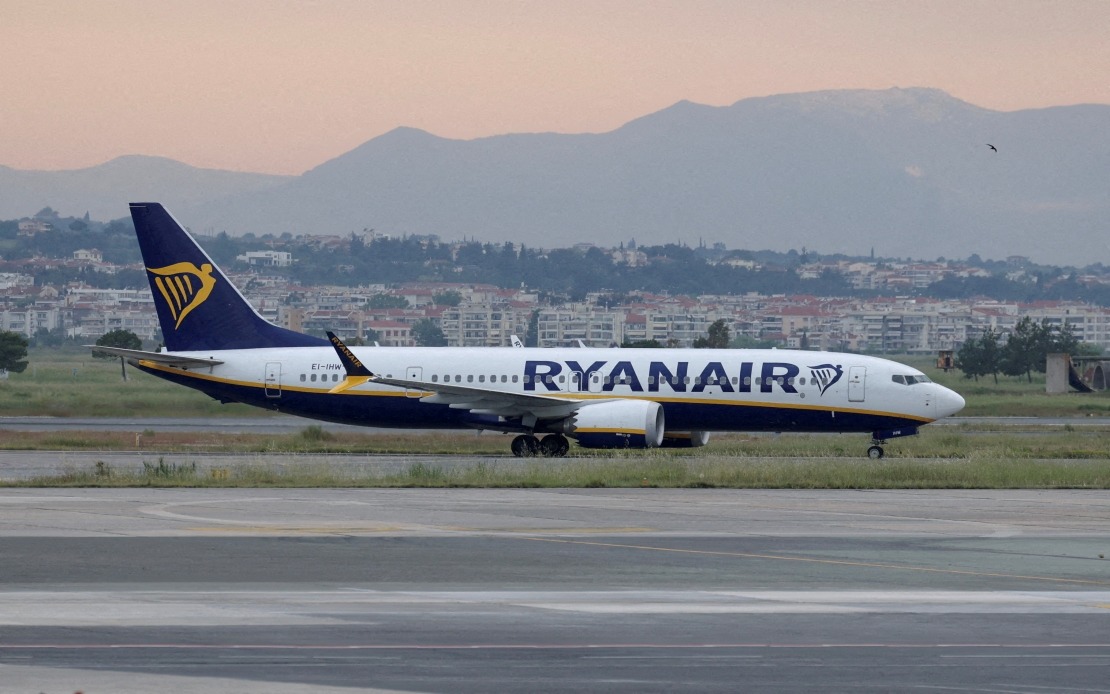
A routine commercial flight turned into a scene of chaos and terror on Friday when a Ryanair aircraft operating the Thessaloniki-to-Memmingen route experienced a catastrophic window failure shortly after departure. The incident prompted an immediate return to Thessaloniki Airport in Greece, cutting short the journey to the southern German city and leaving passengers and crew shaken by the ordeal.
According to eyewitness accounts gathered by German news agency dpa, the trouble began without warning when an explosive sound reverberated through the cabin. Within moments, a window pane had completely shattered, creating a sudden and alarming breach in the aircraft's fuselage. The timing and force of the failure suggest a structural or manufacturing defect, though investigation authorities have not yet released preliminary findings.
The passenger sitting nearest to the compromised window bore the brunt of the incident. According to reports from Greek broadcaster ERT, the man was partially sucked towards the opening, with his head and shoulders protruding beyond the aircraft's exterior. In a display of quick thinking and courage, fellow passengers seated nearby managed to grasp and pull the injured man back into the cabin, preventing a potentially catastrophic outcome. The intervention likely saved his life, as further exposure to high-altitude decompression forces would have been fatal.
The sudden depressurization triggered automatic emergency protocols aboard the aircraft. Oxygen masks deployed throughout the passenger cabin as the plane's systems responded to the breach. Passengers erupted in screams of fear and confusion as the gravity of the situation became apparent, with many uncertain whether the aircraft could safely complete its journey or if further structural failures might occur.
The pilot made the decisive call to abort the flight to Memmingen and execute an immediate return to Thessaloniki Airport. The decision prioritized passenger safety over schedule completion, a standard protocol in such emergencies. The return leg of the flight lasted approximately 20 minutes, during which the aircraft remained at an altitude where cabin pressurization could be maintained and where the pilots had immediate access to emergency landing facilities.
Upon landing, emergency services were standing by to provide immediate medical attention. The injured Serbian national, who had been the most seriously affected by the window failure, was transported by ambulance to a hospital facility in Thessaloniki. His condition and the extent of his injuries remained unclear from initial reports, though the fact that he was conscious and mobile enough to be hospitalized rather than airlifted suggests his injuries, while serious, were not immediately life-threatening.
The incident has raised serious questions about aircraft maintenance standards and component quality control within Ryanair's operations. Window failures, though uncommon, represent a critical safety vulnerability in modern aviation. The European Union Aviation Safety Agency and Greek civil aviation authorities would typically launch formal investigations into such occurrences to determine whether the failure resulted from manufacturing defects, improper installation, inadequate maintenance, or structural fatigue.
As of the time of reporting, neither Ryanair nor the relevant regulatory bodies had released official statements addressing the incident. The airline's silence was conspicuous given the severity of what had occurred and the involvement of multiple jurisdictions—a Greek origin airport, a German destination, and a Serbian national passenger—adding layers of bureaucratic complexity to the investigation process.
For Malaysia and Southeast Asia, this incident serves as a reminder of the critical importance of rigorous aircraft maintenance and safety oversight across all commercial carriers operating in the region. Malaysian passengers and regional airlines must remain cognizant that safety standards should never be compromised for operational efficiency. The European Union's response to such incidents, through mandated investigations and corrective actions, provides a model that Asian aviation authorities can learn from.
The broader implications extend to passenger confidence in low-cost carriers, a segment that has become increasingly prevalent throughout Southeast Asia. While incidents like window failures remain statistically rare, they underscore why operators must invest adequately in maintenance infrastructure and component quality assurance. The fact that a Ryanair flight experienced such a critical failure raises questions about whether cost-cutting measures in maintenance budgets might have contributed to inadequate component lifecycle management.
As investigations proceed, the incident will likely result in enhanced inspection protocols for aircraft windows across multiple carriers. Such developments typically ripple throughout the aviation industry, with manufacturers and operators implementing more frequent inspection schedules and lower replacement thresholds for potentially compromised components. This cascading effect on safety standards, while occasionally burdensome for operators, ultimately protects the millions of passengers who fly daily across the globe.

