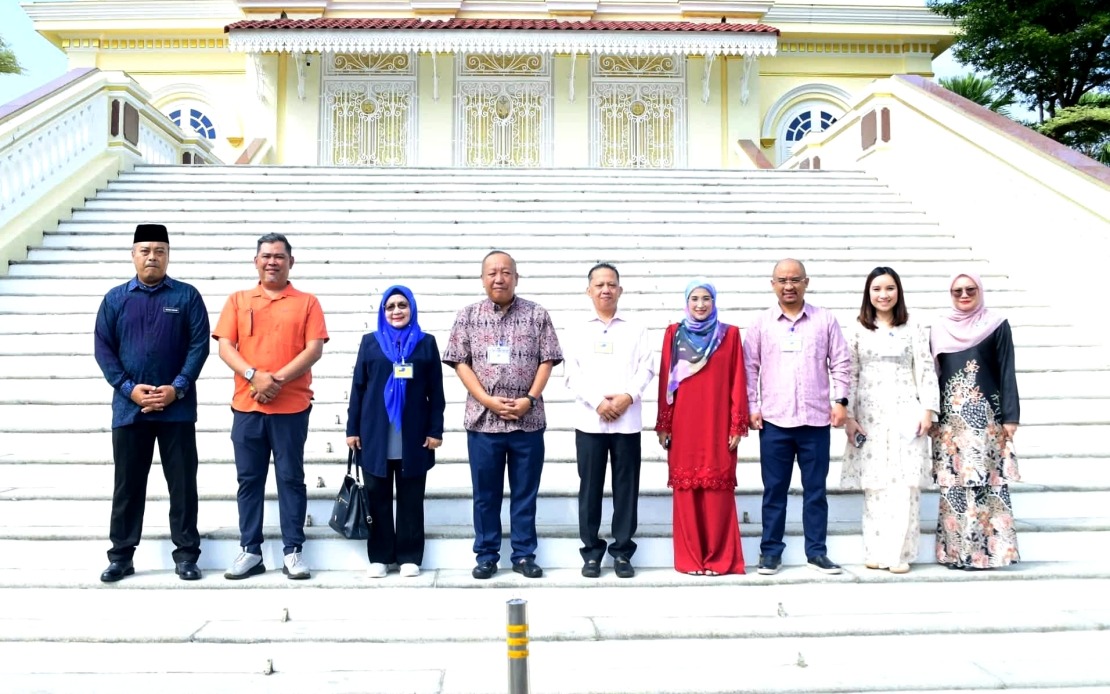
Sabah and Johor are cementing a strategic tourism partnership designed to amplify visitor numbers across both states and position Malaysia more competitively on the global tourism stage. The initiative, led by Sabah's Ministry of Tourism, Culture and Environment (KePKAS), represents a significant step toward coordinated regional tourism development in an era when individual states increasingly recognise the value of collaborative destination marketing. This cooperation extends beyond routine administrative coordination, touching on substantive operational matters ranging from cross-promotional campaigns to the management and presentation of heritage attractions.
Datuk Jafry Ariffin, the Sabah Minister of Tourism, Culture and Environment, framed the enhanced cooperation as instrumental to not only revitalising the domestic tourism market but also laying essential groundwork for Visit Sabah Year 2027, a flagship initiative intended to cement Sabah's status as a premier regional destination. The timing reflects deliberate planning; major state-level tourism years require months of preparation involving stakeholder alignment, infrastructure readiness, and market positioning. By engaging Johor now, Sabah gains access to a state that has developed sophisticated tourism management systems and maintains strong international connectivity through ports and airports serving the southern Peninsular region.
The collaboration opens avenues for joint promotional strategies that leverage both states' distinct appeal. Sabah's positioning centres on natural attractions—pristine rainforests, marine biodiversity, and adventure tourism—while Johor emphasises heritage, cultural assets, and accessibility to Singapore's affluent tourist base. Pooling marketing resources and sharing customer insights can help both states reach demographics that might otherwise gravitate toward competing destinations in Southeast Asia. The arrangement also allows for product development that appeals to increasingly sophisticated tourists seeking integrated regional experiences rather than single-destination visits.
A recent delegation visit from Sabah to Johor underscored this exchange of operational knowledge. The team toured Muzium Diraja Abu Bakar at Istana Besar Johor, where they studied heritage institution management practices. This hands-on exposure matters significantly for Sabah, where cultural tourism represents an emerging economic pillar despite the state's traditional reliance on natural attractions and extractive industries. Learning from Johor's experience in preserving and presenting royal and historical collections provides practical models for developing Sabah's own cultural offerings, whether through museum exhibitions, cultural centres, or heritage trails.
Heritage conservation expertise is particularly germane to Sabah's development trajectory. As the state seeks to diversify beyond traditional sectors, cultural tourism offers sustainable revenue generation that complements rather than competes with nature-based attractions. International tourists increasingly value authentic cultural encounters and historical narratives; destinations that effectively communicate their heritage stories capture premium market segments. By partnering with Johor on conservation best practices, Sabah can accelerate its learning curve and avoid costly mistakes in heritage management that might damage irreplaceable assets.
The broader regional context makes this cooperation timely. Southeast Asia faces intensifying competition from global tourism markets, particularly as post-pandemic travel patterns stabilise. Thailand, Vietnam, and Indonesia have refined regional tourism packaging strategies that encourage visitors to experience multiple destinations within a single trip. Malaysian states operating independently risk missing opportunities to benefit from this trend. A coordinated approach between Sabah and Johor creates opportunities for tour operators to design itineraries connecting diverse Malaysian experiences—from Sabah's rainforests and diving sites to Johor's cultural heritage and proximity to Singapore.
For Malaysian tourism strategy writ large, this bilateral initiative signals a maturation in how states approach destination marketing. Rather than viewing other Malaysian regions as competitors, this model treats them as complementary partners. A visitor might spend five days experiencing Sabah's natural attractions before routing through Johor's heritage sites and cultural institutions, with both states and the national tourism board benefiting from extended Malaysian stay duration. This approach aligns with global tourism sector trends favouring multi-destination regional tourism packages over single-location visits.
Domestic tourism represents another underexploited dimension of this partnership. Malaysian citizens often prefer overseas travel despite world-class attractions at home, partly because integrated regional packages and coordinated messaging about domestic destinations remain underdeveloped. Sabah and Johor collaborating on domestic promotion—through joint advertising campaigns, coordinated festival scheduling, and bundled destination packages—could help reverse this trend. The economic multiplier effects of domestic tourism for local communities in both states justify investment in coordinated marketing efforts.
The initiative also reflects recognition that institutional knowledge transfer strengthens the entire Malaysian tourism ecosystem. Johor's experience managing museum collections, preserving architectural heritage, and developing cultural tourism programming becomes instantly available to Sabah's officials and private sector operators. This horizontal learning between state governments, when formalised through partnerships, accelerates capability development across the federation. Sabah benefits from decades of Johor's accumulated experience without incurring the inefficiencies that come from learning through trial and error.
Visit Sabah Year 2027 provides a concrete focal point for this cooperation. Such years require coordinated efforts across transportation, hospitality, attractions, and marketing sectors. Johor's experience managing similar initiatives offers valuable lessons in capacity building, stakeholder coordination, and quality assurance. The timing also allows adequate preparation; tourism infrastructure improvements, staff training, and market positioning initiatives can proceed methodically rather than chaotically in the months immediately before the campaign launch.
Looking forward, this Sabah-Johor model may inspire analogous partnerships involving other Malaysian states. Selangor and Pahang could coordinate around nature and heritage tourism; Penang and Kedah might develop integrated cultural tourism products; Terengganu and Kelantan could leverage complementary beach and craft-based attractions. If successful, the Sabah-Johor initiative demonstrates that cooperative federalism in tourism can generate win-win outcomes that strengthen Malaysia's overall tourism competitiveness while distributing economic benefits across multiple states and regions.

