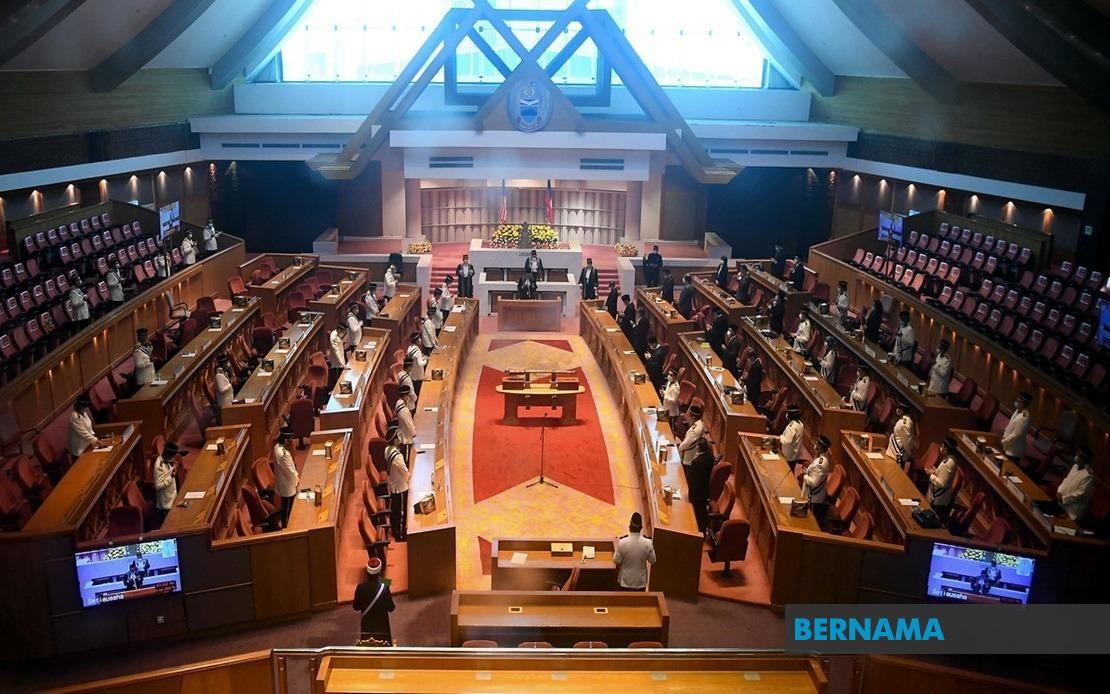
Sabah's state parliament moved forward with governance modernisation on July 22 when members voted to adopt the Sabah Ports Authority (Amendment) Bill 2026, a measure designed to synchronise administrative structures with recent cabinet reconfigurations. Deputy Chief Minister III Datuk Ewon Benedick piloted the legislation through the chamber, drawing participation from six lawmakers during the substantive debate held under the stewardship of Deputy Speaker Datuk Al Hambra Tun Juhar. The passage represents a routine yet consequential adjustment to ensure legal frameworks reflect operational reality across Sabah's public sector.
The legislation confronts a structural inconsistency that emerged following the state cabinet's reorganisation, which took formal effect on December 3, 2025. In that reshuffle, administrative responsibility for port-related functions migrated from the Ministry of Public Works and Utilities to the newly empowered Ministry of Industrial Development, Entrepreneurship and Transport—the portfolio under Ewon's direct supervision. The shift recognised Malaysia's broader strategic pivot toward leveraging port infrastructure as a catalyst for economic diversification and regional competitiveness. However, the underlying legal statute governing the Sabah Ports Authority—the 1981 Enactment—continued to reference obsolete ministerial designations, creating potential administrative friction and legal ambiguity.
Ewon articulated the core deficiency with precision: the definition of 'Minister' embedded in Section 2 of the 1981 Enactment pointedly designated the minister responsible for communications and public works as the authority's institutional guardian. That nomenclature had become divorced from contemporary reality, as cabinet restructuring had transferred port stewardship elsewhere. By leaving the enactment unamended, the state risked situations where statutory interpretation might reference an authority no longer bearing operational responsibility for ports. The amendment therefore corrected this documentation gap, ensuring legal language mirrored functional assignment.
For Malaysian corporate stakeholders and port operators working across Sabah's maritime infrastructure, the amendment offers administrative clarity without introducing disruptive policy upheaval. Ewon emphasised explicitly that the revision carries zero financial burden for the state government, assuaging concerns about hidden costs embedded in restructuring exercises. More significantly, the amendment preserves the institutional autonomy of the Sabah Ports Authority itself, leaving untouched the organisation's policies, operational functions, and statutory powers. Essentially, the change addresses nomenclature and jurisdiction rather than fundamentally reengineering how ports function or who exercises decision-making authority within those facilities.
The bill incorporates thoughtful transitional architecture protecting decisions rendered under the previous administrative regime. A dedicated transitional provision validates all ministerial determinations, approvals, and actions undertaken while port affairs fell under the Public Works and Utilities Ministry. This safeguard matters substantially in practice: existing contracts, regulatory approvals, operational directives, and strategic initiatives pursued under the former structure retain full legal standing and enforceability. Port operators and service providers thus avoid the uncertainty that might otherwise accompany ministerial realignment, knowing that historical administrative acts remain inviolable. Such protective measures reflect mature governance design, preventing unnecessary commercial and operational disruption.
Sabah's cabinet restructuring itself warrants contextual examination for regional observers tracking Malaysian institutional evolution. The December 2025 reconfigurations across state portfolios revealed shifting priorities within Sabah's development agenda. By elevating port affairs within a ministry explicitly focused on industrial development and entrepreneurship—rather than maintaining it within a public works framework—the state signalled recognition that maritime infrastructure constitutes strategic economic infrastructure rather than mere utility provision. This conceptual repositioning aligns Sabah with regional trends elsewhere in Southeast Asia, where port authorities increasingly occupy central roles within national industrial policy and export competitiveness strategies.
The amendment's passage through the state assembly proceeded expeditiously, suggesting cross-party comfort with the technical adjustments proposed. The presence of six legislators engaging substantively during debate indicated the legislative process accommodated genuine parliamentary scrutiny rather than rubber-stamping executive preference. This deliberative character reinforces institutional credibility, particularly important for port-dependent economies where investor confidence depends partly on transparent governance demonstrating respect for procedural propriety. Sabah's demonstrated willingness to correct administrative misalignments through formal legislative amendment demonstrates an institutional commitment to legal coherence.
For maritime commerce flowing through Sabah's port network, the amendment carries subtle yet meaningful consequences. Clear ministerial attribution and responsibility structures reduce bureaucratic ambiguity when port operators require ministerial decisions, exemptions, or policy guidance. Investors contemplating expanded operations within Sabah's port infrastructure gain assurance that administrative authority is transparently defined and legally grounded. The amendment thus constitutes a modest but genuine contribution toward establishing the regulatory predictability that sophisticated port operators demand when evaluating investment locations. Neighbouring states and federal policymakers may similarly benefit from reviewing whether their own statutory frameworks require analogous housekeeping to reflect contemporary cabinet realities.
The legislation's enactment concludes a chapter opened by December's cabinet restructuring, but arguably inaugurates broader questions about Sabah's port development trajectory. As industrial development increasingly anchors the ministry supervising ports, the state faces opportunities to integrate port expansion with coherent industrial strategy. Whether such integration materialises depends on subsequent policy formulation by Ewon's ministry, but the amended legal foundation now supports such comprehensive approach. Port-dependent economies like Sabah must continually reconcile infrastructure capabilities with industrial ambitions, and administrative coherence represents a necessary precondition for such strategic alignment. The amendment, though procedurally routine, establishes institutional conditions enabling more sophisticated port planning and industrial coordination.

