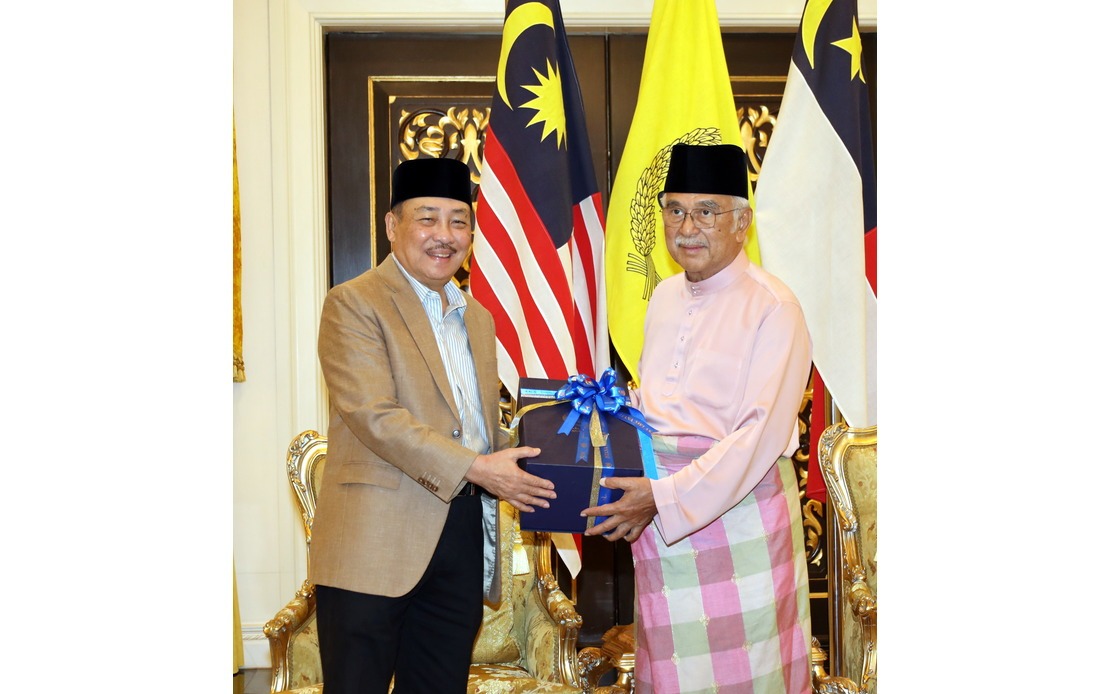
Sabah Chief Minister Datuk Seri Hajiji Noor has concluded a courtesy visit to Melaka, where he met with the state's Yang Dipertua Negeri Tun Dr Mohd Ali Mohd Rustam at Istana Melaka in Bukit Beruang. The meeting, held on August 14, represented a deliberate effort to deepen institutional relationships between the two states and signal commitment to collaborative governance across Malaysia's diverse regions.
The visit underscores the importance of maintaining strong interpersonal and official channels between state leaders, particularly in a federal system where coordination on policy matters ranging from infrastructure to economic development requires sustained dialogue. Such courtesy calls, while often ceremonial in nature, serve practical purposes in establishing rapport and creating informal forums for addressing regional concerns that may not fit standard bureaucratic channels.
Hajiji arrived at the istana at approximately 3.35 pm accompanied by a delegation that reflected the breadth of Sabah's administrative priorities. The entourage included Sabah Rural Development Minister Datuk Rubin Balang, whose portfolio addresses the needs of rural communities across the state; Agriculture, Fisheries and Food Industry Minister Datuk Jamawi Jaafar, representing a sector vital to Sabah's economy; and Nominated Member of the Sabah State Legislative Assembly Datuk Mohd Razali Mohd Razi. The composition of the delegation signalled that the visit aimed to explore substantive areas of potential cooperation rather than serving purely ceremonial functions.
During their discussions, the two leaders and their teams explored various matters of mutual interest spanning both states' developmental agendas. While the specifics of these discussions were not detailed in official statements, such high-level meetings typically touch on themes including infrastructure connectivity, trade facilitation, agricultural policy alignment, and human resource exchanges. For states like Sabah and Melaka, which occupy different geographic and economic positions within Malaysia—Sabah as an East Malaysian state with distinct developmental challenges, and Melaka as a strategically located peninsular state—finding areas of complementary interest can yield practical benefits.
The visit demonstrated how Malaysian state governments continue to cultivate relationships that transcend the immediate political landscape. In a country with 13 states and three federal territories, each with their own governance structures and policy priorities, these formal and informal networks facilitate knowledge-sharing and can prevent the kind of jurisdictional silos that sometimes impede coordinated national development. The presence of multiple ministers suggested that Sabah was keen to explore cross-sector collaboration opportunities.
Melaka's significance as a historical and economically important state makes it a natural counterpart for bilateral engagement. The state's position as a manufacturing and tourism hub, combined with its strategic location in the Strait of Malacca, gives it considerable influence in regional economic discussions. For Sabah, which has been working to diversify its economic base beyond resource extraction, learning from Melaka's experiences in sectors like tourism and value-added manufacturing could offer valuable lessons.
The platform provided by the visit extended beyond immediate bilateral concerns to encompass broader questions about how Malaysian states can coordinate more effectively. Climate change adaptation, for instance, presents different challenges for an island state like Sabah compared to Melaka, yet both face rising sea levels and changing rainfall patterns that demand collaborative solutions. Similarly, agricultural diversification in Sabah might benefit from knowledge transfer regarding crop varieties and farming techniques proven successful in other Malaysian regions.
The afternoon tea that concluded the meeting provided an informal setting for continued discussion, a practice common in diplomatic protocol that often yields candid exchanges beyond what formal meeting settings permit. Such moments, though brief and unrecorded, frequently become the basis for subsequent working-level collaborations between ministerial staff and agency heads.
For Malaysian federalism more broadly, these regular consultations between state leaders reinforce the principle of cooperative governance. Rather than viewing Malaysia's states as competitors, official visits like Hajiji's cultivate a culture of mutual assistance and shared problem-solving. This approach has become increasingly important as states grapple with complex challenges—from managing migration to attracting foreign investment to adapting to climate change—that rarely respect state boundaries.
The Sabah Chief Minister's delegation, drawn from rural development, agriculture, and legislative representation, suggests an administration focused on inclusive governance. The inclusion of a nominated assemblyman alongside portfolio-holding ministers indicates deliberate effort to represent different constituencies and interests within Sabah's governance structure. Such inclusive delegations communicate seriousness about exploring opportunities that benefit diverse segments of Sabah's population.
As Malaysia navigates its economic transition and addresses regional disparities, state-to-state engagement becomes an essential mechanism for ensuring that development benefits are distributed equitably and that smaller or less-resourced states can access expertise and experience from their counterparts. Sabah's engagement with Melaka exemplifies this constructive federalism in action, creating networks through which ideas, best practices, and collaborative projects can flow.

