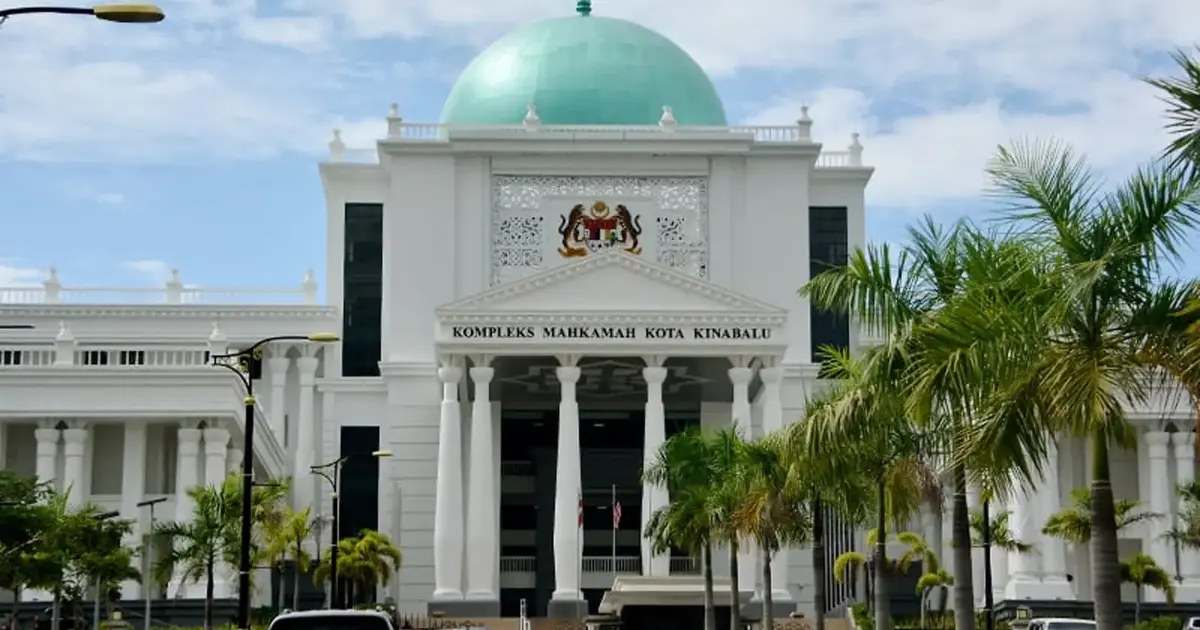
A Sessions Court in Sabah has ruled against politician Albert Tei in his defamation case targeting a state-owned minerals corporation, effectively ending the legal challenge over contested public statements made by the company. Judge Monica Linsua's decision marks a significant moment in the dispute, which had centred on whether certain remarks could be construed as linking Tei to organised political activity.
The judge's analysis focused on the precise language and context of the company's original statement. Rather than accepting Tei's interpretation that the text implied his participation in a political campaign, the court concluded that when examined in its totality, the statement carried no such meaning. This distinction between the literal wording and the plaintiff's alleged construction proved decisive in the case outcome.
The dismissal carries broader implications for political figures in Sabah and beyond who pursue defamation remedies in Malaysian courts. It underscores the judicial threshold required to establish that a statement has defamed someone by connecting them to political activity or movements. Courts in Malaysia typically demand clear evidence of intentional falsity and malicious intent before finding liability, particularly when political matters are involved.
Defamation cases involving public figures remain contentious in Malaysian jurisprudence. The balance between protecting reputation and preserving free speech—especially corporate speech—continues to evolve through rulings like this one. Judges must weigh whether a reasonable person would interpret statements as making false and damaging claims, a standard that frequently benefits corporate defendants when language remains ambiguous or capable of multiple readings.
Sabah's political landscape has witnessed numerous disputes between public officials and commercial entities, often with complex undertones of patronage and rivalry. The minerals sector, in particular, carries significant economic and political weight in the state. When disagreements between politicians and resource-related corporations escalate to litigation, outcomes can influence both business behaviour and the calculations of political actors considering future legal action.
Tei's failed lawsuit suggests that corporations operating in resource-dependent Malaysian states may enjoy considerable latitude in making public statements about political figures, provided they avoid explicit accusations. This immunity derives partly from the legal requirement that plaintiffs prove not merely that statements are controversial or unflattering, but that they are factually false and delivered with knowledge of their falsity or reckless disregard for truth.
The judgment also reflects how Malaysian courts interpret evidence and context when determining meaning. Judge Linsua's approach—examining the company's statement holistically rather than extracting isolated phrases—represents mainstream judicial methodology in defamation cases. Courts recognise that words exist within larger discourse, and that isolated sentences may mislead if severed from surrounding explanation or qualification.
For regional observers, the case illustrates patterns common across Southeast Asia regarding defamation law and political speech. Countries including Malaysia have inherited common law traditions that theoretically protect free expression while maintaining avenues for redress against genuinely false statements. In practice, however, courts often require plaintiffs—particularly those in politics—to meet stringent evidentiary standards, making victory difficult even when statements seem damaging.
The dismissal may influence how future disputes between Sabah politicians and state-linked enterprises unfold. If litigants perceive courts as unlikely to find defamation based on ambiguous or contextual language, they may pursue alternative remedies or employ different strategies altogether. Some may avoid court entirely, calculating that litigation expenses and uncertain outcomes make confrontation unwise.
Corporate defendants, conversely, may feel emboldened to engage more directly with political criticism or controversial topics, knowing that carefully worded statements—particularly those avoiding explicit factual claims—enjoy judicial protection. This dynamic could reshape the boundaries of acceptable corporate speech in Malaysian politics, especially in resource sectors where business interests intersect with political power.
The case also highlights tensions within Sabah's governance structure. State-owned or state-linked enterprises occupy unusual positions, functioning simultaneously as commercial entities and potential instruments of government policy. When these entities become embroiled in disputes with politicians, questions arise about whether they enjoy advantages in court that purely private corporations might lack, or whether their state connections prejudice judges against political plaintiffs.
Looking forward, Tei's options remain limited unless he succeeds on appeal, which would require demonstrating legal error in Judge Linsua's reasoning rather than merely disagreeing with her conclusions. Appeals courts typically defer to trial judges' interpretations of evidence and meaning unless reasoning was plainly unreasonable. This structural feature of appellate review means that Linsua's decision likely represents the final judicial word on this particular dispute unless significant new evidence emerges.
The broader significance of this ruling extends beyond the immediate parties. It reinforces that Malaysian courts, when adjudicating defamation claims involving public figures and political contexts, place substantial weight on linguistic precision and contextual analysis. Political actors contemplating litigation must therefore prepare compelling evidence that statements were not merely insulting or professionally damaging, but factually false in ways courts can readily identify and quantify.

