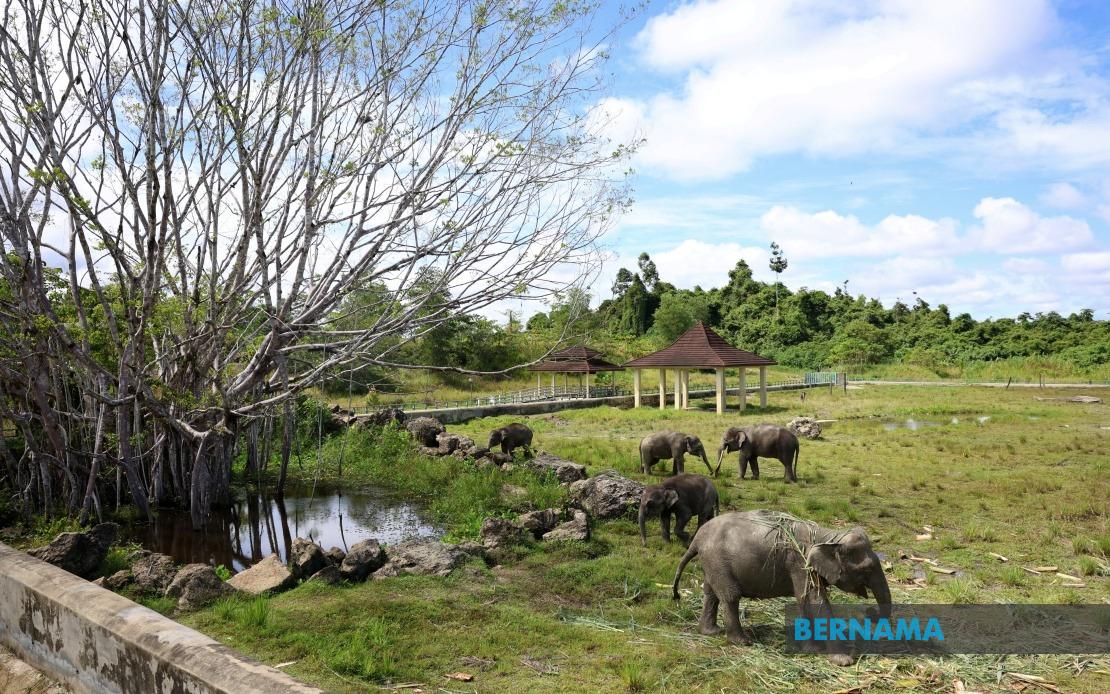
The Sabah state government is testing a dedicated elephant sanctuary in Tawau as a potential blueprint for managing wildlife conflicts throughout the state, with senior officials signalling their willingness to scale up the initiative if early results prove promising. Datuk Dr Andi Md Shamsureezal, the Sabah Assistant Minister of Tourism, Culture and Environment, told the Sabah State Legislative Assembly that authorities are currently assessing the viability of the proposal in close coordination with the Sabah Wildlife Department and other government bodies. The sanctuary concept represents a shift away from traditional reactive measures and towards a more strategic, landscape-level approach to addressing the mounting tensions between expanding human settlements and wild animals across Sabah's interior regions.
The Tawau sanctuary model carries significant implications for rural communities across Sabah, where crop-raiding by Bornean elephants, wild boars, and other species has become an escalating threat to agricultural livelihoods and food security. Datuk Seri Mohd Shafie Apdal, the Warisan-Senallang assemblyman, had earlier proposed that the state designate protected wildlife areas that could simultaneously function as tourism attractions, thereby generating revenue streams that might offset losses incurred by affected farmers. This dual-purpose approach reflects a growing recognition across the region that wildlife conservation and economic development need not be mutually exclusive, particularly in areas where rural communities depend on both agriculture and ecosystem services. The sanctuary framework could help transition Sabah towards a more sustainable model of coexistence rather than perpetual conflict management.
Datuk Dr Andi acknowledged the depth of the problem when responding to Arunarnsin Taib's parliamentary query regarding crop damage and livelihood impacts. He outlined a comprehensive strategy that combines immediate crisis response with longer-term ecological solutions tailored to individual species' behaviour and the specific environmental conditions driving conflicts in different localities. The government recognises that a one-size-fits-all approach fails to address the underlying causes of human-wildlife friction, which vary significantly depending on local geography, land-use patterns, agricultural practices, and seasonal wildlife movements. This acknowledgement marks a departure from earlier conservation paradigms that often prioritised species protection above community concerns.
A particularly telling aspect of the official response involves the government's explicit rejection of capture-and-relocation programmes as a sustainable conflict-mitigation strategy. Datuk Dr Andi made clear that physically removing problem animals merely displaces the conflict to new areas without resolving the root environmental drivers that push wildlife into human-dominated landscapes in the first place. This position aligns with emerging international best practices in wildlife management and reflects a more sophisticated understanding of ecosystem dynamics. When elephants are captured and transported to ostensibly remote locations, they often return to their original territories or create new conflicts in the areas where they are released, ultimately squandering resources and animal welfare whilst failing to address farmers' concerns.
Instead of relocation, the state government has begun investing in community-based intervention teams, specifically ranger units composed of local residents from areas experiencing acute human-wildlife friction. These ranger teams serve a dual function: they provide employment opportunities to rural populations whilst simultaneously building local capacity for early conflict detection and wildlife monitoring. By embedding conservation responsibilities within affected communities, the approach fosters a sense of ownership and investment in wildlife management outcomes, thereby increasing the likelihood of sustained cooperation and behaviour change. This strategy has proven effective in other parts of Southeast Asia where community engagement has transformed wildlife from perceived pests into valued resources warranting collective protection.
The deployment of satellite tracking collars on selected elephants represents another dimension of the government's multifaceted approach. By maintaining real-time data on elephant movements and migration patterns, authorities can issue timely warnings to at-risk agricultural areas, enabling farmers to implement protective measures or temporarily secure vulnerable crops before herds arrive. The early warning system transforms reactive damage control into proactive risk reduction, affording farming communities the opportunity to mitigate losses rather than simply absorbing them. This technology transfer from conservation science to practical livelihood protection exemplifies the potential for scientific innovation to bridge the wildlife-development divide.
Wild boar management presents a distinct set of challenges requiring separate tactical approaches. Sabah has implemented controlled population reduction programmes in carefully selected zones, balancing biological sustainability against community protection needs. The government emphasises that these culling operations proceed strictly within legal frameworks and are informed by rigorous risk assessments rather than ad-hoc responses to complaints. This principled approach helps protect Sabah's wider ecological integrity whilst still providing relief to communities facing economic losses from wild boar damage. The distinction between targeted, science-based population management and indiscriminate culling is crucial for maintaining both ecological function and public confidence in government stewardship.
Macaque population management in selected localities addresses a distinct problem set centred on zoonotic disease transmission risks and public safety concerns. Controlled reduction in monkey numbers in high-conflict zones represents a targeted intervention designed to lower disease transmission probability whilst simultaneously reducing property damage and human injury incidents associated with aggressive primate behaviour. This targeted approach acknowledges that not all wildlife conflicts stem from the same underlying causes, requiring differentiated management responses calibrated to specific species ecology and local epidemiological risk profiles. The public health dimension of wildlife management often receives insufficient attention in conservation discourse despite its critical importance to vulnerable rural populations.
The success or failure of the Tawau sanctuary pilot will likely have reverberations throughout Sabah and potentially across Southeast Asia more broadly. If the model demonstrates that dedicated wildlife areas can simultaneously reduce human-animal conflicts, generate conservation revenue, and provide livelihood alternatives to resource extraction, the implications for regional conservation policy could be substantial. Success would validate an integrated approach that treats wildlife protection as compatible with rather than opposed to rural development. Conversely, if the sanctuary model proves insufficient to meaningfully reduce conflict incidents or fails to generate adequate economic returns, policymakers may need to contemplate more interventionist strategies or reconsider land-use allocation patterns at landscape scales.
The expansion timeline remains uncertain and contingent upon quantifiable performance metrics that have not yet been publicly specified. Government officials have indicated that observation and evaluation will precede any roll-out to other Sabah districts, suggesting a methodical, evidence-based decision-making process. This cautious approach seems appropriate given the ecological complexity of the issue and the diversity of conflict contexts across Sabah's various administrative zones. What constitutes "success" in this context will be critical: will it be measured purely by reduction in crop damage incidents, by livelihood improvements among affected farmers, by sanctuary revenue generation, by wildlife population stability, or by some composite index encompassing multiple objectives? The clarity with which success metrics are defined will substantially influence both the sanctuary's perceived legitimacy and the political feasibility of expansion. For Malaysia and the broader region grappling with rapid landscape transformation and escalating human-wildlife tensions, Sabah's pilot project represents a significant test case for whether conservation and development can genuinely coexist within Southeast Asia's increasingly contested natural spaces.

