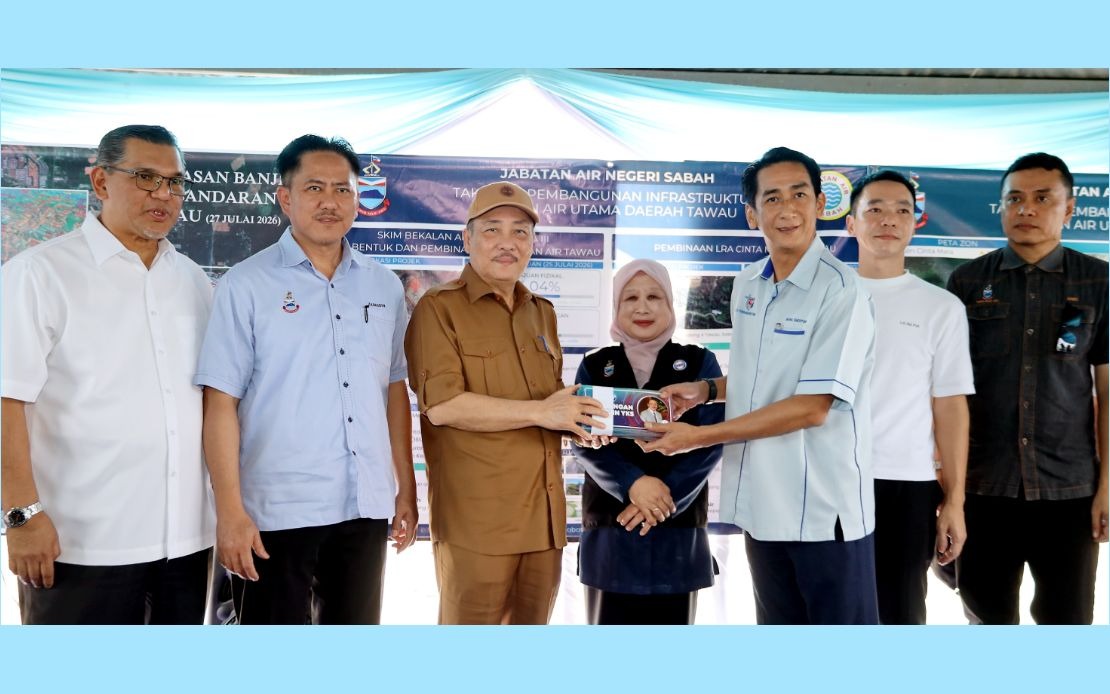
Sabah Chief Minister Datuk Seri Hajiji has presented RM30,600 in emergency relief funds on behalf of Yayasan Kebajikan Sabah to the Tawau Municipal Council, marking the state government's response to devastating flooding that struck the district earlier this month. The assistance reached 102 heads of household who lost their homes and possessions when floodwaters swept through the area, with each family allocated RM300 to help cover immediate essential needs and recovery costs.
The distribution of aid underscores the state administration's commitment to providing rapid financial support to families grappling with the aftermath of natural disasters. For many rural and urban households in Tawau, such targeted cash assistance represents a crucial lifeline during the recovery phase, when insurance coverage remains limited and personal savings have been depleted by displacement and emergency shelter costs. The RM300 per household amount, while modest, acknowledges the urgent nature of relief demands in the immediate post-disaster period.
Tawau experienced significant flooding on July 25 when heavy rainfall caused waterways to overflow and inundate residential areas across the municipality. The disaster forced authorities to evacuate 362 residents to emergency shelters established at Dewan Serbaguna Kompleks Sukan Tawau, where families spent days away from their homes awaiting water levels to recede and assessment teams to evaluate structural damage. The evacuation highlighted the vulnerability of Tawau's flood-prone zones and the need for coordinated disaster response mechanisms to protect displaced populations.
In his statement, Hajiji extended formal recognition to the multiple agencies and departments that mobilised resources during the crisis period. The Civil Defence Force, Royal Malaysia Police, Fire and Rescue Department, and Health Ministry personnel worked alongside state and local disaster management committees to coordinate evacuation operations, provide emergency medical care, and distribute supplies to evacuation centres. This inter-agency coordination reflects established protocols within Malaysia's disaster management framework, yet the appreciation articulated by state leadership underscores the real strain placed on these services during acute emergency situations.
The role of Tawau Municipal Council president Mohd Shoffian Mohd Said as recipient of the funds indicates the devolution of relief distribution authority to local administrators who maintain proximity to affected communities and existing records of vulnerable populations. Municipal councils across Malaysia increasingly serve as front-line coordinators for disaster response, holding responsibility for rapid needs assessments and ensuring equitable distribution of government assistance. This arrangement enables faster disbursement compared to centralised processing, though it places significant administrative burden on councils that may already be stretched managing routine municipal functions.
Flood disasters in Sabah's east coast municipalities occur with concerning regularity, particularly during the southwest monsoon season when rainfall intensifies across the region. Tawau's geographic location and terrain make it particularly susceptible to flash flooding, with low-lying residential areas and inadequate drainage infrastructure exacerbating water accumulation. The July 25 incident represents one of multiple flooding events that have affected Tawau over the past decade, indicating a pattern of recurring vulnerability that suggests longer-term infrastructure investment may be required alongside emergency relief.
From a regional perspective, the Tawau flooding contributes to a broader pattern of climate-related disaster impacts across Southeast Asia. Sabah and neighbouring Sarawak have experienced intensifying weather patterns and flooding frequency in recent years, drawing scholarly attention to climate change adaptation strategies and disaster preparedness. The Malaysian government's allocation of relief funds through established foundations like Yayasan Kebajikan Sabah reflects institutional mechanisms designed to respond systematically to such recurring crises, though critics argue that prevention through improved drainage systems and urban planning represents a more cost-effective long-term approach.
The involvement of Yayasan Kebajikan Sabah, the state-based charitable foundation, demonstrates how government entities leverage existing institutional frameworks to channel disaster relief. These foundations typically maintain funding from government allocations and are positioned to provide rapid assistance when disasters strike, though reliance on foundation resources for ongoing relief burdens highlights gaps in permanent disaster assistance budgeting. For Malaysian states with high flood exposure, developing dedicated annual contingency funds for disaster relief has emerged as a strategic policy consideration.
Beyond immediate financial relief, the flood experience in Tawau raises questions about longer-term community resilience and rehabilitation support. The RM300 per household assistance addresses acute needs but does not fully offset losses incurred when homes suffer water damage, possessions are destroyed, and livelihoods are disrupted for weeks. Comprehensive disaster recovery programmes typically encompass temporary housing assistance, livelihood recovery grants, and counselling services, yet the scope and duration of such support varies significantly across Malaysian states based on available resources and political prioritisation.
The Tawau situation also underscores the importance of pre-disaster preparedness, including community awareness of evacuation procedures, early warning systems, and maintaining accessible emergency shelters. The successful evacuation of 362 residents suggests that disaster response protocols functioned effectively in this instance, yet previous flooding events have occasionally revealed communication gaps or shelter capacity constraints. Ongoing investment in disaster risk reduction through public education and infrastructure improvement remains essential for mitigating future impacts.
Looking forward, the relief assistance provided represents immediate humanitarian response but carries implications for how Sabah approaches climate adaptation and infrastructure development. State planners increasingly recognise that reactive disaster relief, while necessary, should be complemented by proactive mitigation measures including improved drainage systems, relocation of settlements from high-risk areas, and nature-based solutions such as mangrove restoration and wetland preservation. The fiscal commitment to relief funds must be balanced against preventive infrastructure investments that could reduce future disaster frequency and intensity.

